
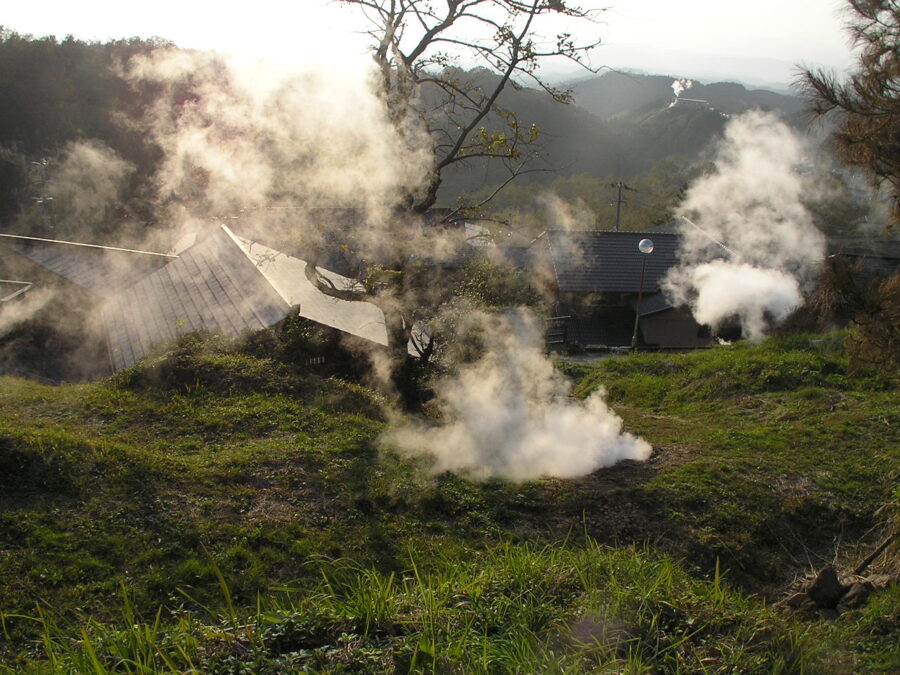

In the Hagenoyu fields the pipes hiss before you see them. A white plume comes off a bent iron wellhead, bends with the wind across the grass, and a few meters away somebody’s lunch is cooking in the same steam. Waita Onsen (わいた温泉郷) is a scatter of small hot-spring hamlets on the western slopes of Mount Waita in Oguni, and on most weekdays it has more steam than people.
There is no main street here, no row of souvenir shops and no single place to park and wander. You drive from one bath to the next on narrow farm roads, rent a private family bath by the hour, and if you have brought a few eggs you steam them in a stone box beside the car park. It suits someone who likes a quiet soak and a map more than a promenade.


Contents7 parts
Six hamlets on one mountain
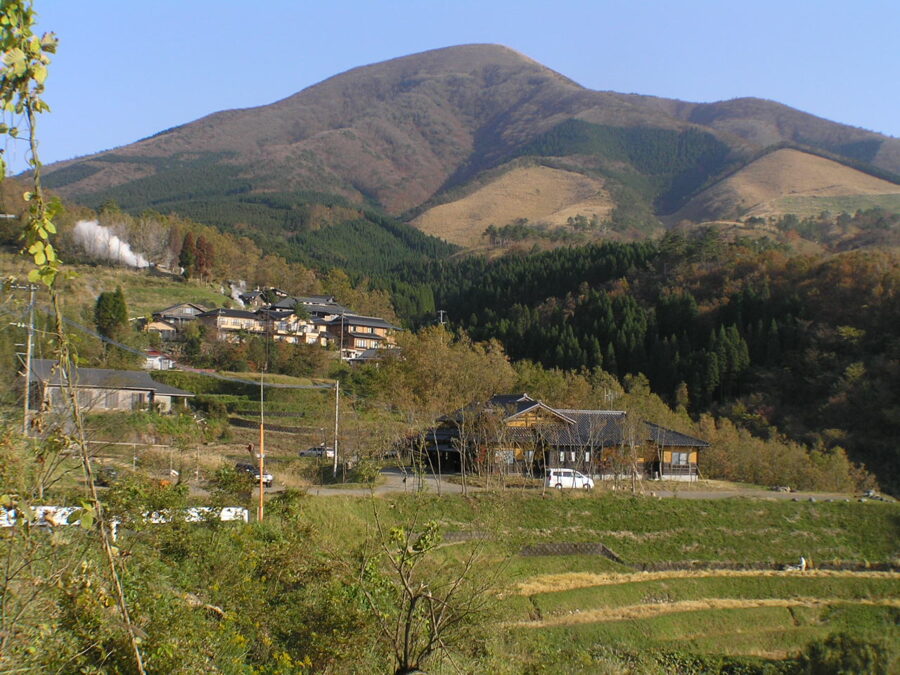
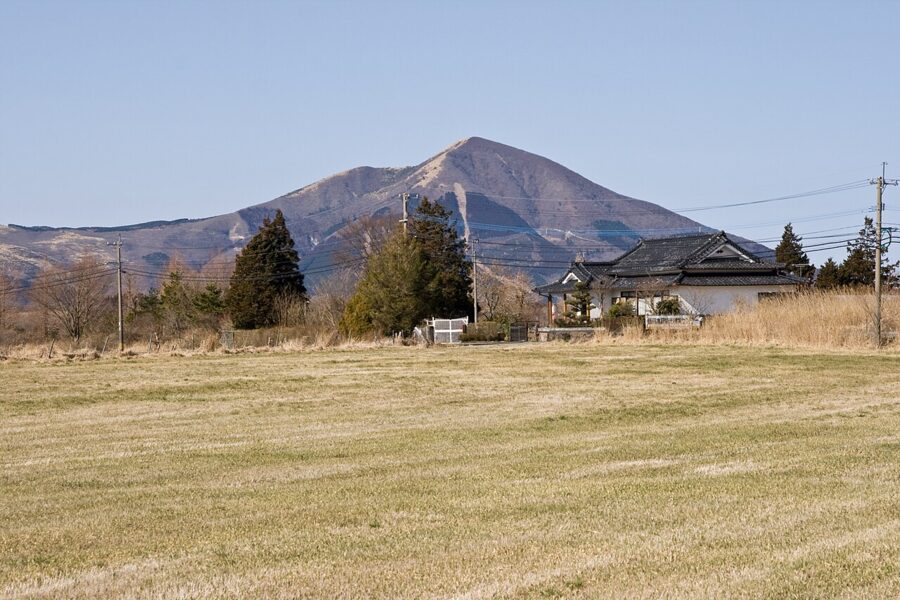
Mount Waita (涌蓋山) stands about 1,500 meters (4,920 feet) high on the border between Kumamoto and Oita, a neat cone that Oguni people call Oguni Fuji and the Oita side calls Kusu Fuji. The Waita hot-spring association describes the district as the hot-spring zone spread across its foot, fed by the heat under the mountain, with six bathing areas that differ in view and in water. The town’s tourism association adds that it began as a place where local farmers came to soak in the slack season, known to hardly anyone outside the valley.
Which six depends on who is counting. The association’s current site lists Hagenoyu, Takenoyu, Shugojin, Suzugatani, Asōzuru and Jigokudani. Its own older “what is Waita” page swaps Shugojin for Yamakawa, the version most Japanese guides repeat, and a 2017 travel feature counted Hibira instead, folding Asōzuru and Suzugatani into one. I include Yamakawa, because most guides do.

Hagenoyu: the high hamlet
Hagenoyu (はげの湯) sits highest and has the most inns, the widest views back across the valley and, to my eye, the most dramatic steam. Ryokan Sansui writes the name with 峐, an old character for a bare hill, and puts itself at about 800 meters (2,620 feet). Kunugi-yu’s family baths, the auberge Waita-kan, Takenokura and Sansui are all here.
Takenoyu: steam between thirty houses
Takenoyu (岳の湯) is the hamlet people photograph. The association describes about thirty houses with steam coming out of the ground nearly everywhere, and the town-owned bathhouse Yukemuri Chaya sits in the middle. Hōrei no Yu, with its big pale-blue outdoor pool, belongs to the same area, and the hamlet’s residents own the small geothermal power plant nearby.
Jigokudani, Asōzuru, Suzugatani and Shugojin
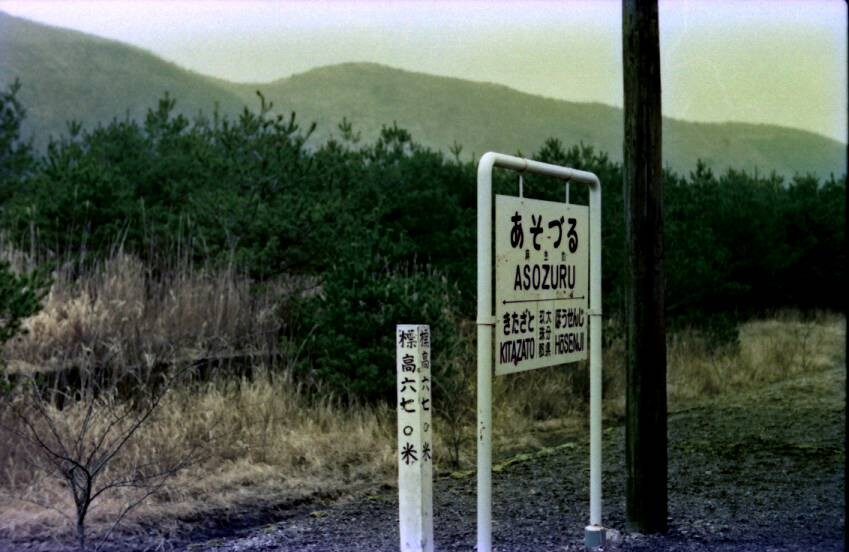
Jigokudani (地獄谷, “hell valley”) is a wooded fold where Yūka has scattered private bath huts through the trees. Asōzuru (麻生釣) sits on the prefectural border, and Kame no Yu there says its grounds lie in both Oita and Kumamoto. Suzugatani (鈴ヶ谷) has no day bath that I could confirm as open. Shugojin (守護陣) is a family-bath inn at the end of a narrow road that runs past a cliff.
Yamakawa: down by the river
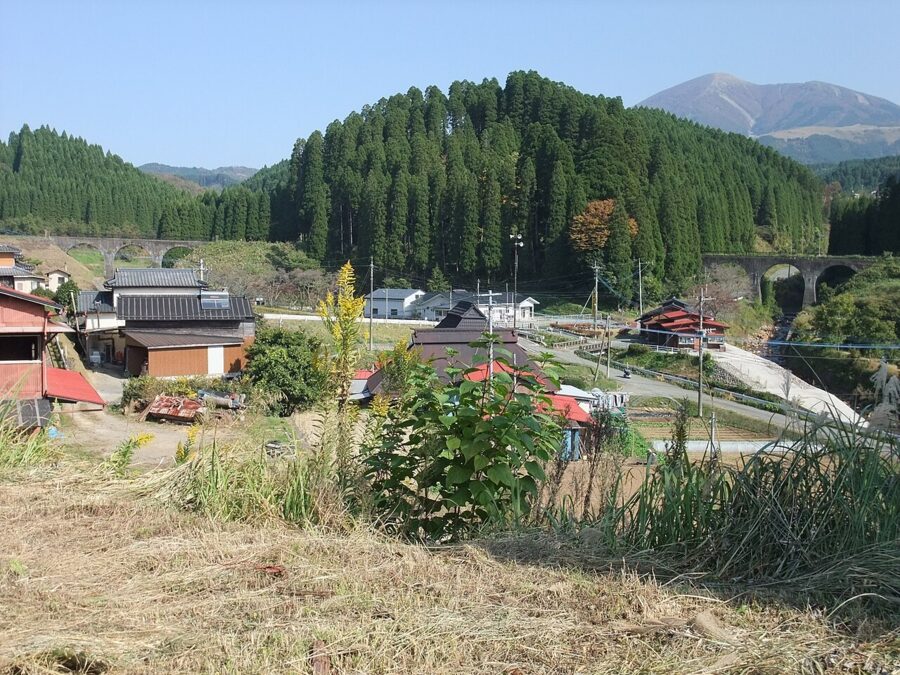
Yamakawa (山川) lies lower, in the valley of the Shioi River below the old bridges of the closed Miyanoharu Line. Many of its inns have open-air baths of cloudy white sulfur water, from ten sources of about 46 to 58°C (115 to 136°F), and a small communal bath is used mostly by residents. Fireflies come out over the river in early summer.

Steam you can see from the road
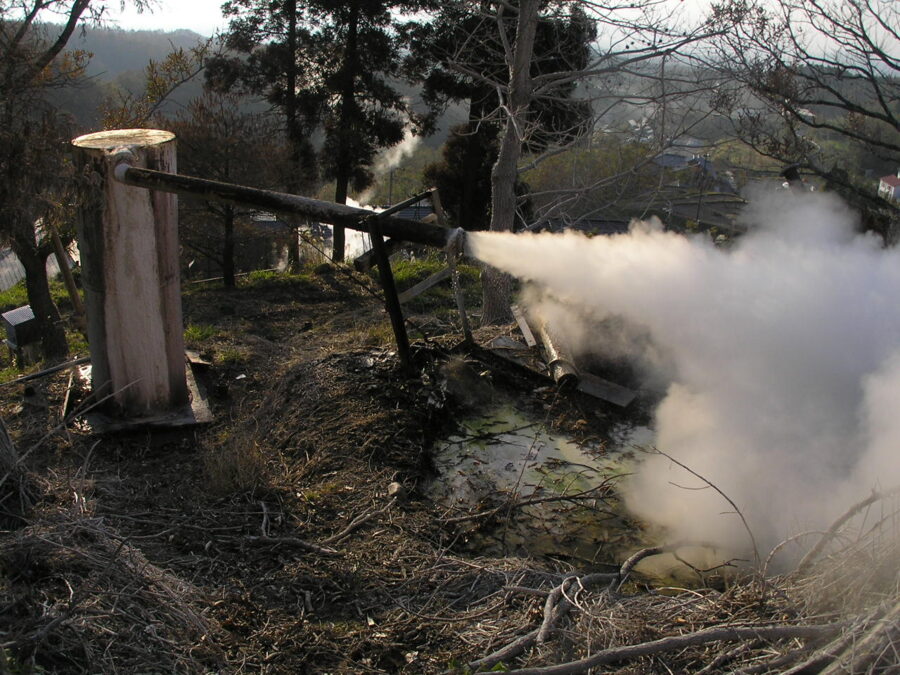
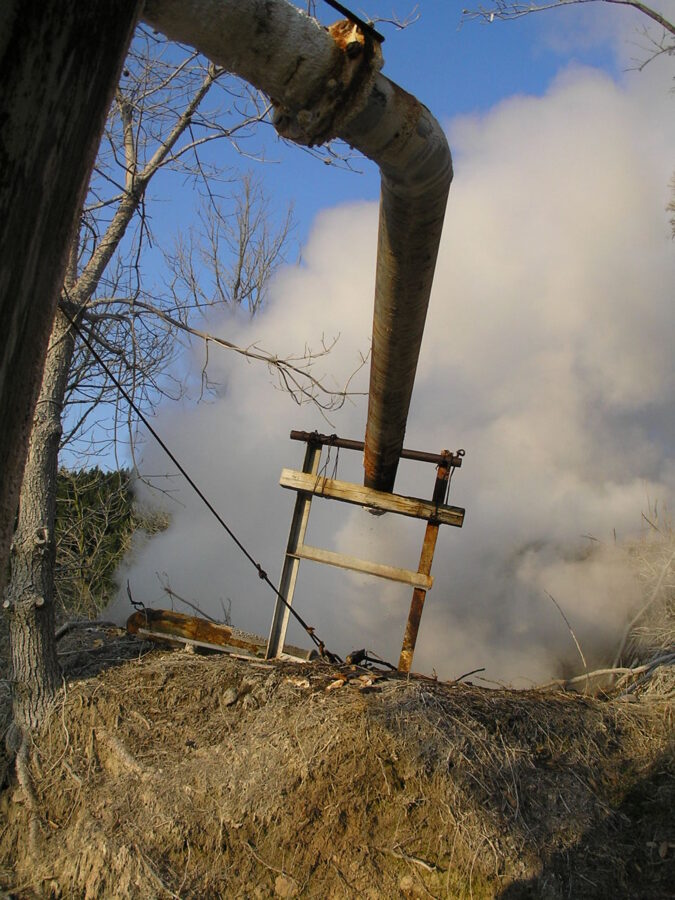
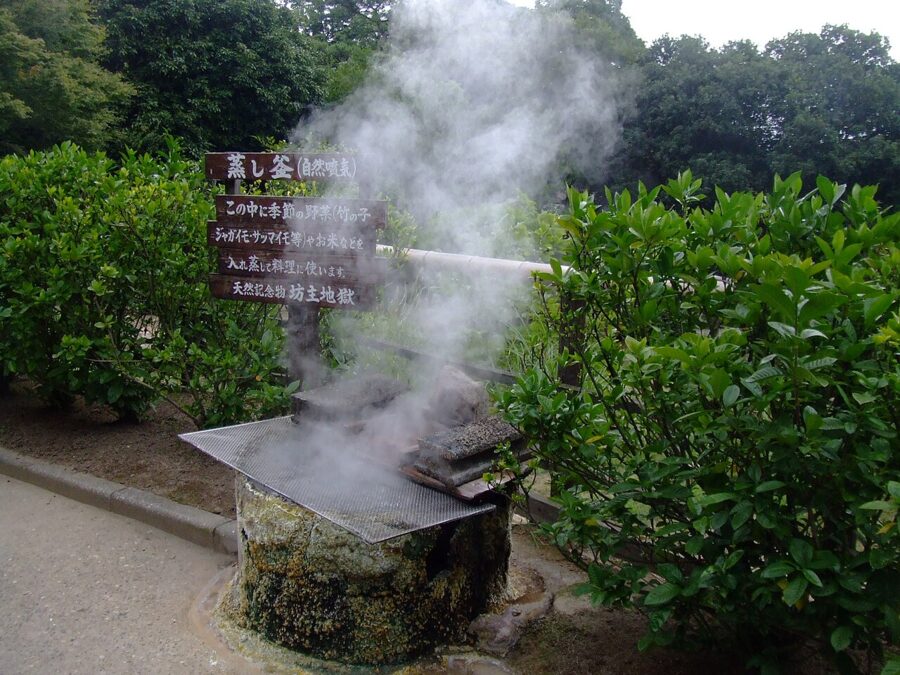
At Waita the heat is not hidden. Steam pours from pipes, from cracks in banks, from grates beside the road and from vents in back gardens. On a cold morning Takenoyu and Hagenoyu can vanish into it for a few minutes and reappear as the wind shifts.

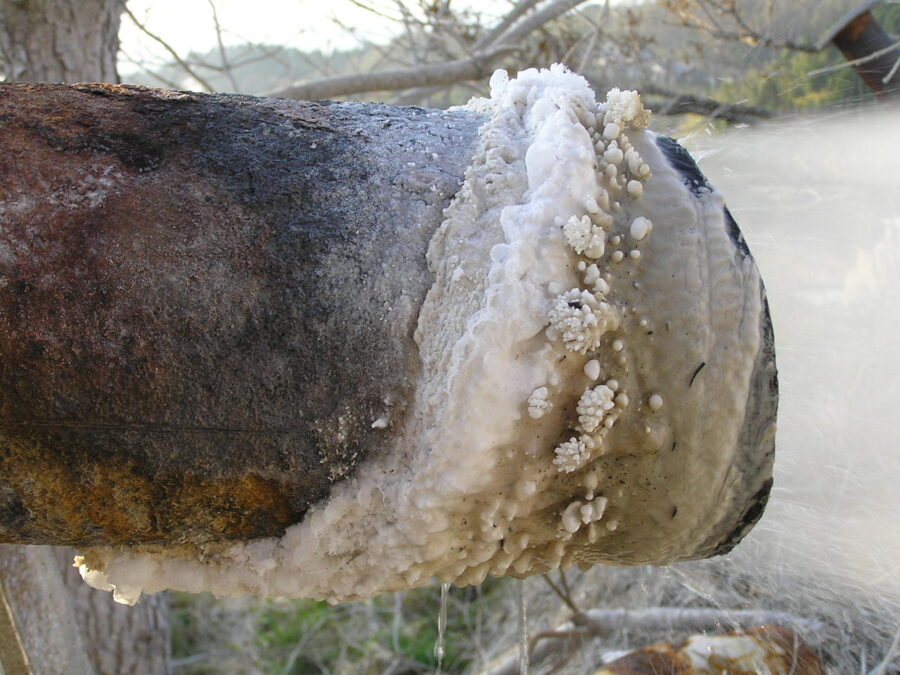
The water leaves its minerals behind as it cools, building white crusts on pipe mouths and tank edges, and the air near the vents smells faintly of sulfur. Keep children and dogs well back from open vents.

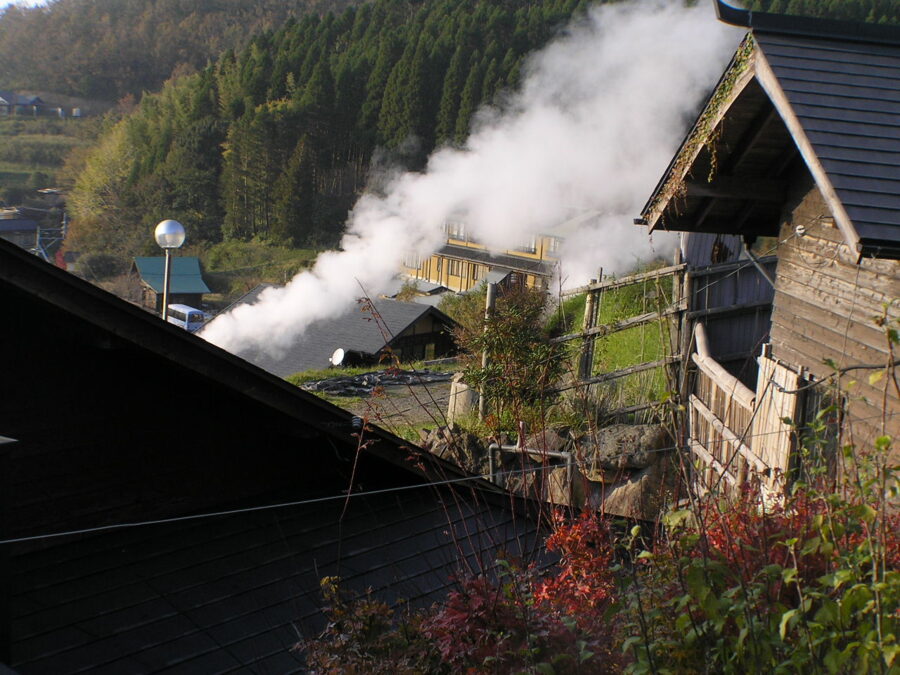

The power plant run by the hamlet
The heat that warms the baths also makes electricity. The Waita geothermal power plant in Nishizato has run since June 2015 with a capacity of 1,995 kilowatts, and its story is a local one. According to a Ministry of the Environment hearing record, a national power developer planned a plant on Takenoyu’s common land and had finished test drilling when it pulled out in 1999, because not every resident would agree.
That left the hamlet split, twenty-six households for a plant and four against. The twenty-six formed their own company, the Waita-kai, and built the plant on private land with an outside firm handling the engineering, while the four formed a separate spring-owners’ group. Well owners within 300 meters were given piped hot water from the start.
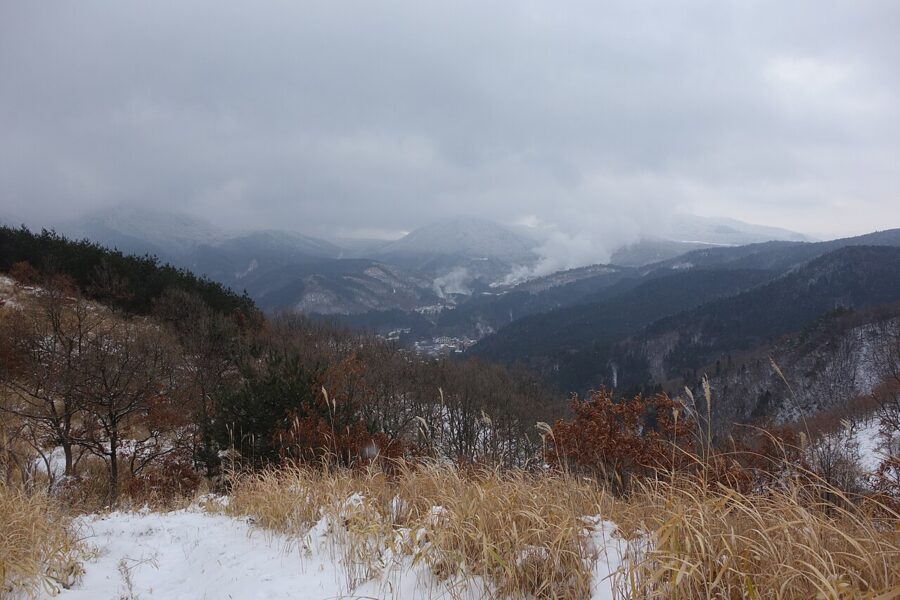

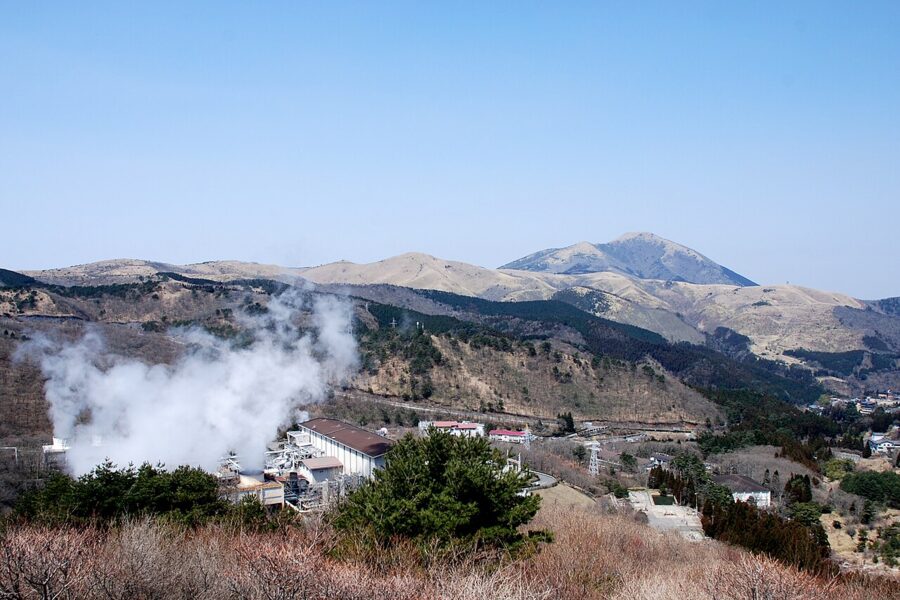

In 2021 the power company put up a monument to Takenoyu’s biggest vent, the Ō-jigoku or great hell, near Yukemuri Chaya. It makes an easy landmark for the bathhouse.
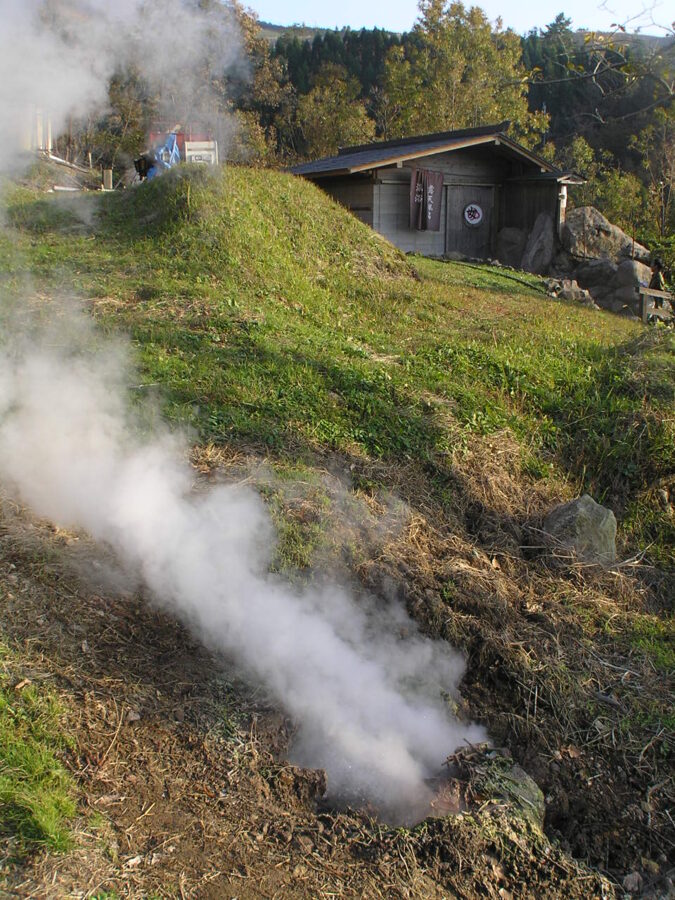

Jigoku-mushi: cooking in the steam
Jigoku-mushi (地獄蒸し, “hell steaming”) means cooking food in boxes set over a steam vent. Eggs, sweet potatoes, corn, vegetables and buns all go in, and they cook faster than you expect. Several Waita bath houses let bathers use their steam ovens, called mushi-gama (蒸し釜), free of charge.
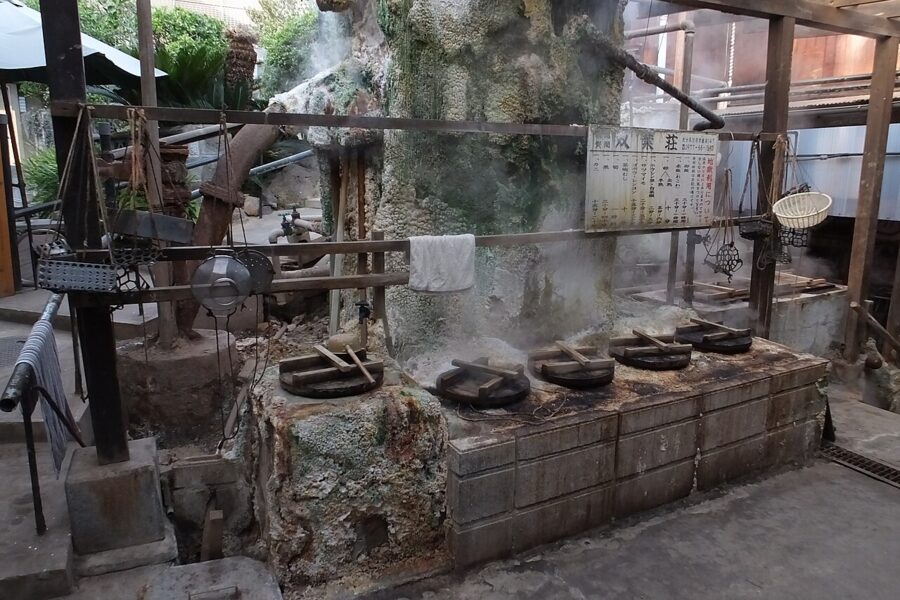

Each operator sets its own rules. As of November 2026:
- Kunugi-yu (Hagenoyu): free for bathers, for up to an hour after your bath, and not before it, so put slow things in before you bathe. The counter sells eggs at ¥50 (well under US$1), meat buns at ¥200 (about US$1) and sticky rice at ¥400 (about US$3), with a basket on loan; bring your own food and the basket costs ¥200. One oven per group, and take your rubbish home.
- Kame no Yu (Asōzuru): free for overnight guests and for 90 minutes after a day bath, otherwise ¥700 (about US$5) per person. Close the valve, put the food in, then open the valve.
- Hōrei no Yu (Takenoyu): bathers can use the steam oven, and the shop sells ingredients.
- Yūka (Jigokudani): a steam oven on the grounds for vegetables and eggs.
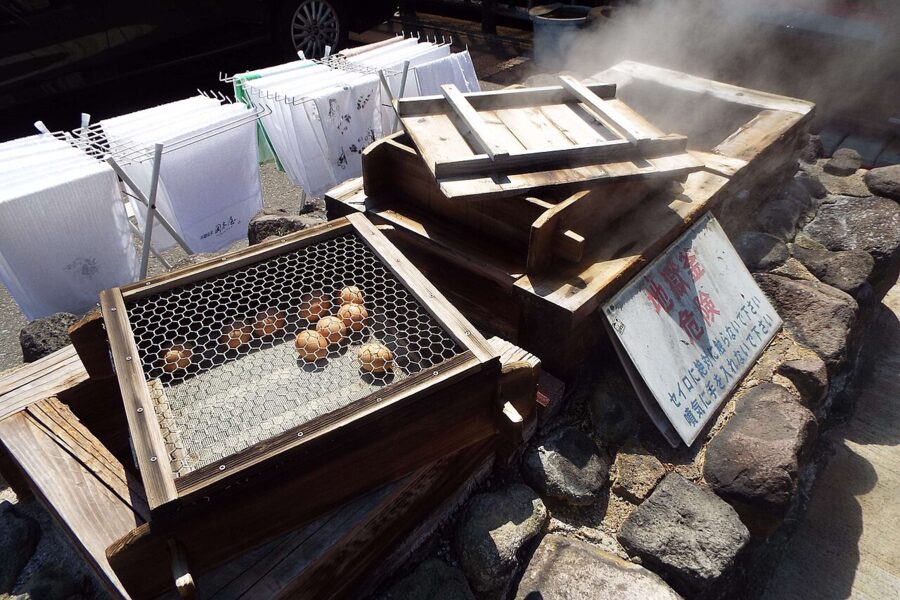

The steam is close to boiling and comes out in bursts. Open the lid away from your face and keep small children back; Kame no Yu says plainly that it takes no responsibility for burns.
If you would rather someone else cooked, Seiryōsō in Takenoyu serves jigoku-mushi alongside its wild-plant dishes, and Takenokura in Hagenoyu steams fresh mountain produce in hot-spring steam. Yukemuri Chaya’s building also houses Tenku no Mamebatake, a small restaurant that cooks with geothermal heat; check its days before you count on lunch there.
Family baths and day bathing
Waita’s specialty is the kazoku-buro (家族風呂, family bath): a small private bath, indoors or out, rented by the room rather than by the person and locked from the inside. Most here run on coin timers. You put the stopper in, feed the machine, and fresh hot-spring water fills the tub for you alone, then keeps trickling in so it never cools.
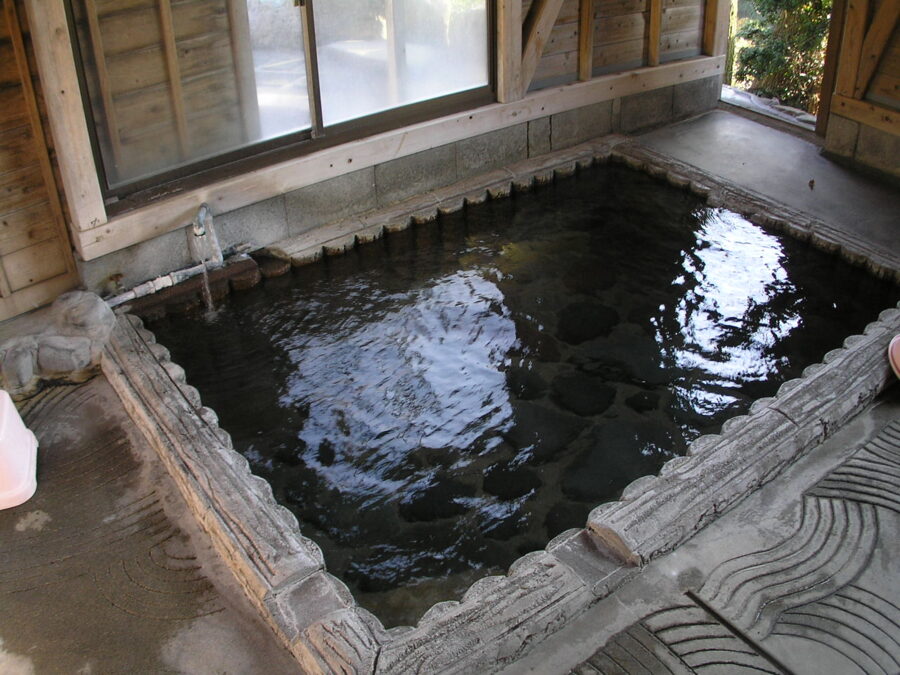

That makes Waita easy for couples, families with small children and anyone with a tattoo. The catch is that most places take no reservations. Kunugi-yu serves walk-ins in the order they reach the window, so a sunny Sunday in November can mean a wait.
Day-bathing prices and hours
Prices are from each operator’s own site unless noted, as of November 2026. One room costs the same however many people use it.
| Bath house | Hamlet | What you get | Price | Hours and closing days |
|---|---|---|---|---|
| Kunugi-yu | Hagenoyu | 14 private outdoor baths, 2 private indoor | Weekdays ¥1,000 (50 min) to ¥2,500 (60 min); weekends and holidays ¥1,500 to ¥3,000 (60 min) | Closed Thursdays except holidays, New Year, Golden Week and Obon; no reservations |
| Yūka | Jigokudani | Shared outdoor bath; private and “premium” private huts | Outdoor bath ¥700 adults, ¥500 children; private ¥1,500 to ¥2,500 (50 min, up to 4 people); premium ¥3,300 to ¥4,500 (60 min) | 8:00 to 22:00, last entry 21:00; closed Wednesdays (Thursday if Wednesday is a holiday) |
| Kame no Yu | Asōzuru | Detached private baths: rock, barrel, cut stone, cypress | ¥1,200 (50 min); cypress ¥1,600 (50 min); cypress rooms with a toilet ¥2,000 (60 min) | Coin baths open 24 hours, all year |
| Hōrei no Yu | Takenoyu | Large outdoor pool; private indoor and outdoor baths | Outdoor pool ¥600; private indoor ¥1,000, private outdoor ¥1,500 or ¥2,000 (1 hour) | Outdoor pool 8:00 to 19:00; guides list Wednesday as the closing day |
| Yukemuri Chaya | Takenoyu | Town-owned bathhouse, large bath and a steam room | Not published on the operator’s pages | 11:00 to 21:00, last entry 20:00; closed Wednesdays and Thursdays (since August 1, 2026) |
*Hōrei no Yu has no working website, so its figures come from a bather’s dated report of March 2026 and a 2026 bath guide, which agree. Roughly, the cheapest soak in the district is ¥600 (about US$4), a private bath starts at ¥1,000 (about US$6), and a good private outdoor bath runs ¥1,500 to ¥2,500 (about US$10 to US$16). Kame no Yu’s ¥1,200 (about US$8) rooms are the best value I found.

The water
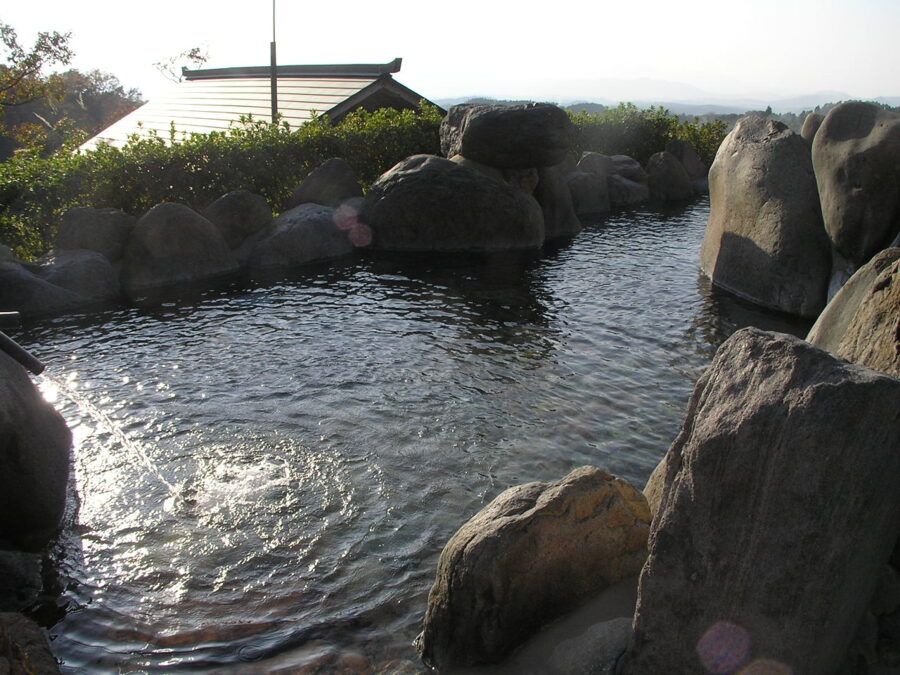
Most Waita sources are sodium chloride springs, slightly alkaline and very hot. Waita-kan publishes its analysis: 96.5°C (206°F) at the source, pH 8.5, and 461.4 mg/kg of metasilicic acid, the mineral Japanese inns praise as good for the skin. Its water shifts with the weather between milky white and pale cobalt blue, and Hōrei no Yu’s outdoor pool turns blue-white in the cold months.
The association describes Yukemuri Chaya’s water as weakly alkaline and slippery on the skin. Down in Yamakawa the springs turn to sulfur, cloudy and white, with chloride and sulfate types mixed in. For the blue, go to Hagenoyu or Hōrei no Yu on a cold day; for sulfur, go down to Yamakawa.

Bath manners
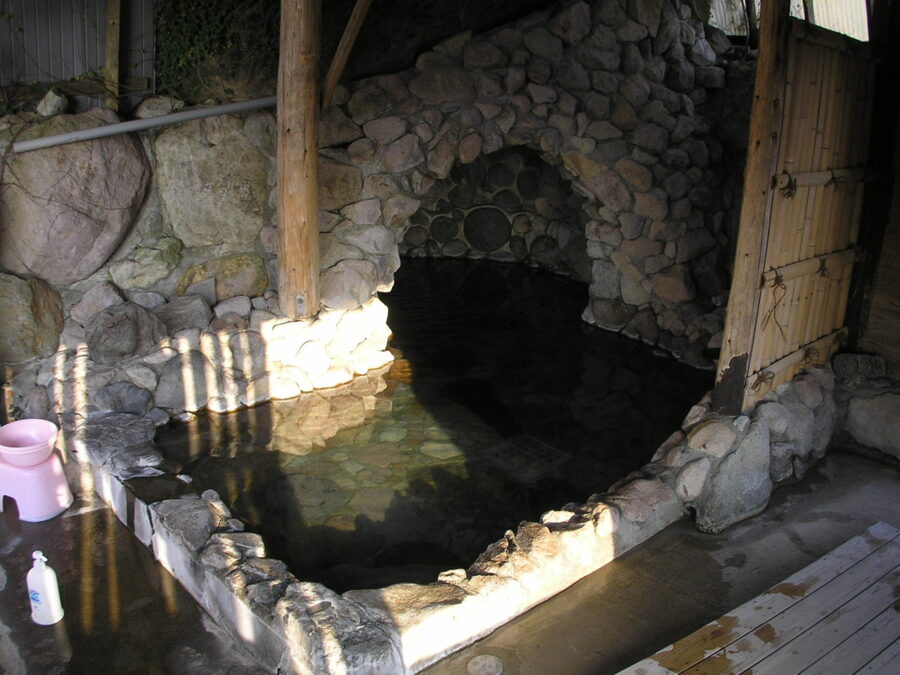
Wash and rinse at the taps before you get in, keep your towel out of the water, and do not swim, shout or soap up in the tub. In a family bath, turn the door sign to “in use,” lock it, and leave the room as you found it. Kunugi-yu asks that you use its rest area only after bathing and for no more than an hour, and bans sleeping in cars on its lot. At Waita-kan’s mixed outdoor bath everyone wears a bathing wrap, which the inn sells to guests at ¥500 (about US$3) for men and ¥1,000 for women.

Where to stay, booked direct
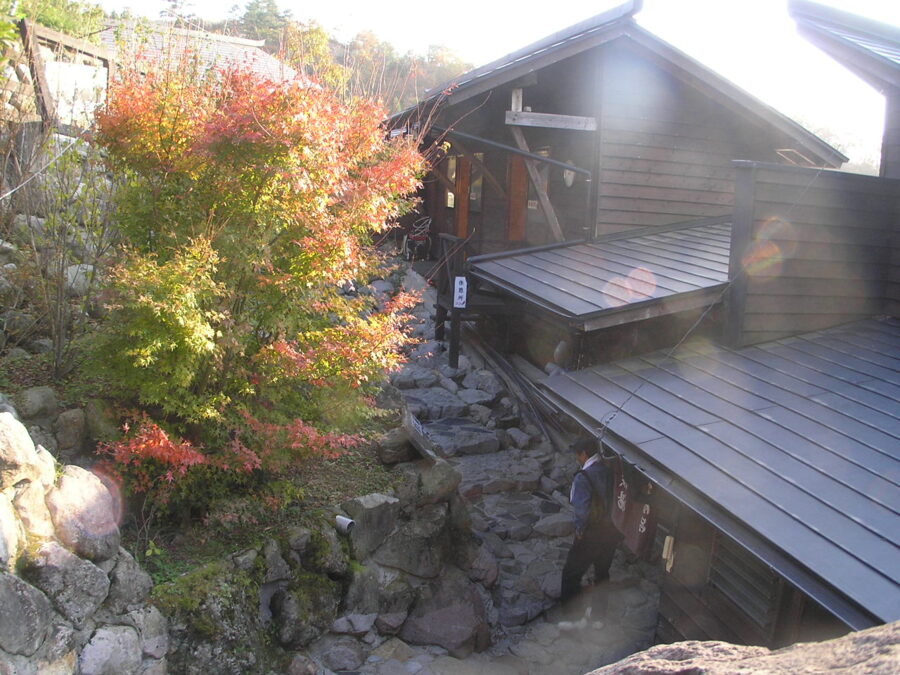
All the inns below take bookings by phone or on their own websites, and Sansui says its direct rate beats the travel sites. None is large; Sansui suggests booking about two weeks ahead for weekends and busy seasons.
In Hagenoyu
Ryokan Sansui is the highest inn in the hamlet and takes adults only. It has sixteen free-flowing baths, seven of them private, plus a mixed outdoor bath where guests wear a bathing wrap, and dinner leans on seafood sent from Amakusa, the landlady’s home. Check in by 6 p.m. if you want dinner.

Waita-kan calls itself an auberge and serves a French and Italian dinner. Every bath is private except the mixed outdoor pool added in 2021, and the half-open Sasa no Yu faces the mountain. It does not take children of junior high age or younger.
Takenokura was built from the materials of ten old farmhouses and has eight rooms, five with their own bath. Kunugi-yu also has two simple self-catering cottages if you mainly want the baths and the steam oven.
In Takenoyu, Asōzuru and Yamakawa
Seiryōsō in Takenoyu is a small family inn with five free-flowing baths and the wild-plant cooking mentioned above. Hōrei no Yado has rooms beside the Hōrei no Yu baths. Kame no Yu in Asōzuru rents ten detached self-catering cottages, by phone only. In Yamakawa, Shirahana Symphony and Sansō Kosugian take overnight guests, and Shirahana also opens its baths to day visitors.
Waita or Kurokawa?
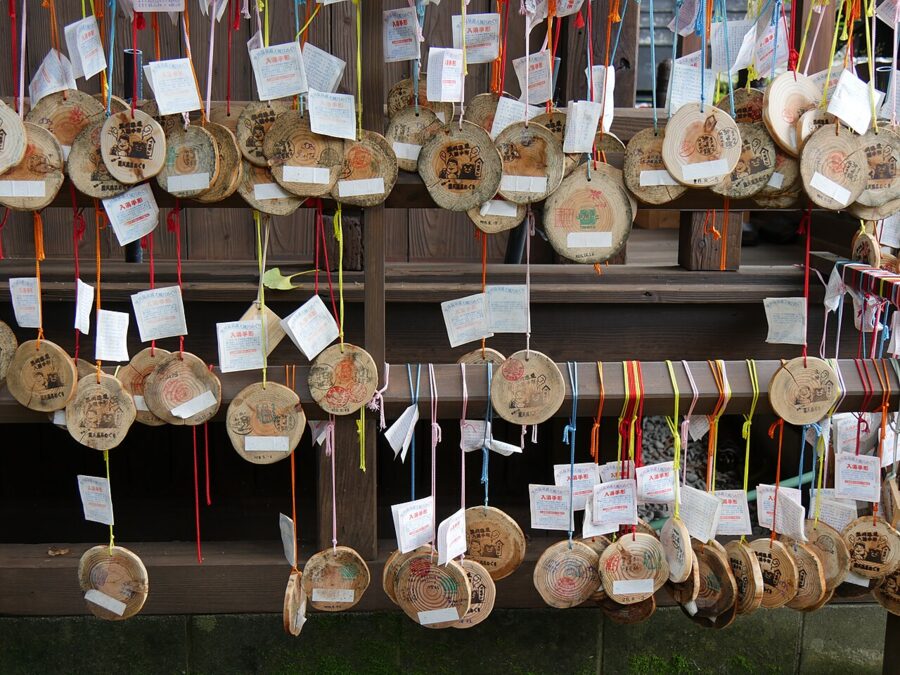
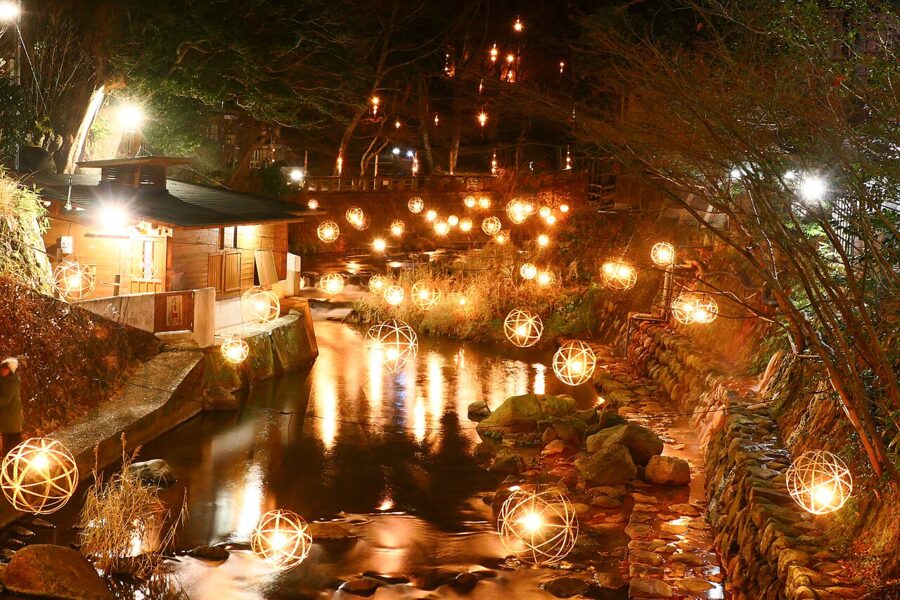
Kurokawa Onsen, in neighboring Minamioguni, is the famous one: about thirty ryokan packed into a wooded river gorge, a street you can stroll in a cotton robe, and the nyūtō tegata bathing pass, which as of November 2026 costs ¥1,500 (about US$10) for three of twenty-five outdoor baths. Waita has none of that. It has steam, private baths and space, with no village center and very few shops.
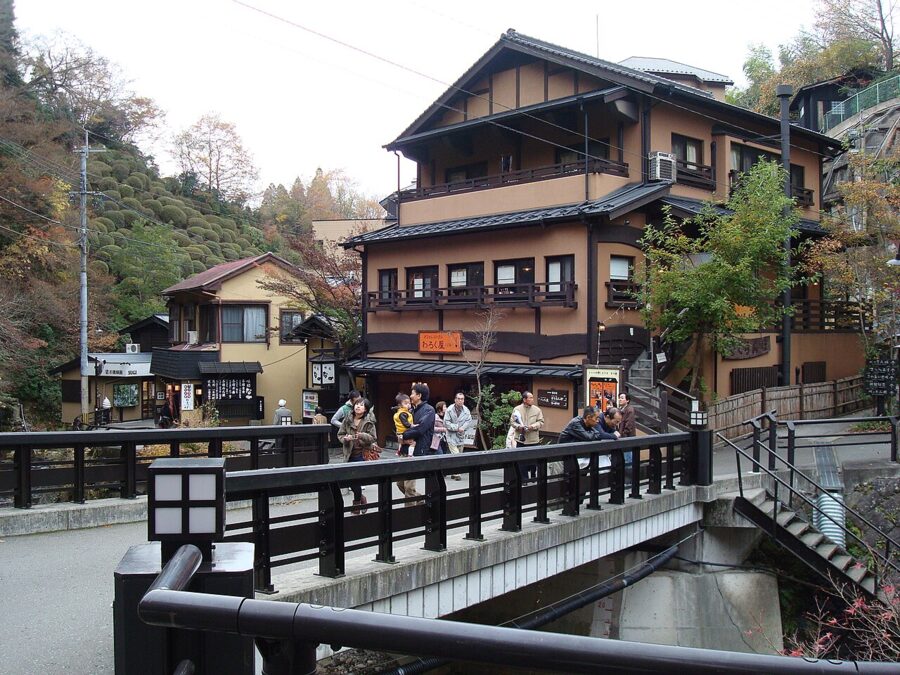

My view: stay in Kurokawa if you want to walk from bath to bath in the evening, and at Waita if you would rather have a private bath and an empty road. They are close enough to do both. The rest of Oguni, from the cedar-built town center to Tsuetate‘s riverside inns, is a short drive away.

Getting there
Waita is a place for a car. The hamlets are spread over several kilometers of steep, narrow roads with no bus between them, and each bath house has its own parking.
Driving
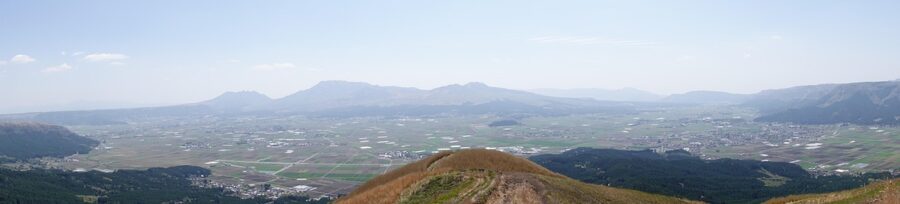
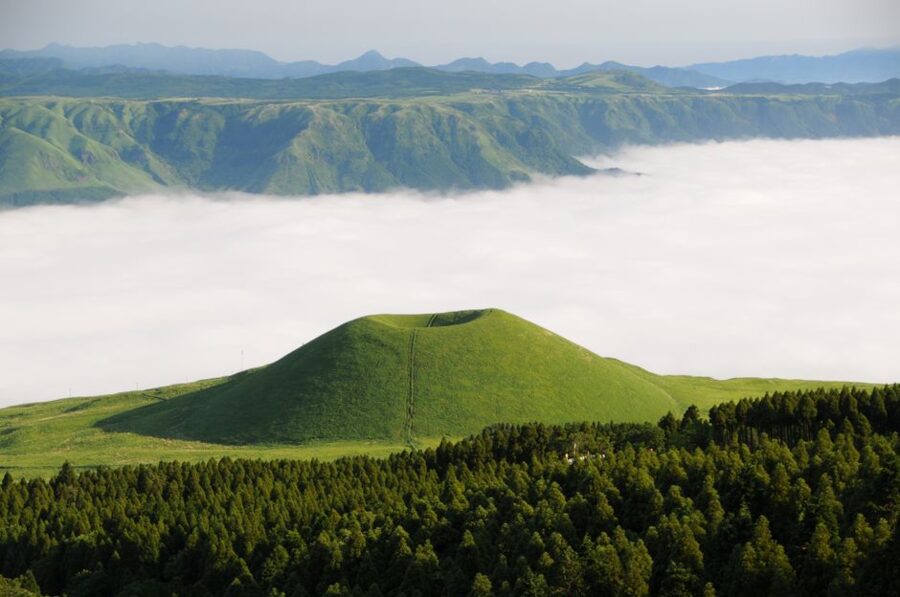
- From Kumamoto and the airport: Route 57 toward Ōzu, then the Milk Road (Prefectural Road 339) over the northern rim of the Aso caldera to Route 212 and on toward Oguni. The Oguni tourism association puts Ōzu to Oguni at about 50 minutes.
- From Aso: climb to the Daikanbō lookout and follow Route 212 north; the hot-spring association reckons about 40 minutes from there to the hamlets.
- From Fukuoka: the Ōita Expressway to Hita IC, then Route 212 south, about two hours.
- From Oita and Yufuin: the Ōita Expressway to Kusu IC, about 30 minutes from the hamlets, or to Kokonoe IC and Route 387, about 20 minutes to Asōzuru.
- From Kurokawa: about 8 kilometers (5 miles) apart in a straight line, longer by the winding road.
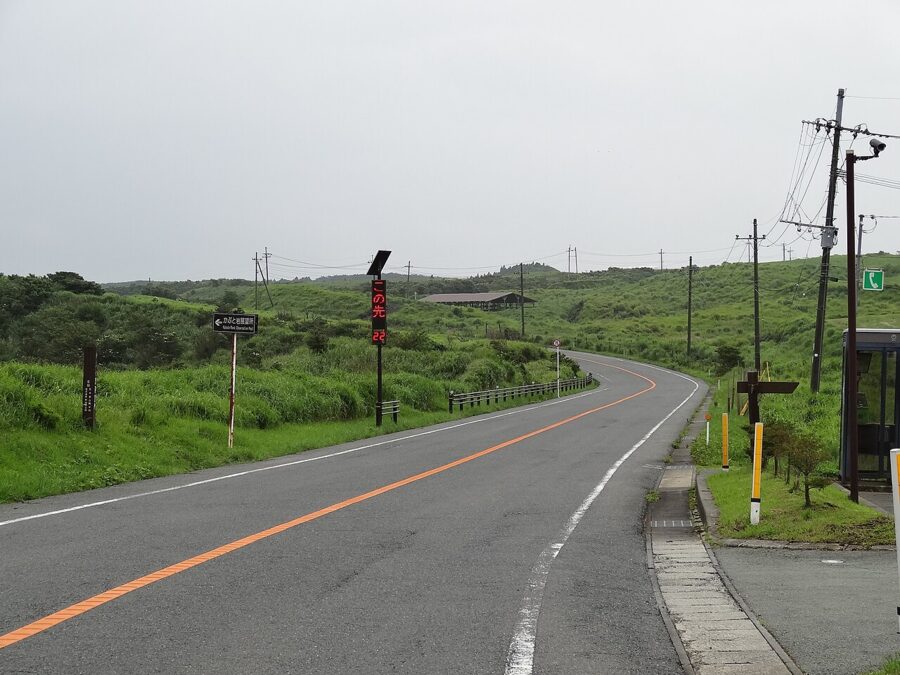

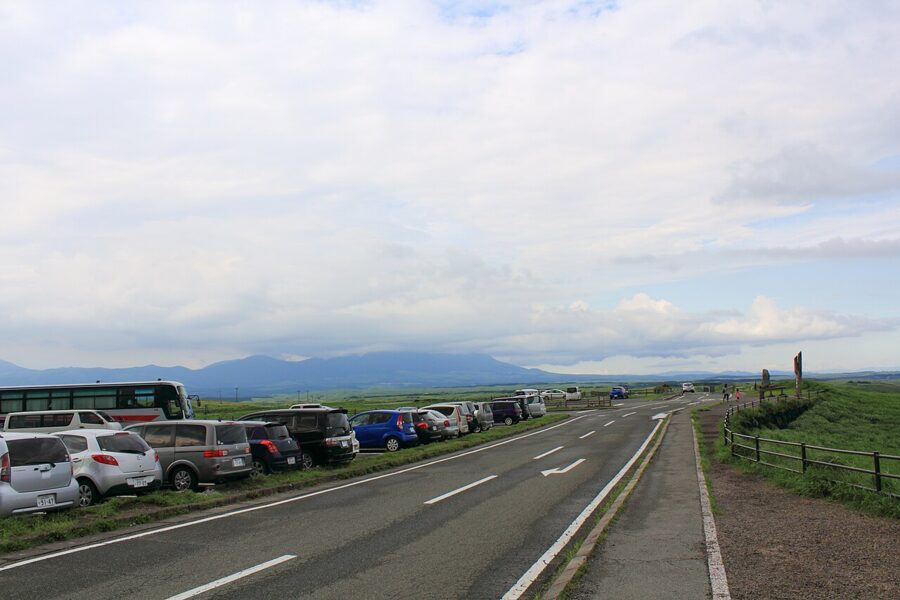

The hamlets sit at around 800 meters and the roads ice up in winter. Waita-kan asks winter drivers to carry chains or fit snow tires, and warns that the surface gets worse as you climb.
By bus and taxi
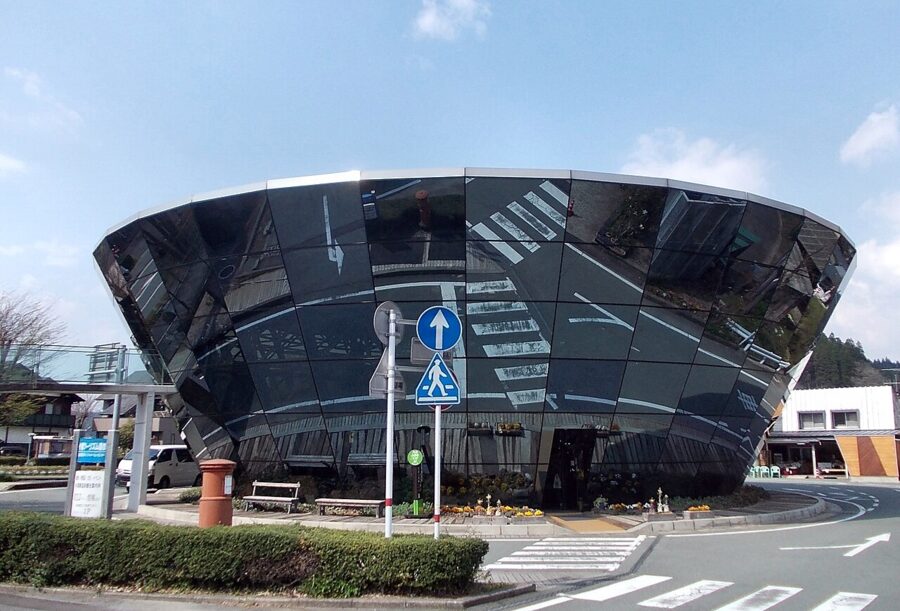
No bus runs into the hamlets. Kyushu Sanko buses link JR Aso Station with Yu Station, the domed roadside station in central Oguni, in a little over an hour, and highway buses from Fukuoka bound for Kurokawa stop at Yu Station after about two and a half hours, reservation required. From there a taxi takes about 10 to 15 minutes to most bath houses; book the return, since no taxis wait at the baths.

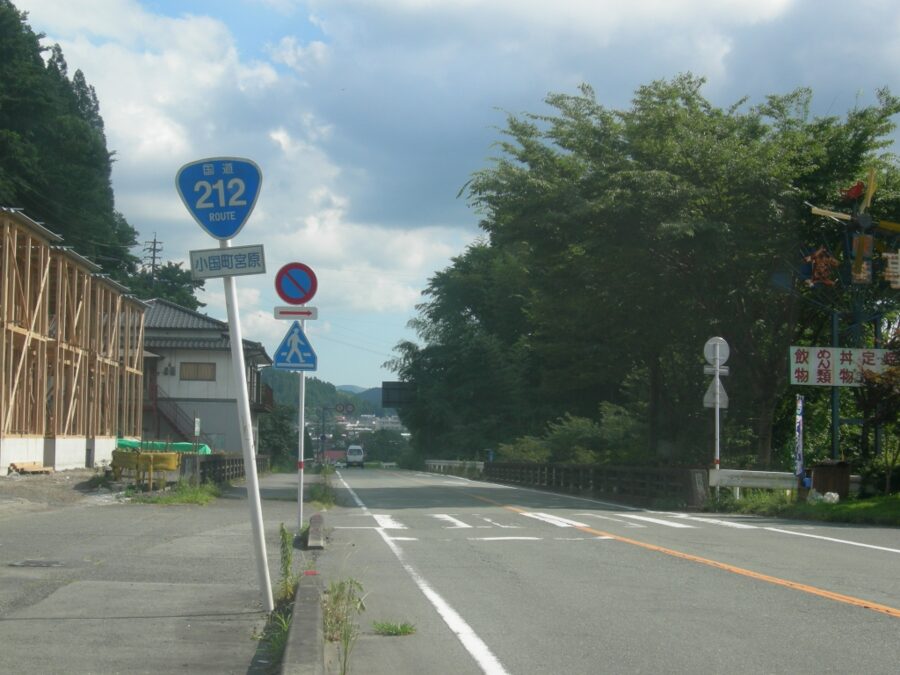
Check the prefecture’s road notices after heavy rain.
When to go
The steam is the reason to come, and it is best on cold, still mornings between November and March, when every vent throws up a column you can see across the valley. Autumn color comes in late October and early November, when the private baths are busiest at weekends. The Shimonojō ginkgo elsewhere in Oguni turns yellow around the same time.
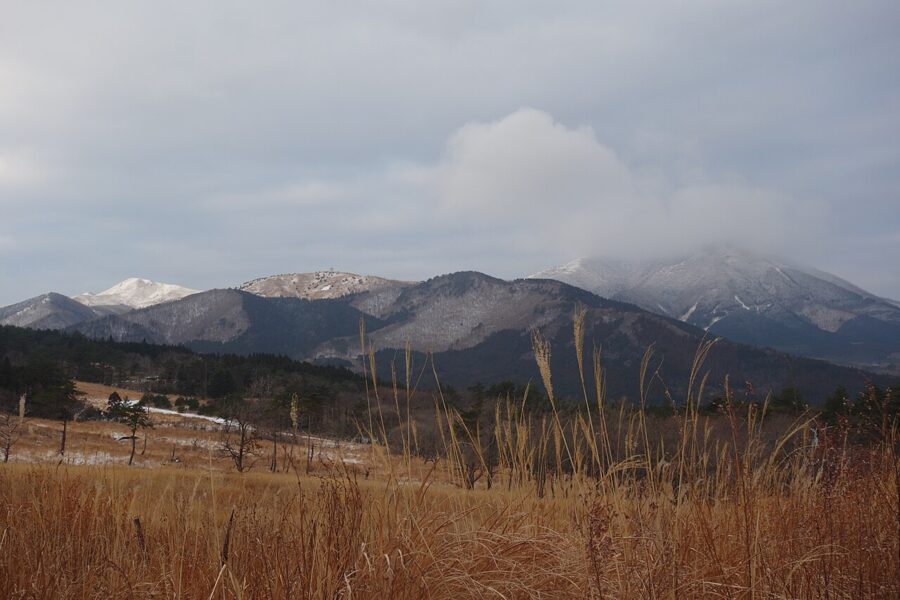

Spring brings new green to the mountain and birdsong in the oak woods around Kunugi-yu, and early summer brings fireflies to Yamakawa. Summer is pleasant at 800 meters, but the steam is thin and I’d skip midday in August.
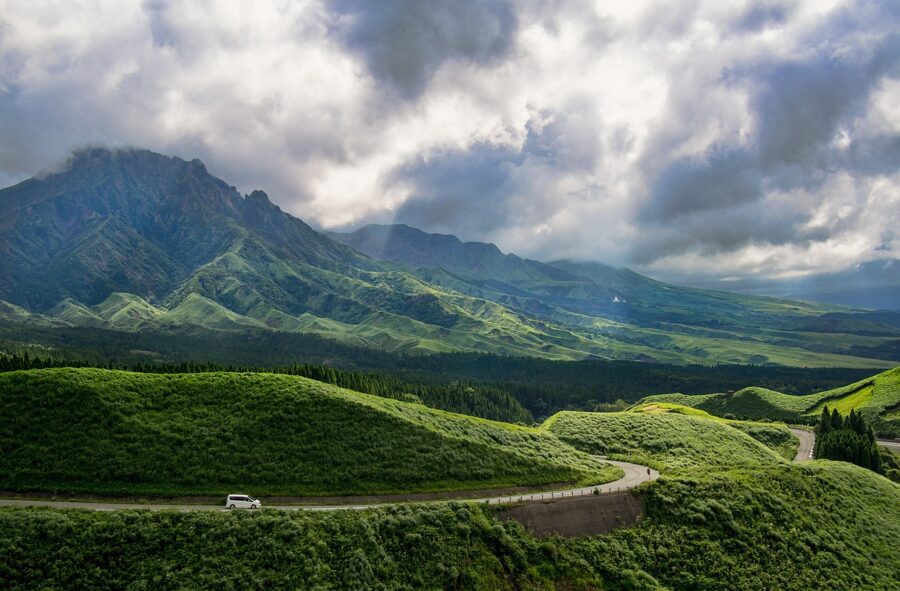

Quiet days
Pick a Monday, Tuesday or Friday. Kunugi-yu closes on Thursdays, Yūka on Wednesdays, Yukemuri Chaya on Wednesdays and Thursdays, and Hōrei no Yu is listed as closing on Wednesdays, so midweek is when a bath-hop goes wrong. Weekends are fine early, but by midday the family-bath queues build.
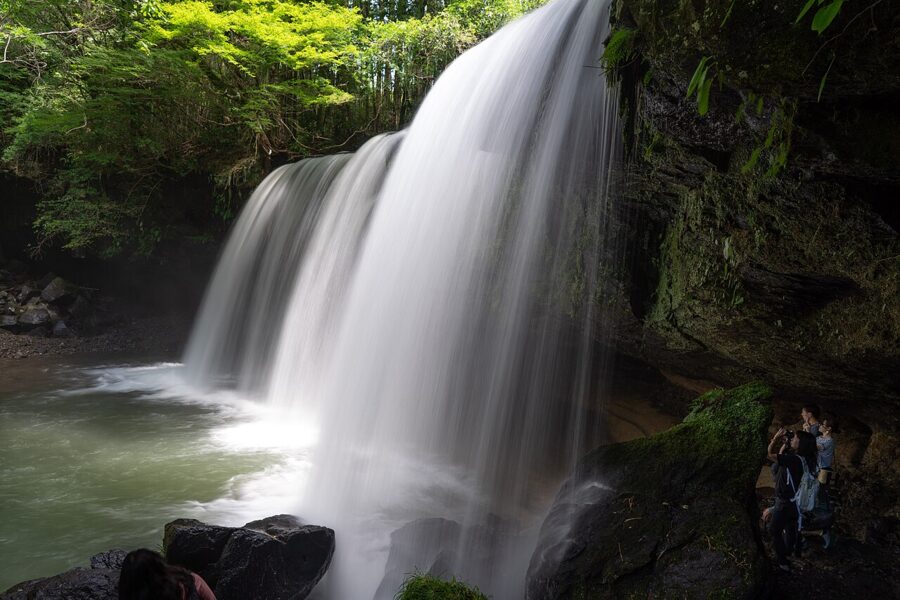
With half a day more, the climb up Mount Waita suits beginners and intermediate hikers, and the association promises a 360-degree view from the top. Nabegataki Falls, the waterfall you walk behind, is in the same town and pairs well with an afternoon in the baths.
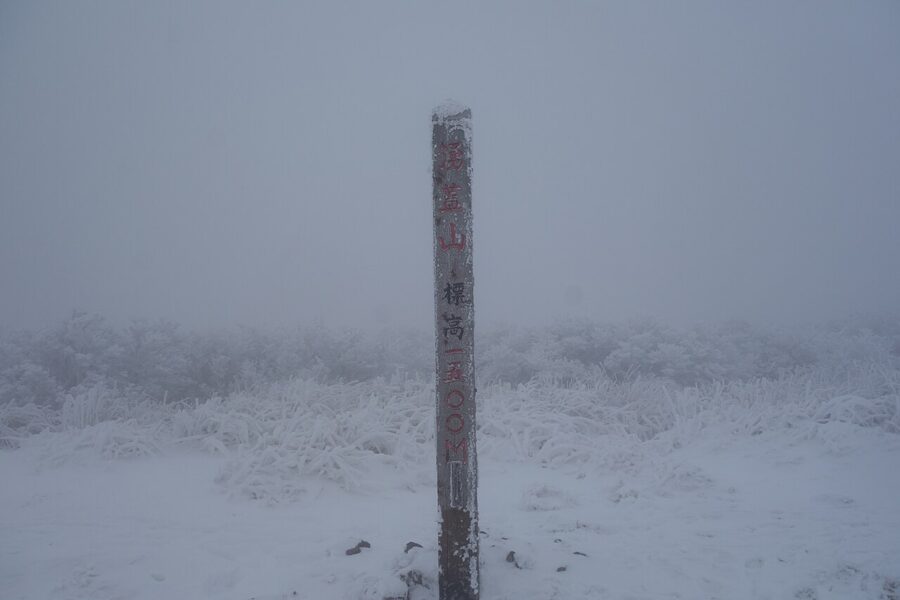


Come on a cold morning, bring a bag of eggs, and start at Takenoyu while the steam is thickest. By the time it thins enough to see the mountain, the eggs will be ready.