

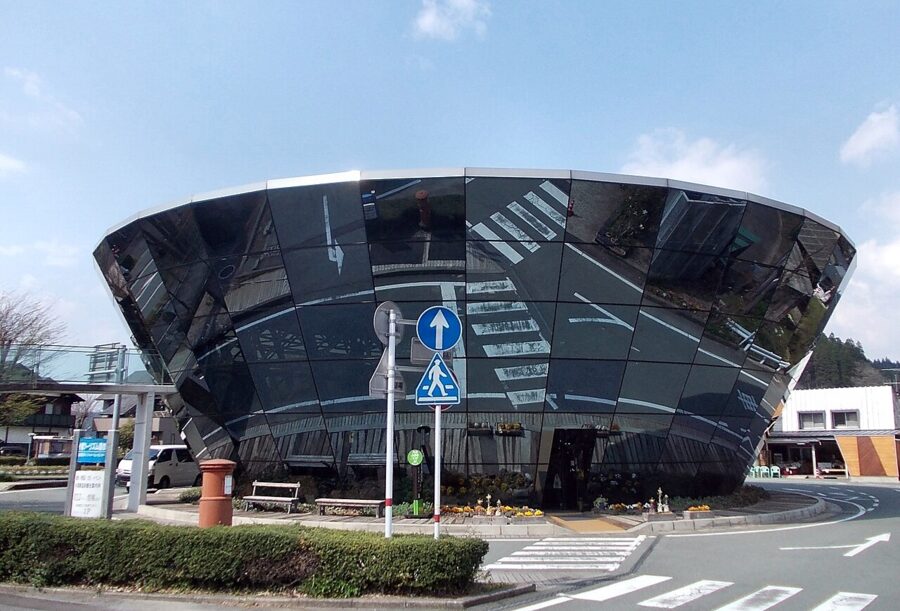
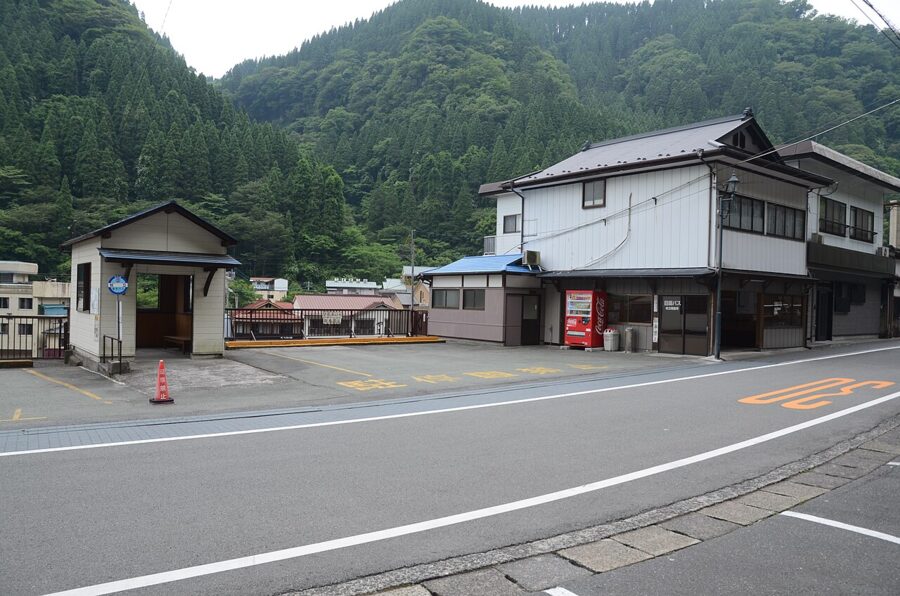
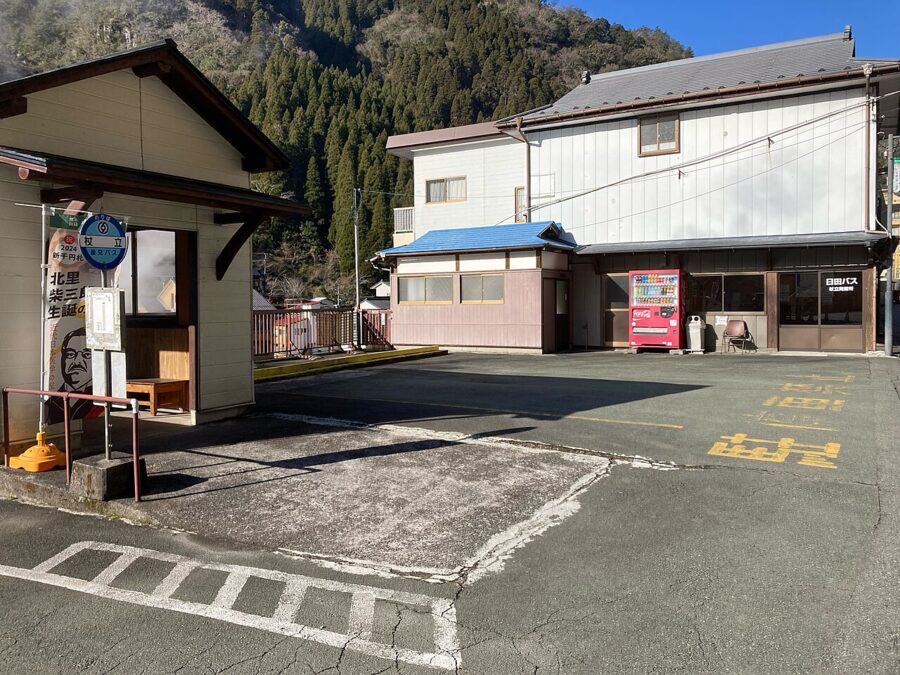
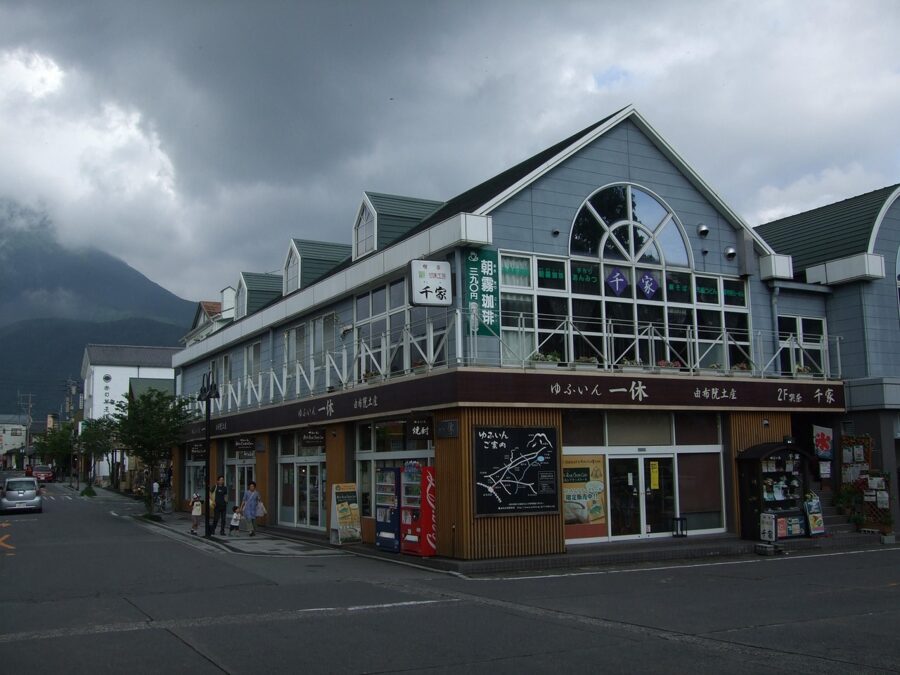
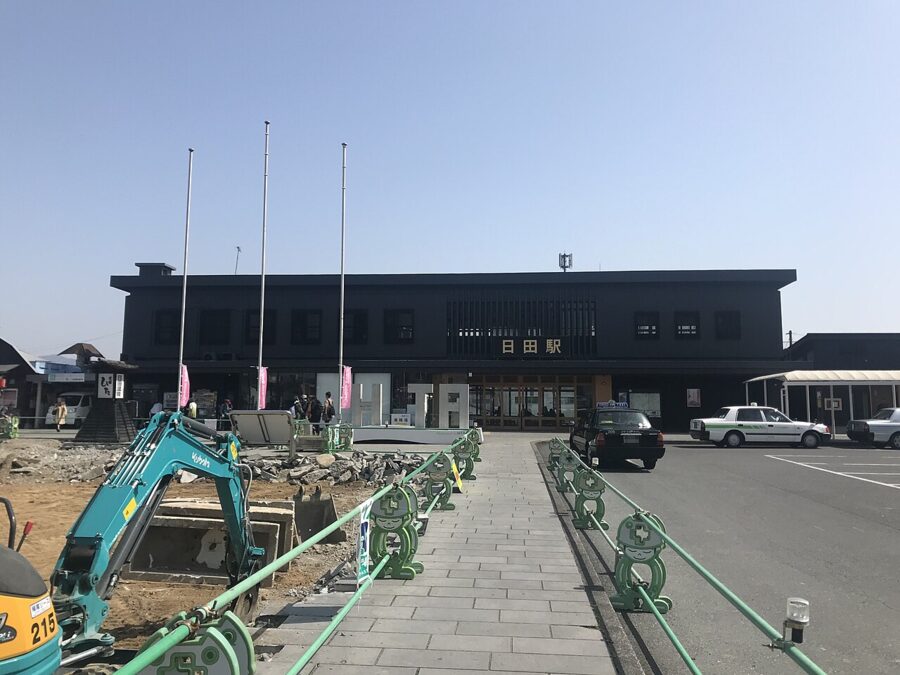
Oguni lost its railway on December 1, 1984. The terminus of the old Miyanoharu Line, Higo-Oguni station, is now a roadside station called Yu Station, and the buses that pull into its forecourt are how the town is reached today: three a day from Fukuoka, a few from Aso and Tsuetate, and the Oguni-go Liner from Higo-Ozu. Kurokawa Onsen (黒川温泉), over the hill in Minamioguni, sits on a slightly better bus line. Everything else here is a road.

None of it is hard, but all of it is sparse. Miss the 10:45 from Kurokawa to Kumamoto and the next one leaves at 3:25 p.m. So the useful question is not which route is fastest but which one fits the hour you land, and whether you will want a car once you arrive. I would take the bus in and hire a car only if the plan includes the waterfalls, the steam vents at Waita and the high roads.
The times and fares below are the operators’ own as of November 2026; check them again close to the day.
Contents8 parts
Where Oguni sits, and the three ways in
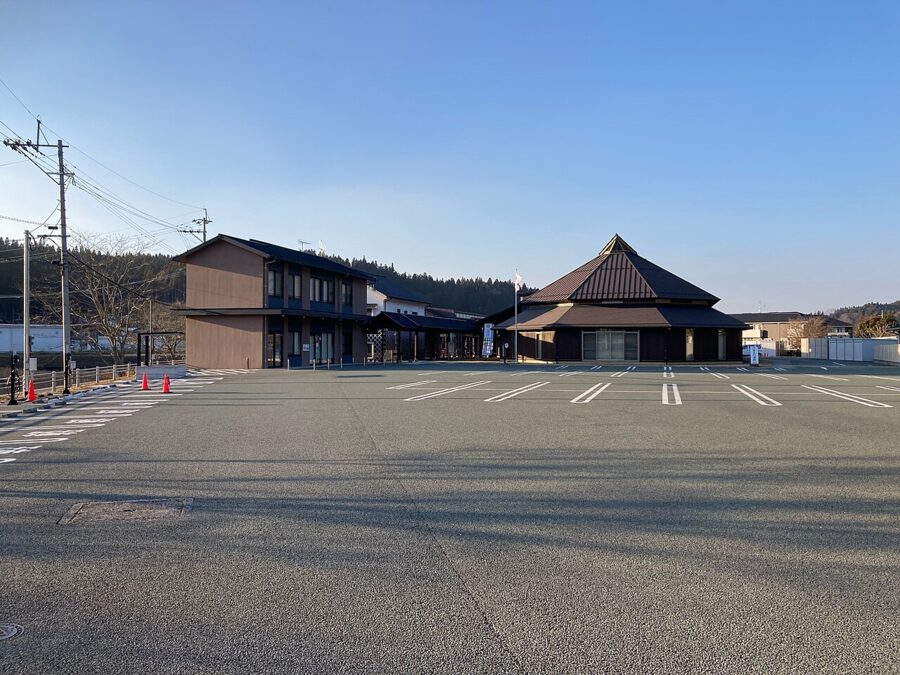
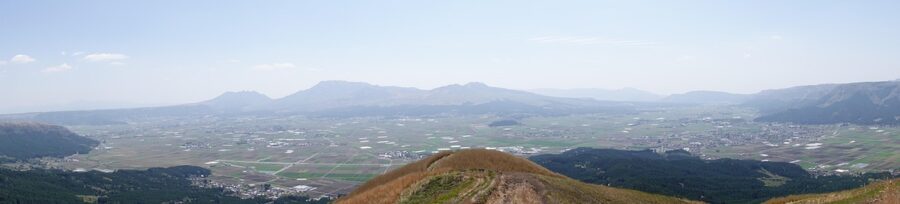
Oguni (小国町) and its neighbor Minamioguni share a high, forested basin just north of the rim of the Aso caldera, and together they are called Ogunigo. Oguni’s center is Miyahara, around Yu Station, one of the timber public buildings the town put up in the same program as the Oguni Dome. Kurokawa is in Minamioguni, 7 km (4 miles) west of the Senomoto junction on the Yamanami Highway.
Almost every trip comes in one of three ways. From the north, out of Fukuoka and Hita, Route 212 follows the river up through Tsuetate Onsen to Oguni town. From the south, out of Kumamoto and Aso, the roads climb the caldera wall by Daikanbo or along the Milk Road and drop down into Ogunigo. From the east, out of Beppu and Yufuin, the Yamanami Highway crosses the Kuju highlands to Senomoto, a short run from Kurokawa.
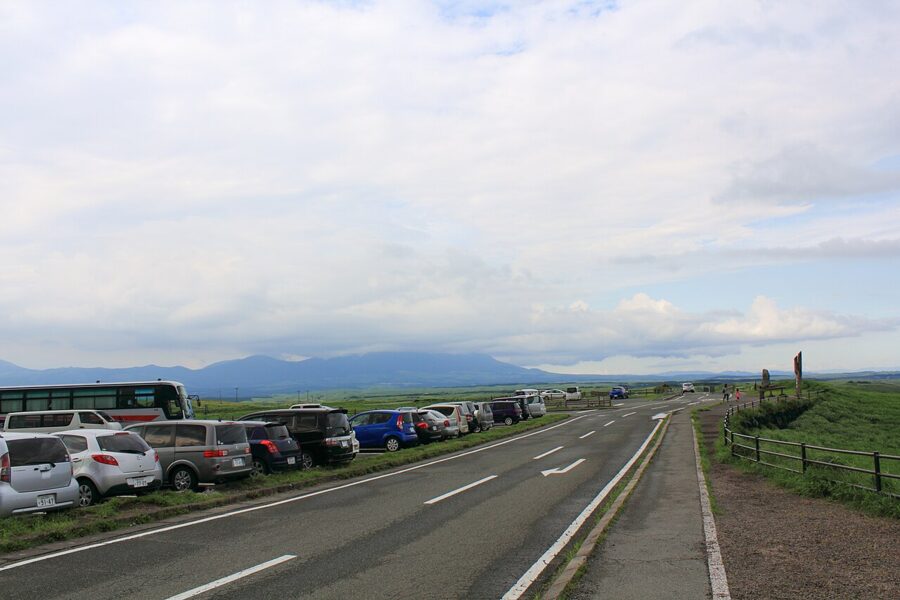

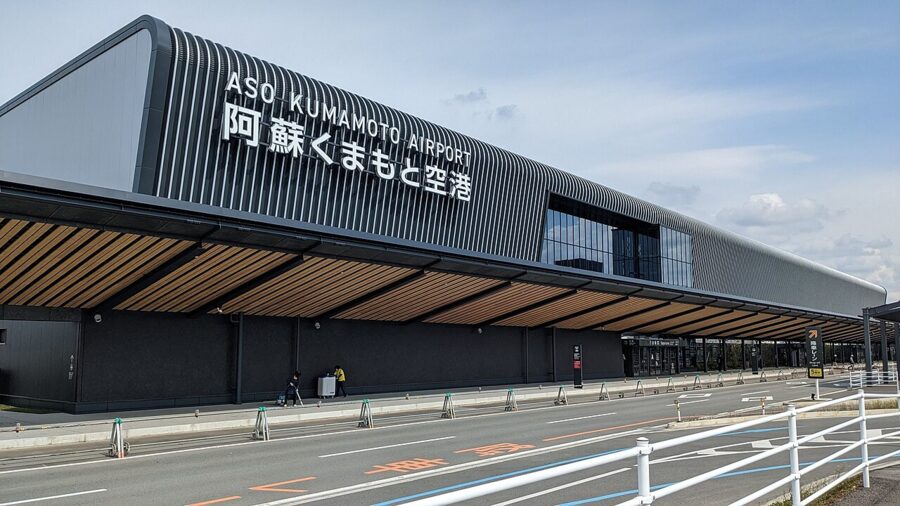
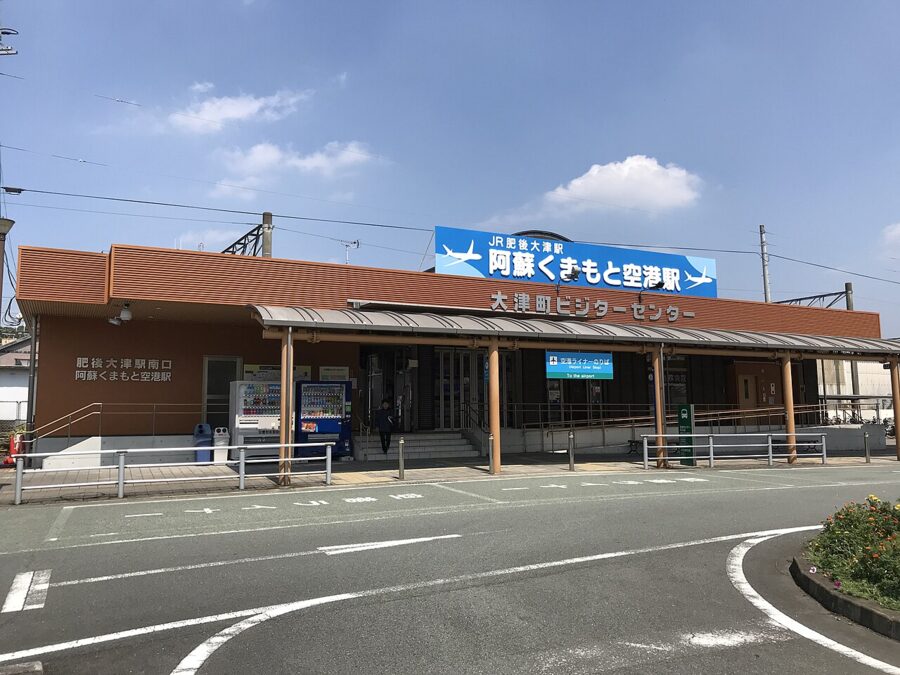
The two airports that matter are Fukuoka, for the direct bus, and Aso Kumamoto Airport, which sits on the Kyushu Odan Bus route. Coming from Tokyo, either works: Fukuoka for the most departures, Kumamoto if you want to be on the Kurokawa bus within the hour.
From Fukuoka: the direct Kurokawa bus
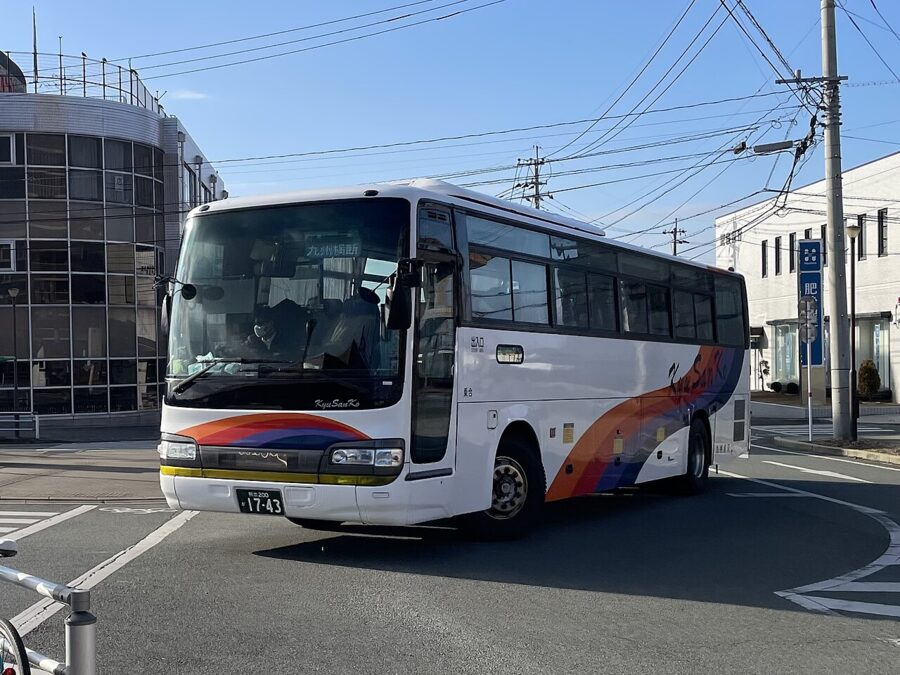
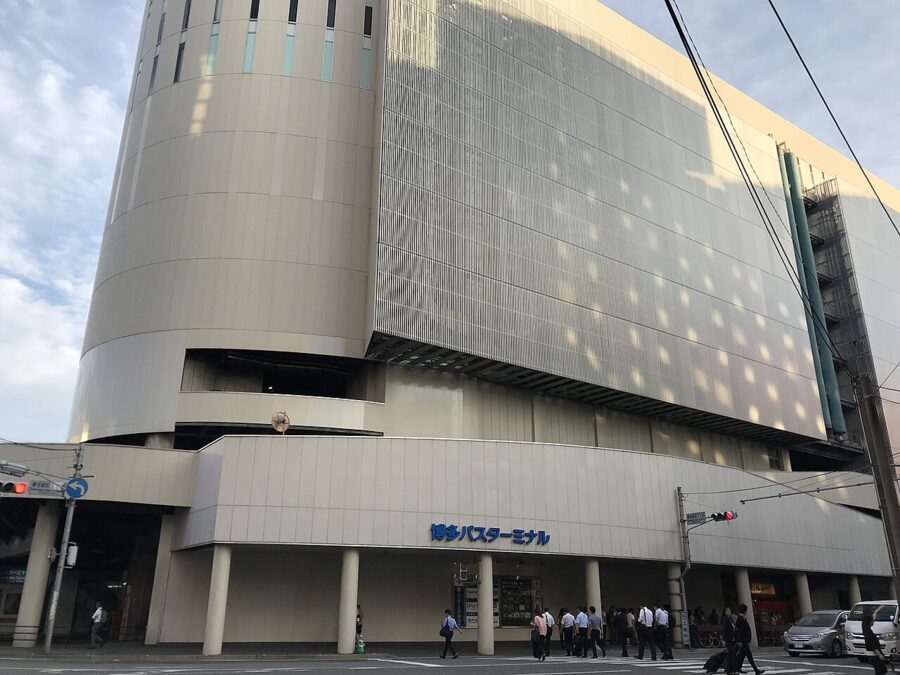
The highway bus between Fukuoka and Kurokawa Onsen is the easiest way in, and the only highway bus that stops in Oguni town itself. Kyushu Sanko Bus and Hita Bus run it together, three times a day each way, every day. Seats are reserved: booking opens one month before travel, and for the trip back from Kurokawa you must book by 7 p.m. the day before.
| Stop | Bus 1 | Bus 2 | Bus 3 |
|---|---|---|---|
| Nishitetsu Tenjin Expressway Bus Terminal | 9:30 | 11:15 | 12:40 |
| Hakata Bus Terminal | 9:53 | 11:38 | 13:03 |
| Fukuoka Airport (international terminal) | 10:13 | 11:58 | 13:23 |
| Hita Bus Terminal | 11:17 | 13:02 | 14:27 |
| Tsuetate (Tsuetate Onsen) | 11:57 | 13:42 | 15:07 |
| Yu Station (Oguni) | 12:12 | 13:57 | 15:22 |
| Kurokawa Onsen | 12:29 | 14:14 | 15:39 |
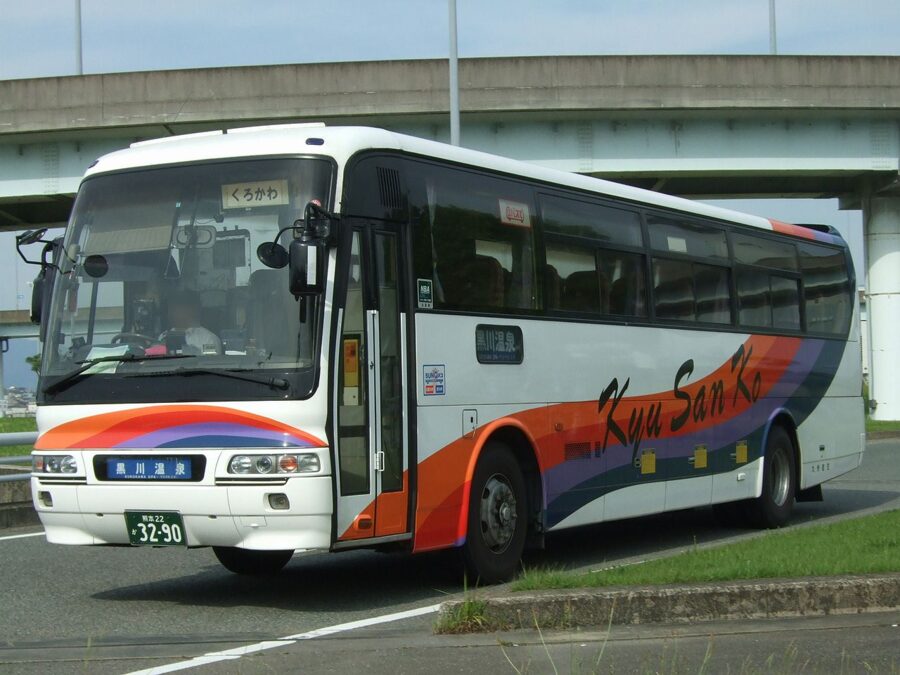

Coming back, buses leave Kurokawa Onsen at 10:00, 11:00 and 14:00, call at Yu Station 17 minutes later and Tsuetate 32 minutes later, and reach Hakata Bus Terminal at 12:34, 13:34 and 16:34.
Fares, set in October 2025, are ¥4,000 (about US$26) from Tenjin, Hakata or the airport to Kurokawa, ¥3,800 (about US$25) to Yu Station and ¥3,400 (about US$22) to Tsuetate. From Hita Bus Terminal it is ¥2,200 (about US$14) to Kurokawa and ¥1,400 (about US$9) to Tsuetate. The Fukuoka to Kurokawa fare table has the rest, and SUNQ Passes for all or northern Kyushu are valid.

The slower way, through Hita
If the direct bus is full, or you would rather not commit to a seat, go to Hita first. Hita Bus’s Hita-go highway buses leave Hakata Bus Terminal about every half hour through the day and take 1 hour 45 to 50 minutes; the fare is ¥1,980 (about US$13), nimoca cards are accepted, and there is no seat booking.
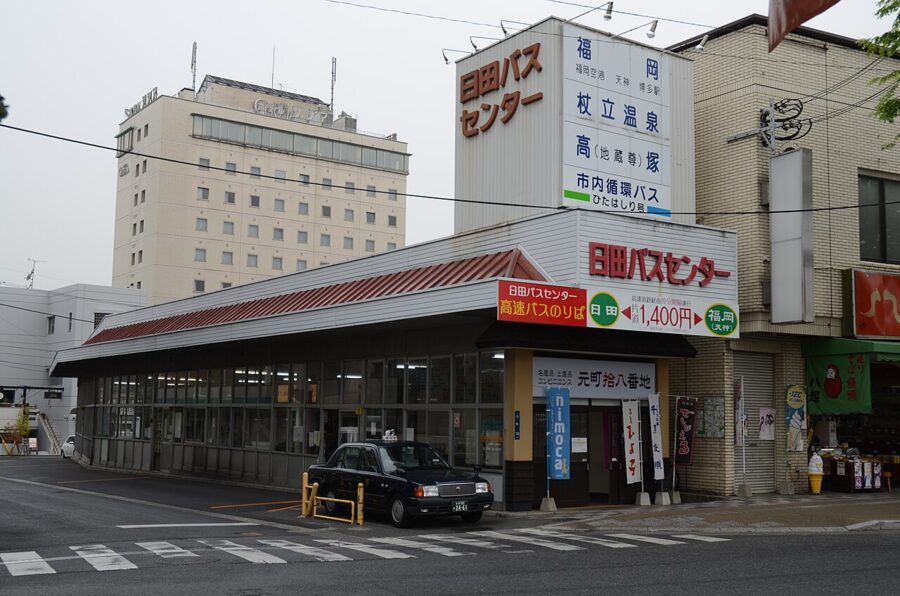
From Hita Bus Terminal the local Tsuetate line runs up the valley in about an hour. On the October 2026 timetable, buses for Tsuetate leave at 9:40, 11:10, 13:30 and 16:35 on weekdays, with an extra 14:55 on Saturdays; on Sundays and holidays only the 9:40, 13:30 and 16:35 run. The fare to Tsuetate is ¥1,050 (about US$7) in cash, since IC cards are not accepted on board, and a round-trip ticket valid for 10 days costs ¥1,780 (about US$11). Coming back, the first bus leaves Tsuetate at 7:50 and the last at 17:40.
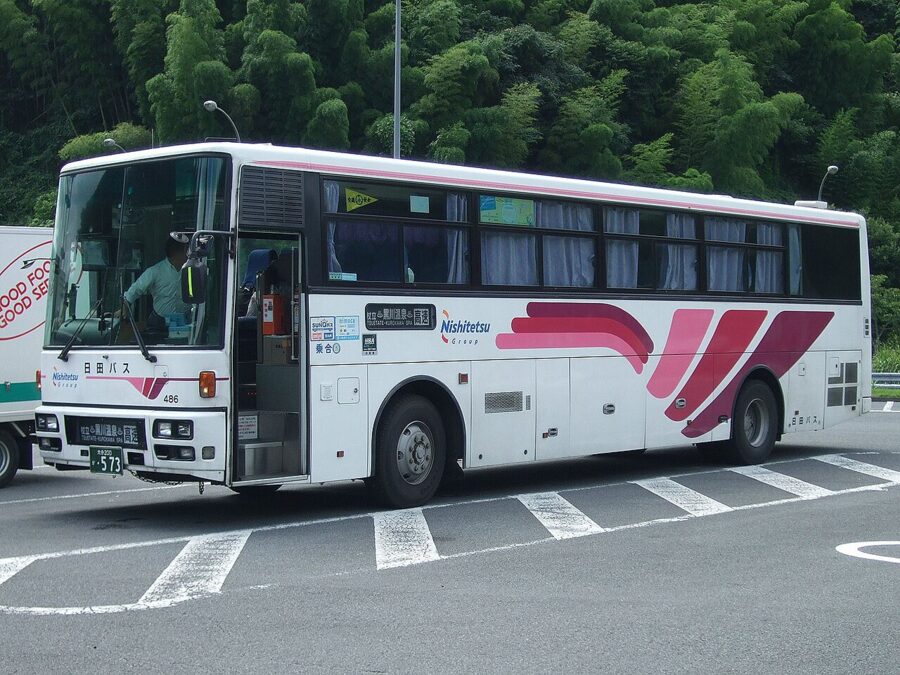

Oguni’s own access guide puts the last leg, Sanko’s local bus from Tsuetate to Yu Station, at about 20 minutes. I could not confirm its current times, so keep a taxi as the fallback. Either way you pass through Tsuetate Onsen, and a night there is not a bad outcome.

From Kumamoto, the airport and Aso: the Kyushu Odan Bus
The Kyushu Odan Bus (九州横断バス) crosses the island from Kumamoto to Yufuin and Beppu by way of the airport, Aso station, Minamioguni and Kurokawa. It does not go into Oguni town; for that, get off at Minamioguni Yakuba-mae or Kurokawa and take a taxi. Seats can be booked from two months ahead to the day before.
| Stop | No. 1 | No. 3 | No. 7 |
|---|---|---|---|
| Kumamoto Station-mae | 7:23 | 8:23 | 12:08 |
| Kumamoto Sakuramachi Bus Terminal | 7:35 | 8:35 | 12:20 |
| Aso Kumamoto Airport | 8:19 | 9:19 | 13:04 |
| Aso Station-mae (departs) | 9:24 | 10:24 | 14:09 |
| Minamioguni Yakuba-mae | 10:01 | 11:01 | 14:46 |
| Kurokawa Onsen | 10:15 | 11:15 | 15:00 |
| Yufuin Station-mae Bus Center | 11:48 | 12:48 | 16:33 |
| Beppu Ekimae Honmachi | ends at Yufuin | ends at Yufuin | 17:29 |
Westbound, buses leave Kurokawa Onsen at 10:45, 15:25 and 16:25 every day and reach Kumamoto Station-mae at 13:23, 18:03 and 19:03. Fares rose on August 1, 2026: Kumamoto city to Kurokawa is now ¥3,400, the airport to Kurokawa ¥2,600 (about US$17) and Aso station to Kurokawa ¥1,600 (about US$10). To Minamioguni Yakuba-mae it is ¥3,000 (about US$19) from Kumamoto and ¥1,300 (about US$8) from Aso station; the Kyushu Odan Bus fare table covers every stop.

One thing catches people out. Kumamoto’s buses stopped taking Suica, SUGOCA and the other national IC cards after November 15, 2024. On Sanko buses, the Kyushu Odan Bus included, you pay in cash or tap a contactless credit or debit card, the contactless fare system brought in across Kumamoto’s buses in February 2025.

The Oguni-go Liner from Higo-Ozu
Oguni also runs its own direct bus to Higo-Ozu station on the JR Hohi Line from Kumamoto. The Oguni-go Liner runs on Tuesdays, Fridays, Saturdays, Sundays and public holidays, but not at all in January and February.
It leaves Higo-Ozu’s south exit at 9:25 and 17:30, reaching Minamioguni town office at 10:33 and 18:38 and Yu Station at 10:40 and 18:45. Toward Ozu it leaves Yu Station at 8:00 and 16:00. The fare is ¥1,500 (about US$10) between Yu Station and Higo-Ozu, or ¥1,390 (about US$9) from Minamioguni town office. The 17:30 arrives later than any highway bus.


From Beppu and Yufuin
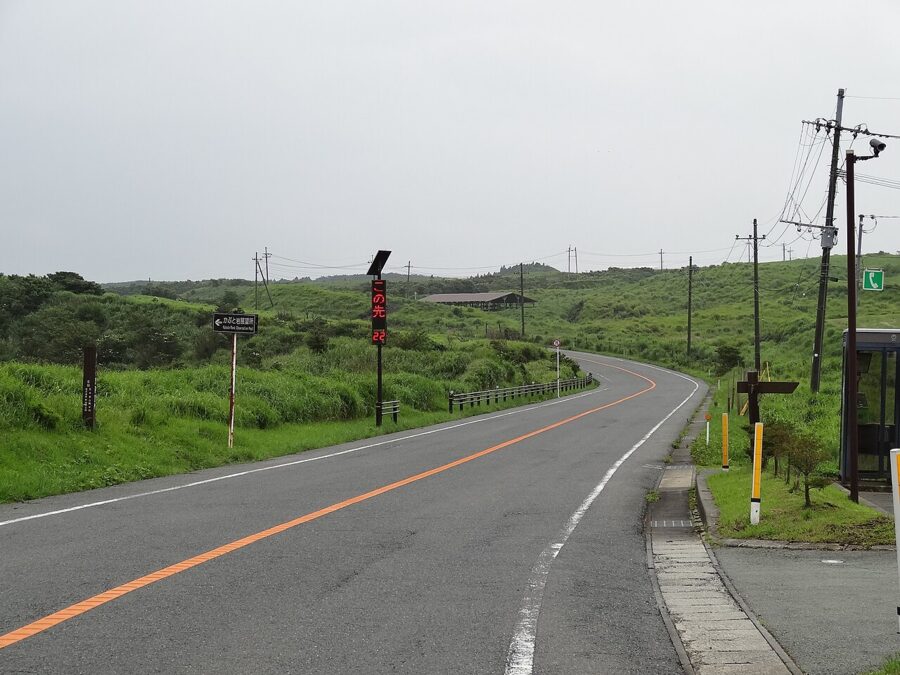
From the Oita side the same Kyushu Odan Bus runs the other way. Only one bus a day starts in Beppu, at 8:10 from Beppu Ekimae Honmachi, reaching Kurokawa at 10:45. From Yufuin Station-mae Bus Center there are three, at 9:10, 13:50 and 14:50, taking about an hour and 35 minutes. The fare is ¥2,700 (about US$17) from Yufuin and ¥4,000 from Beppu.
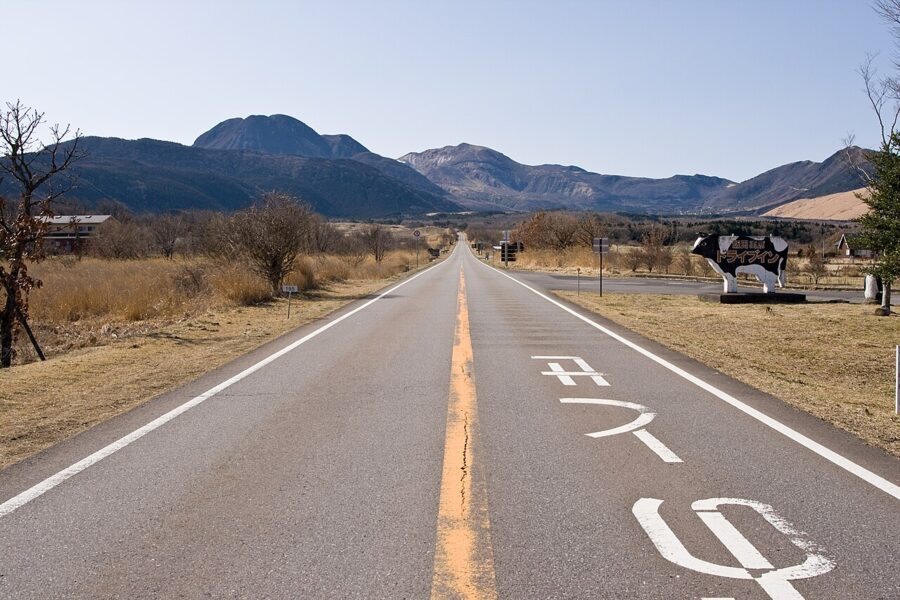
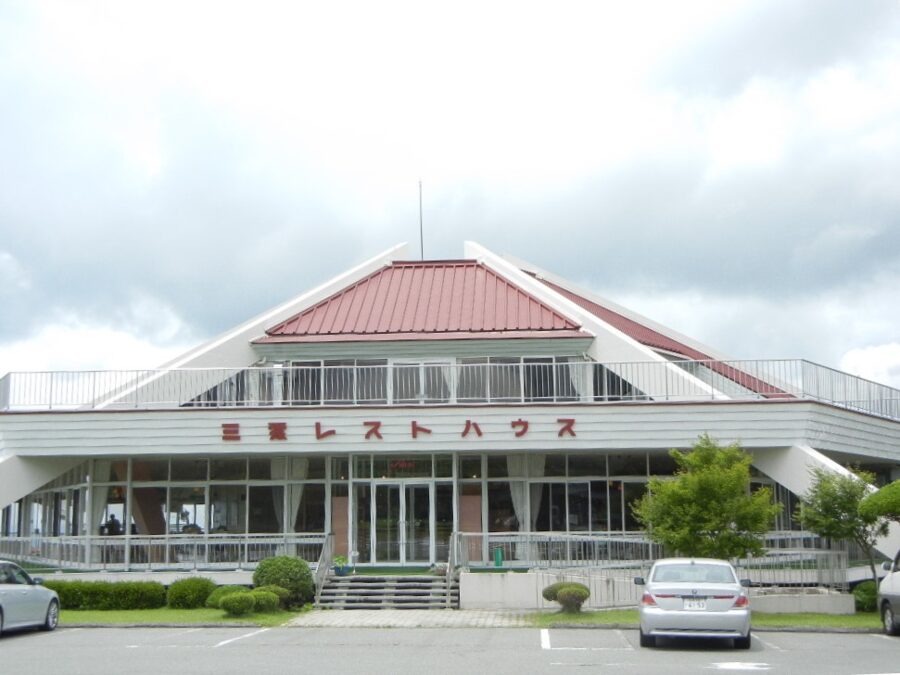
The road is the Yamanami Highway, a 102 km (63 mile) mountain route, much of it a toll road until 1994. It peaks at Makinoto Pass, 1,330 m (4,364 feet) up, and the bus takes a rest stop at the Senomoto rest house before the last 7 km down to Kurokawa.


By train, as far as the trains go
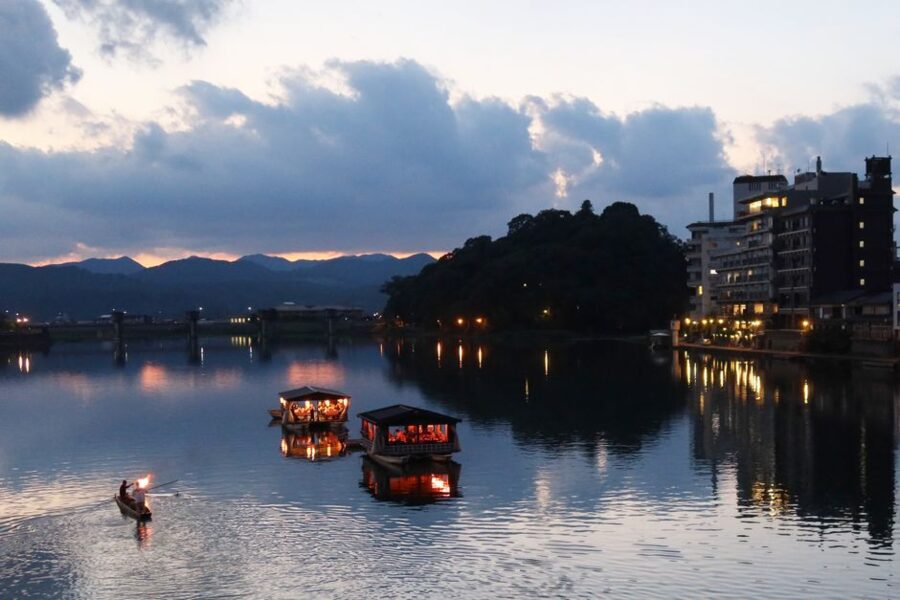
No railway reaches Oguni or Kurokawa, but the JR Hohi Line gets you to Aso in the south and the JR Kyudai Line to Hita in the north, each a bus ride away.
Aso station
Most local trains from Kumamoto terminate at Higo-Ozu, so you change there for the climb into the caldera. The simplest train is the Kyushu Odan Tokkyu (Trans-Kyushu Limited Express), which leaves Kumamoto three times a day, at 8:25, 11:51 and 15:23. The 8:25 reaches Aso at 9:54, half an hour before the 10:24 Kyushu Odan Bus leaves Aso Station-mae for Kurokawa.
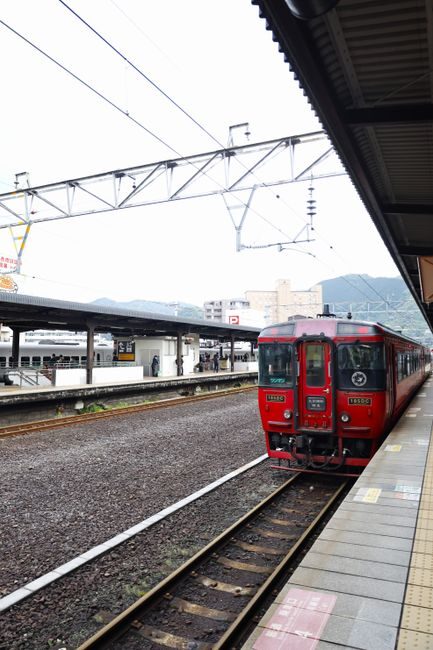
From Aso station, besides the Odan bus, Sanko runs a local line north over the rim through Oguni town to Tsuetate, about 50 minutes to Yu Station by the town’s reckoning. Departures are few, and I could not confirm current times, so check Sanko’s route search first. If you are going up the volcano too, Aso station is your base, and the Mount Aso guide covers the crater.
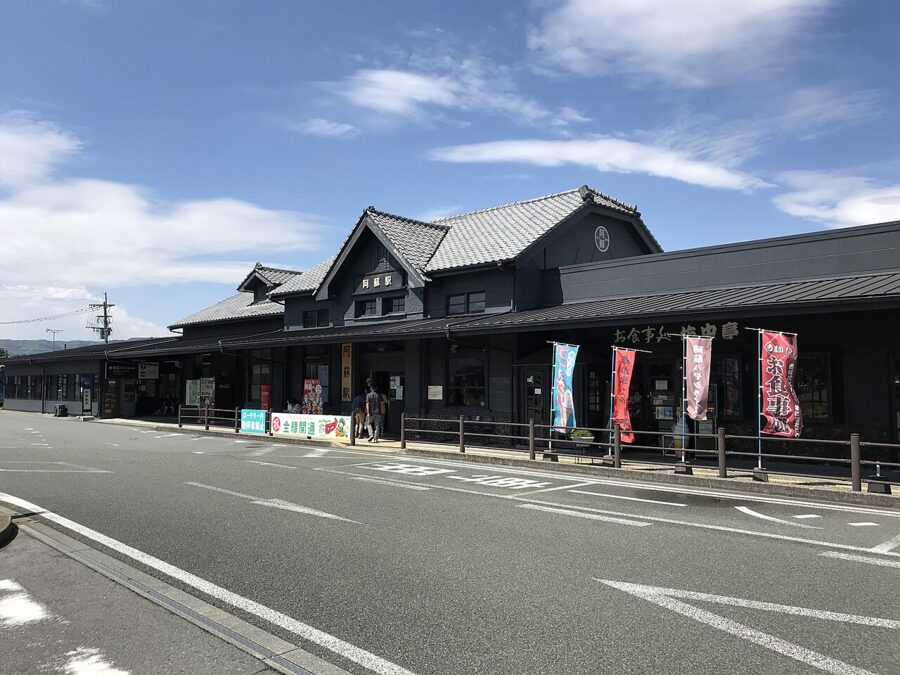

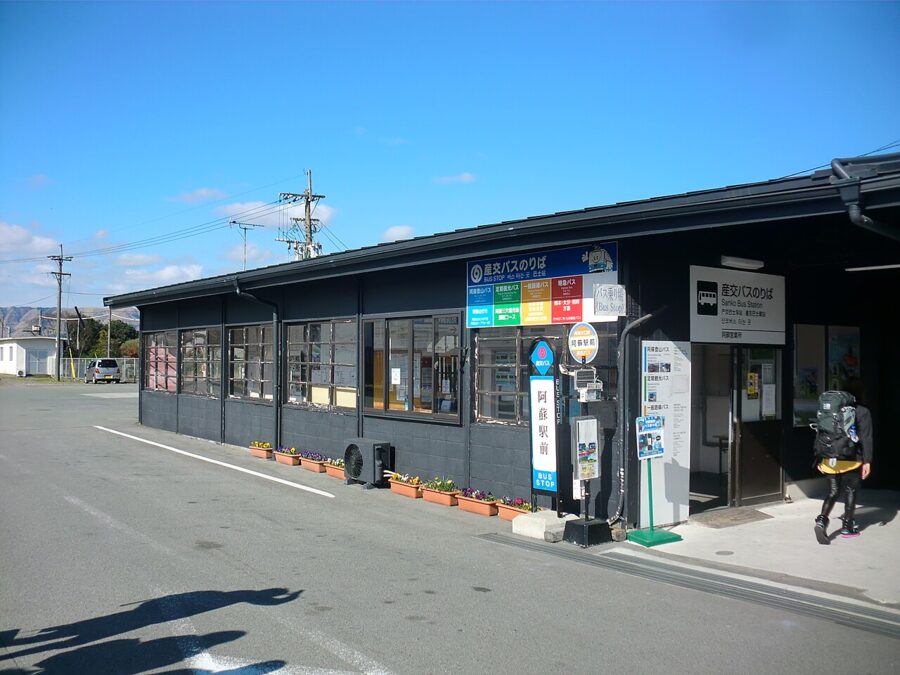

Hita station
The Kyudai Line runs through Hita between Kurume and Oita, and the Yufu limited express from Hakata stops there. From Hita you join the northern route: the Kurokawa bus calls at Hita Bus Terminal, and the local Tsuetate line starts there. Without a JR pass, the Hita-go bus from Fukuoka is simpler and cheaper.
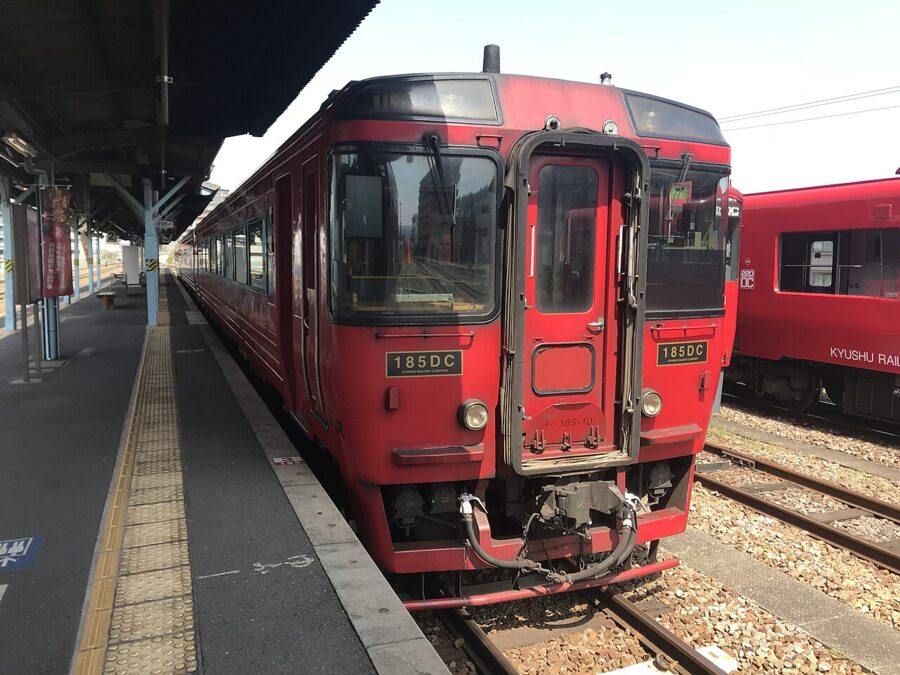


Driving
With a car, Ogunigo opens up. The falls, the farm-road onsen of Waita, the Shimonojō ginkgo and the high lookouts are an easy drive from each other and awkward or impossible by bus.
Renting a car
Rent where you arrive. Aso Kumamoto Airport, Kumamoto Station, Fukuoka Airport and Hakata Station all have the big companies’ counters, and Toyota Rent a Car has a branch beside Aso station. Ask for an ETC card with the car so you can use the expressway toll gates without stopping.
Holders of foreign passports can buy NEXCO West’s Kyushu Expressway Pass, unlimited expressway driving for ¥6,200 (about US$40) for two days or ¥8,400 (about US$54) for three, through Times, Nissan and several smaller rental firms; Toyota, Nippon, ORIX and Budget were not selling it in November 2026. Sales end on March 31, 2027, and since Route 212 and the Milk Road are free, it saves little here.
The routes, with distances
The distances below come from the Kurokawa inns’ association and the times from the two town halls:
| From | Route | Distance and time |
|---|---|---|
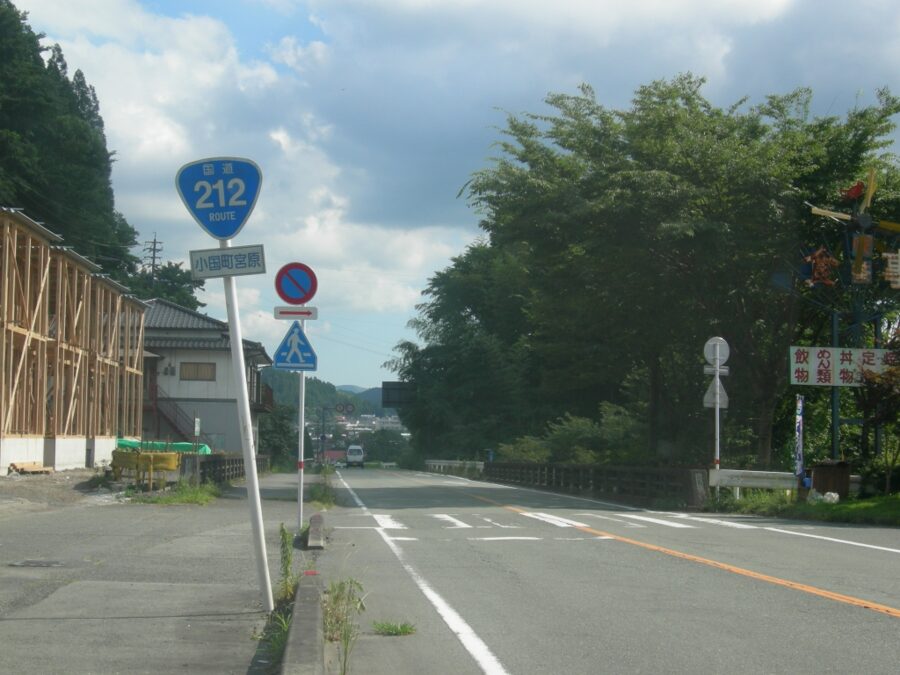
| Fukuoka | Kyushu and Oita expressways to Hita IC, then Route 212 south via Tsuetate | 113 km (70 miles) from Dazaifu IC to Kurokawa; about 2 hours to Oguni |
| Fukuoka Airport | Same route | About 1 hour 45 minutes to Minamioguni |
| Kumamoto city | Route 57 to Ozu, the Milk Road (Prefectural Road 339), then Route 212 | 72 km (45 miles) to Kurokawa by way of Daikanbo; about 1 hour 20 minutes from Kumamoto IC to Minamioguni |
| Aso Kumamoto Airport | The Milk Road | About 1 hour to Minamioguni |
| Aso city | Route 212 north over Daikanbo | 33 km (21 miles) to Kurokawa |
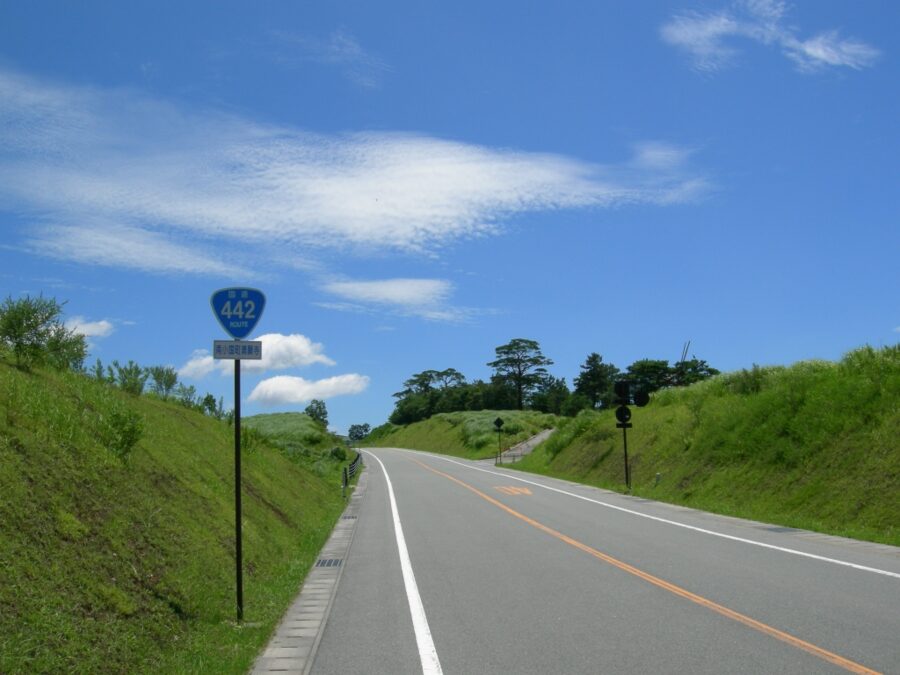
| Beppu | The Yamanami Highway to Senomoto, then Route 442 | 64 km (40 miles) to Kurokawa |
| Yufuin or Oita | Oita Expressway to Kokonoe IC, then Route 387 | About 30 minutes from Kokonoe IC to Oguni; about 1 hour 30 minutes from Oita Airport to Minamioguni |
| Taketa | North by way of Kuju | 35 km (22 miles) to Kurokawa |
From Kumamoto I would go up by the Milk Road and come back down through Daikanbo and Aso, which turns the drive into a loop. From Fukuoka, Route 212 from Hita is the quick way, and it passes right through Tsuetate.
Winter, fog and cattle
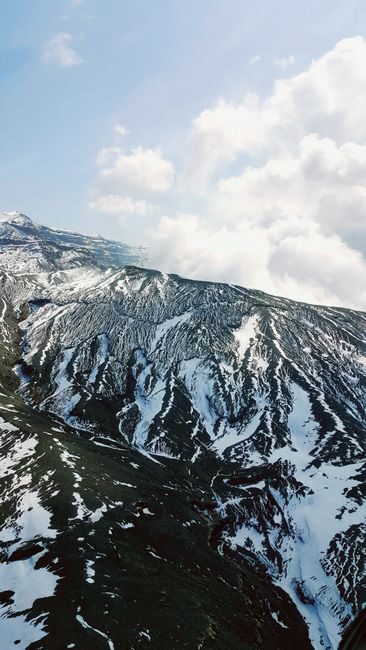
Ogunigo sits high for Kyushu. The Yamanami Highway between Iida Kogen and Senomoto runs mostly above 900 m (2,950 feet), and the Kurokawa association’s own route map marks several climbs, among them the Route 212 hairpins up to Daikanbo, as needing care on days of rain and snow.
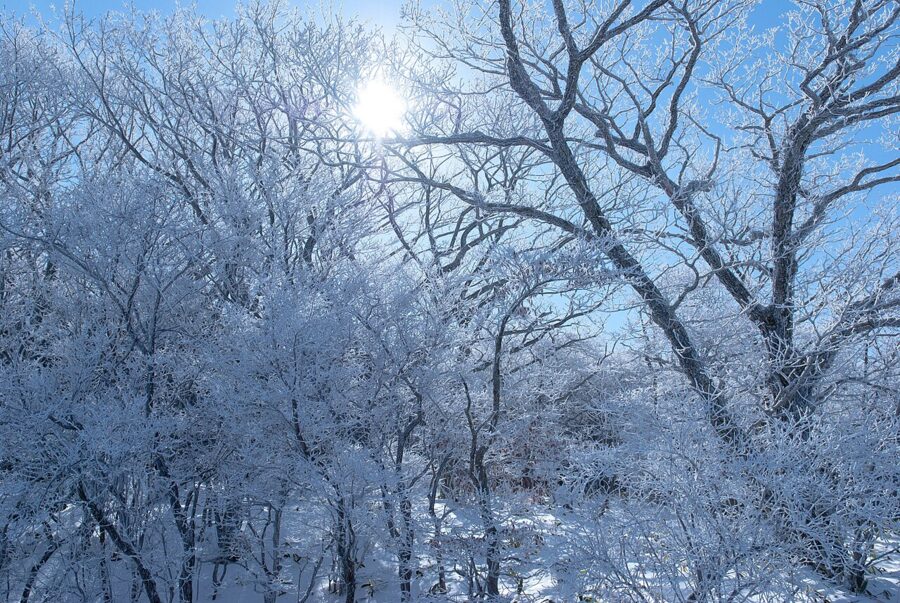

Rental cars in Kyushu do not come with winter tires by default. Nippon Rent-A-Car, for one, fits studless tires as standard only in snow regions further north, and names Aso and Kuju among the areas where you should book them as a paid extra; stock is limited. Book them for any trip between December and March, and check the Kurokawa weather and road page, with its road links and live camera, before you set off.
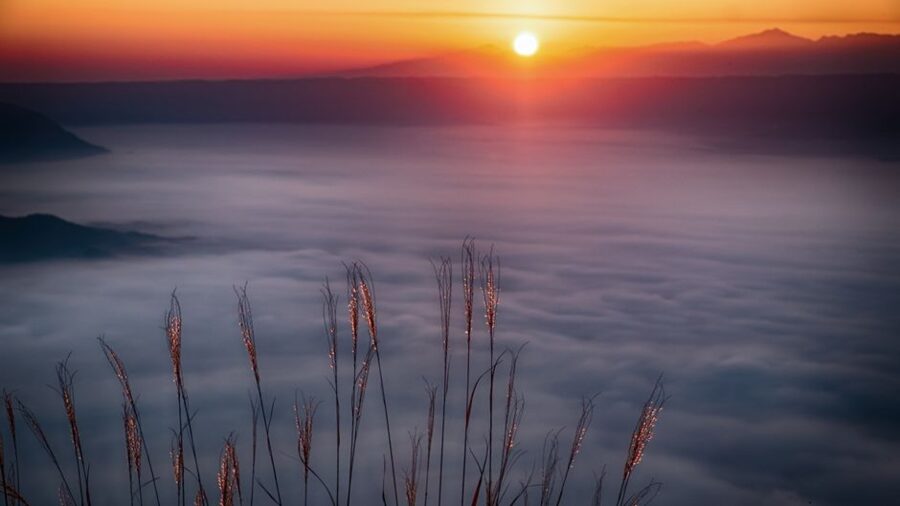
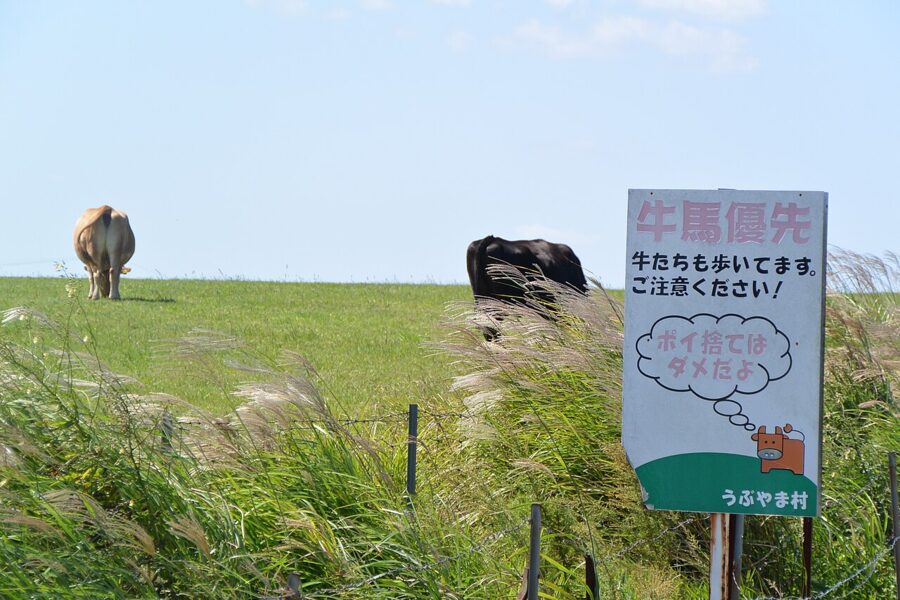
Morning fog is the other hazard on the rim roads. Drive with your lights on and save the stopping for the lookouts. In the grasslands, cattle and horses graze on open range, and the signs mean it.

Once you are there
Within Ogunigo the buses thin out to almost nothing. On weekdays the two towns run the Niji Bus, a community loop between the centers of Oguni and Minamioguni. Its five round trips a day are meant for shopping and clinic visits rather than sightseeing, and the flat fare is ¥200 (about US$1), or ¥300 (about US$2) if you cross from one town to the other. It does not run on weekends or public holidays.
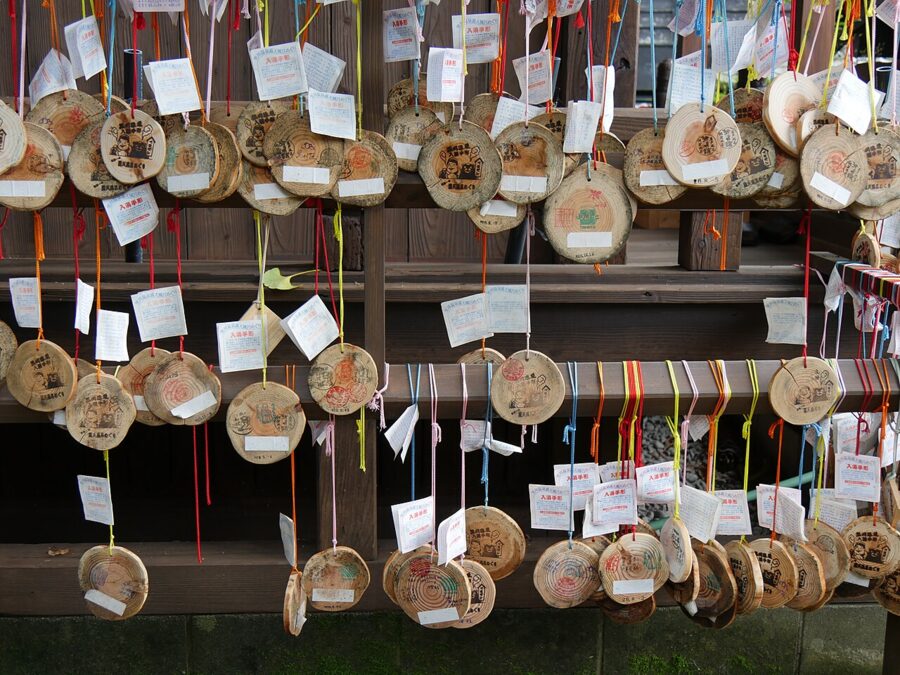
Kurokawa itself is a village for walking. The inns, the shops and the open-air baths you can visit with the bath pass are strung along one small gorge, and the bus stop is at its edge. The neighboring onsen are close too: Tanohara is about 2 km away and Oda about 1.5 km. Everything else, from Yu Station to the waterfalls, is a taxi or a car.
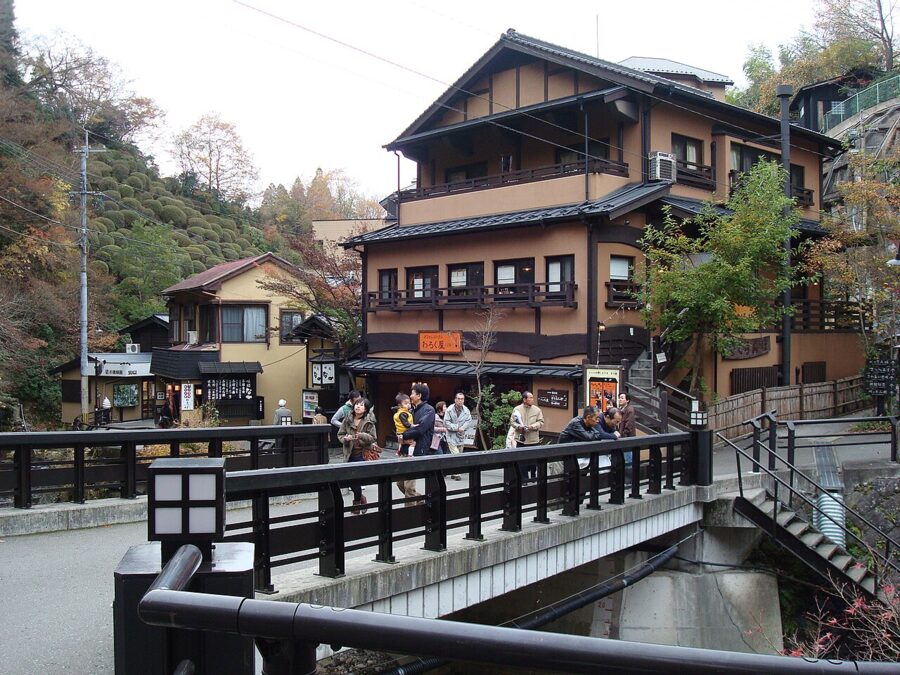


For taxis, the Kurokawa association’s advice holds for the whole area: take a taxi or your inn’s pickup from the bus stop, and ask about pickup when you book. Taxis come from a few small local firms, so do not count on one waiting; have the inn call one. A taxi is also the practical way from the town center to Nabegataki or Waita.
The best route from each starting point
| Starting from | For Oguni town | For Kurokawa Onsen |
|---|---|---|
| Fukuoka (Hakata, Tenjin, airport) | Direct Kurokawa bus to Yu Station, about 2 hours 20 minutes, ¥3,800 | Same bus to the end, about 2 hours 36 minutes from Hakata, ¥4,000 |
| Fukuoka, no reservation | Hita-go bus to Hita, Hita Bus to Tsuetate, then Sanko or a taxi | As for Oguni, then a taxi |
| Kumamoto city | Odan bus to Minamioguni Yakuba-mae and a taxi; or JR to Higo-Ozu and the Oguni-go Liner (Tue, Fri, weekends, holidays) | Kyushu Odan Bus, 2 hours 52 minutes, ¥3,400 |
| Aso Kumamoto Airport | Odan bus and a taxi; or rent a car, about 1 hour | Kyushu Odan Bus, about 2 hours, ¥2,600 |
| Aso station | Sanko local bus, about 50 minutes (check times) | Kyushu Odan Bus, 51 minutes, ¥1,600 |
| Yufuin | Odan bus to Kurokawa and a taxi | Kyushu Odan Bus, about 1 hour 35 minutes, ¥2,700 |
| Beppu | Odan bus (one a day) and a taxi, or drive | Kyushu Odan Bus at 8:10, 2 hours 35 minutes, ¥4,000 |
| Hita | Hita Bus to Tsuetate (about 1 hour, ¥1,050), then on to Yu Station | Direct Kurokawa bus from Hita Bus Terminal, about 1 hour 12 minutes, ¥2,200 |
So book the Fukuoka bus or the Odan bus as soon as your dates are fixed, and take the earliest departure that fits. The old railway terminus at Yu Station is still where most journeys into Oguni end, and from there it is a short taxi ride to wherever you are sleeping.