
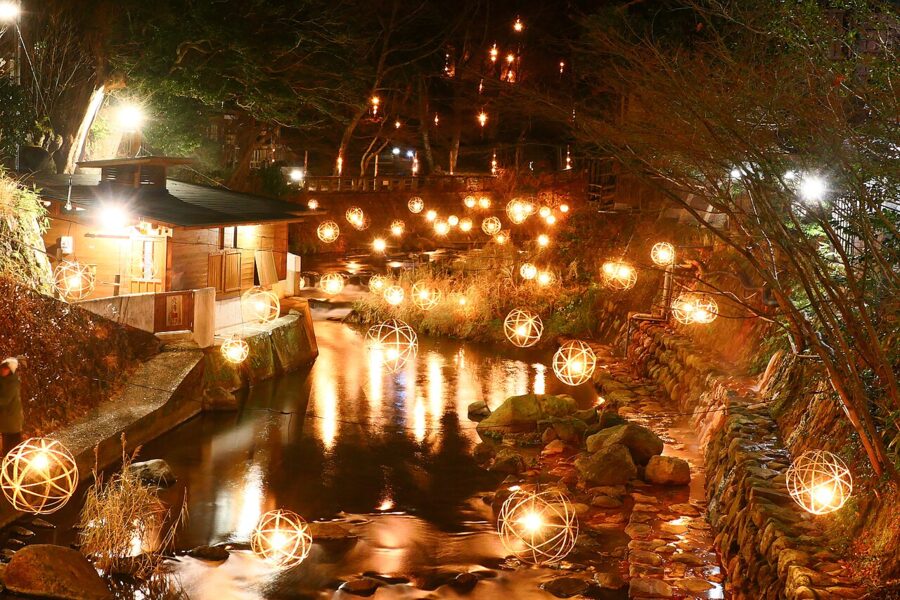
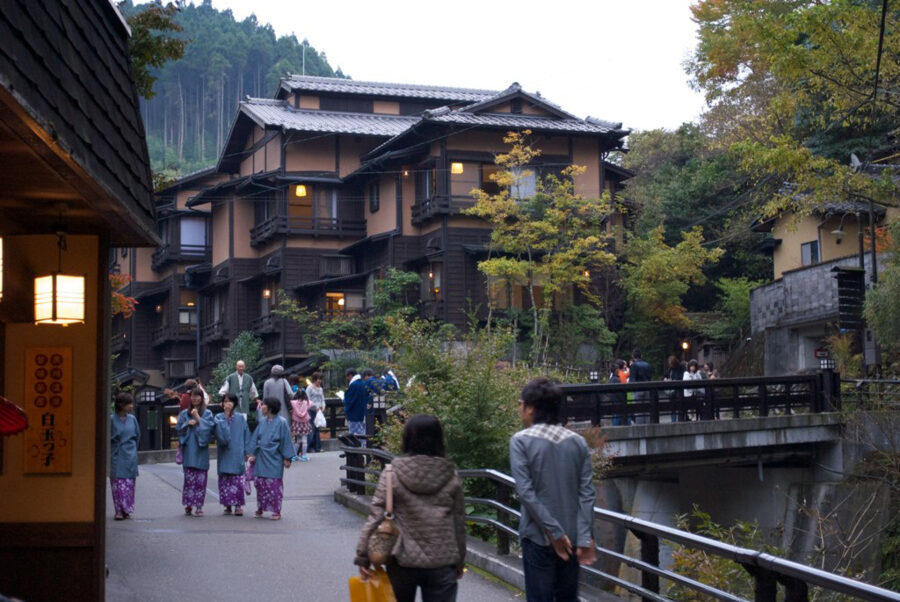
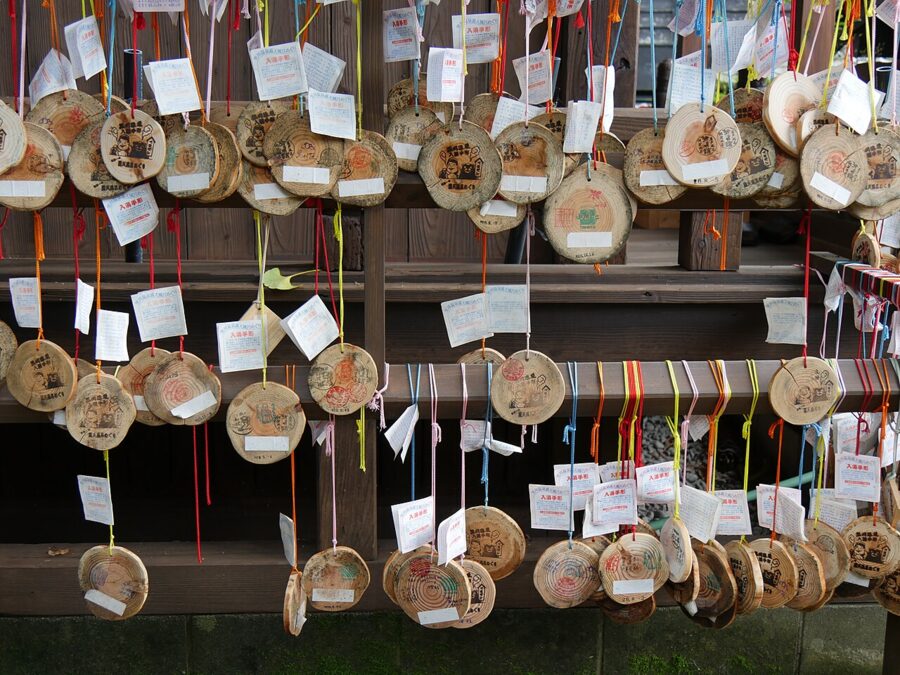
In Kurokawa the bath ticket is a slice of tree. You buy a round of cedar about the size of your palm, hang it round your neck, and walk the lanes in a cotton robe from one inn’s outdoor pool to the next, collecting a stamp at each front desk. By late afternoon the river steams, the wood of the inns goes dark, and the only sounds are water and sandals.
Kurokawa Onsen (黒川温泉) is about 30 inns in a narrow wooded valley in Minamioguni, the town just south of Oguni, at the northern edge of the Aso caldera in Kumamoto Prefecture. Fifty years ago it was a struggling stop on a new highway. Today it is one of the most admired hot-spring villages in Japan, thanks to a hand-dug cave, two hundred signs taken down and that wooden pass.

Before anything else, know that the buses are few and must be booked. Everything else here can be sorted on the day.

Contents9 parts
- Where Kurokawa is, and how it fits with Oguni
- How a stalled valley of inns rebuilt itself
- The nyūtō tegata: price, rules and how to use it
- Inns that take day bathers, and their hours
- Staying the night
- The lanes, food and souvenirs
- Seasons, light-ups and crowds
- Getting there by bus and car
- One night at Kurokawa, hour by hour
Where Kurokawa is, and how it fits with Oguni
Kurokawa sits in the Manganji district of Minamioguni (南小国町), on the Tanohara River, a headwater of the Chikugo, close to the Oita border. It is at about 700 meters (2,300 feet), which the village association says keeps it three to five degrees cooler than the plains.
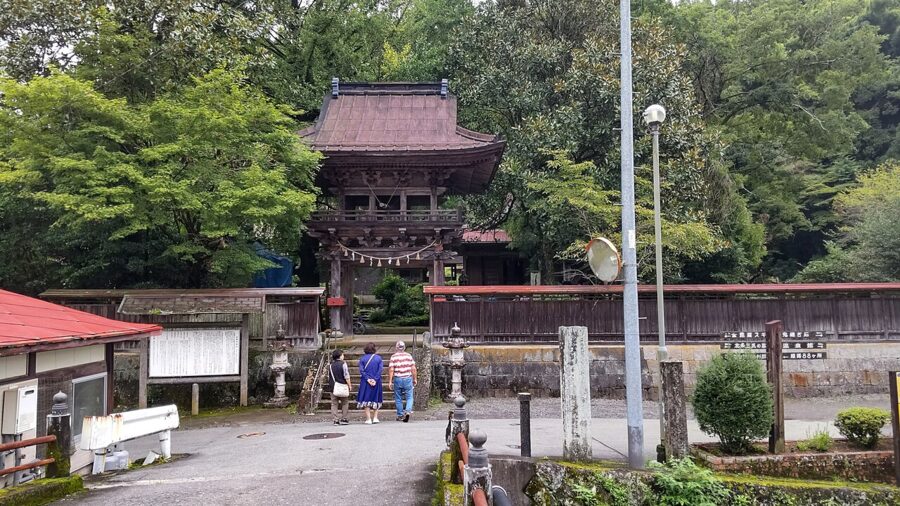

Minamioguni and Oguni share one old name, Oguni-gō (小国郷), and one stretch of cedar country. Oguni has the bus hub at Yu Station, the timber Oguni Dome, the river village of Tsuetate Onsen and the steaming hamlets of Waita. Minamioguni has Kurokawa and most of the visitors. The Fukuoka bus calls at Yu Station 17 minutes before Kurokawa, so the two pair easily.
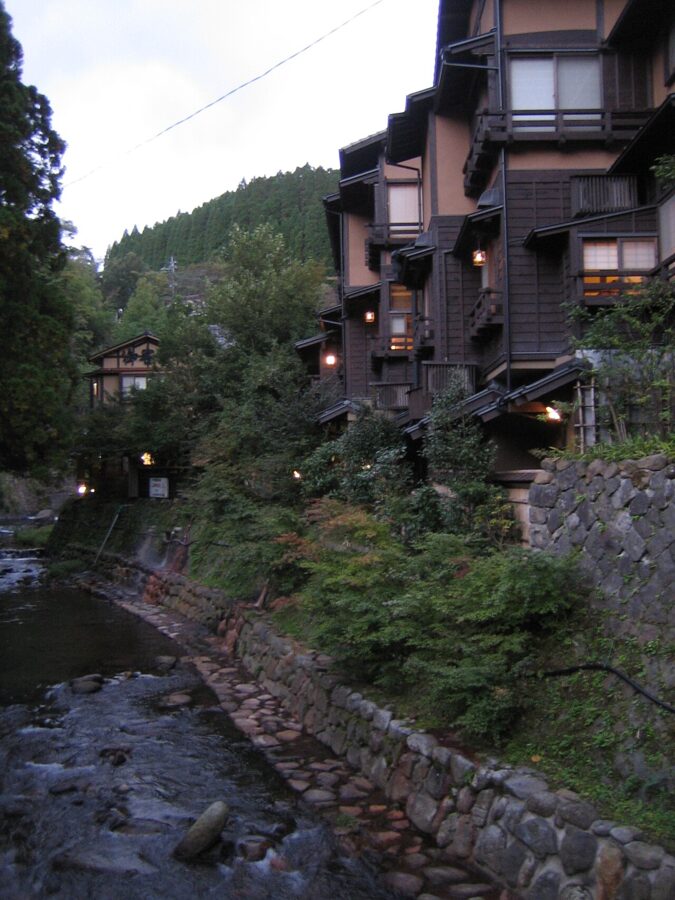

How a stalled valley of inns rebuilt itself
The village legend has a stone Jizō losing its head in place of a poor salt seller’s, then asking to be set down here, where a spring rose. The written record is plainer: an Edo-period curing spot near the Hosokawa domain’s border, with an official inn, the Okyakuya, for passing officers, then a handful of farm-and-inn households after the war.
The association’s history of Kurokawa dates the modern village to 1961, when six inns formed the Kurokawa Onsen Ryokan Association. The Yamanami Highway opened in 1964 and brought a brief rush, then little. Through the 1970s, while Aso, Tsuetate and Beppu filled big hotels, Kurokawa drifted.
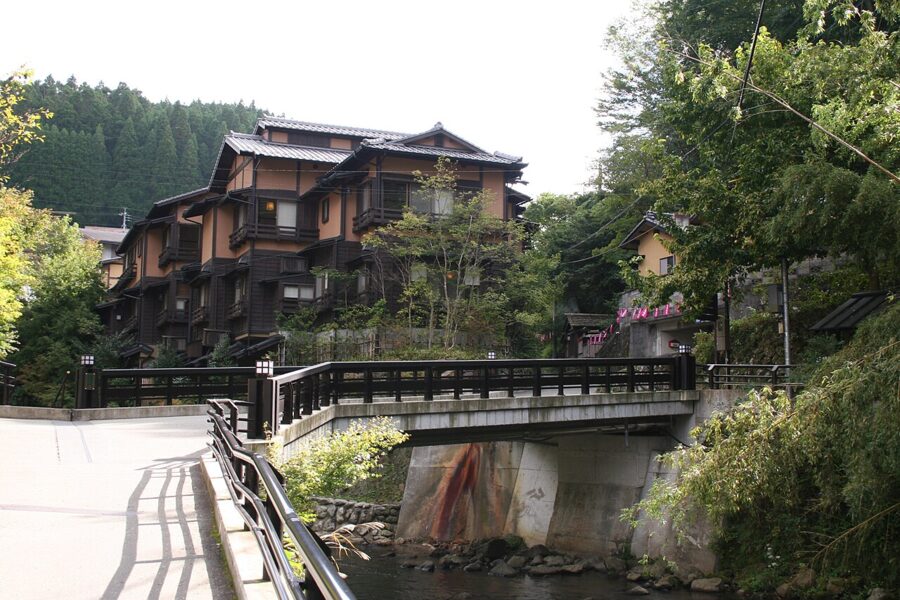

The cave bath at Shinmeikan
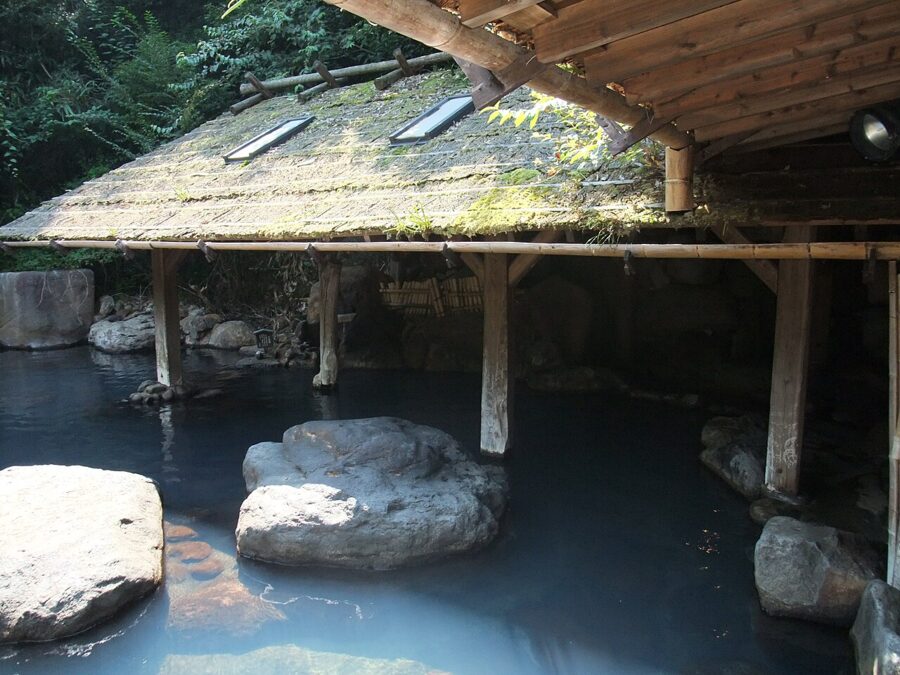
One inn kept filling. At Shinmeikan, Gotō Tetsuya (後藤哲也), the third-generation owner, had started at 24 to dig a cave into the rock behind the inn with a hammer and chisel, reasoning that nobody comes to an onsen with dull baths. Shinmeikan’s history page says it took three and a half years; the inn’s booking text says ten. He piped spring water into it, then hauled scrub trees down from the hill to make an outdoor bath that looked as if it had always been there.
Women came for it, and the other innkeepers, who had thought him odd, came to ask how. His inn sums up the rule as “nature as it is”: the spring comes out of the ground naturally, so the bath should look natural too. Shinmeikan calls him the father of Kurokawa, and so does the village.
One inn, thirty rooms
In 1986 the association split into three working groups. One took down all of the roughly 200 mismatched roadside signs and put up shared ones. Another pruned and planted, turning bare cedar slopes into the mixed woodland you walk through now.
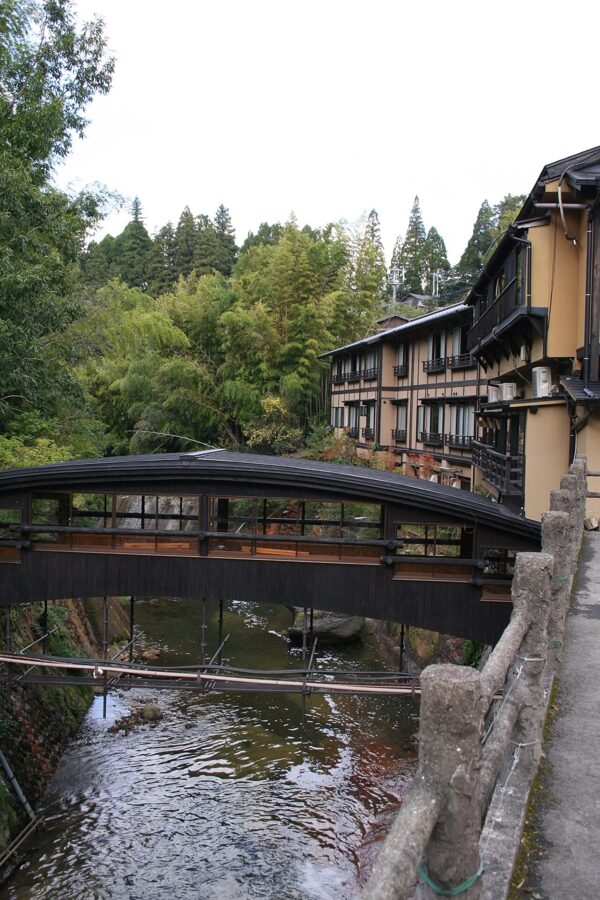

The third group had two inns with no room for an outdoor bath. Its answer was the nyūtō tegata (入湯手形, bathing pass), letting anyone use every member inn’s outdoor bath. The slogan that grew from it, “Kurokawa Onsen ichi ryokan,” calls the village one inn: the inns are its rooms, the lanes its corridors, the woods its garden.
The association counts 170,000 overnight guests in 1989, about 300,000 by the end of the 1990s and a 2003 peak of 400,000, with an estimated 1.2 million visitors. The 2016 Kumamoto earthquakes shut a few inns and cut the Kumamoto road, but by 2018, the association says, guest numbers were nearly back.

The nyūtō tegata: price, rules and how to use it
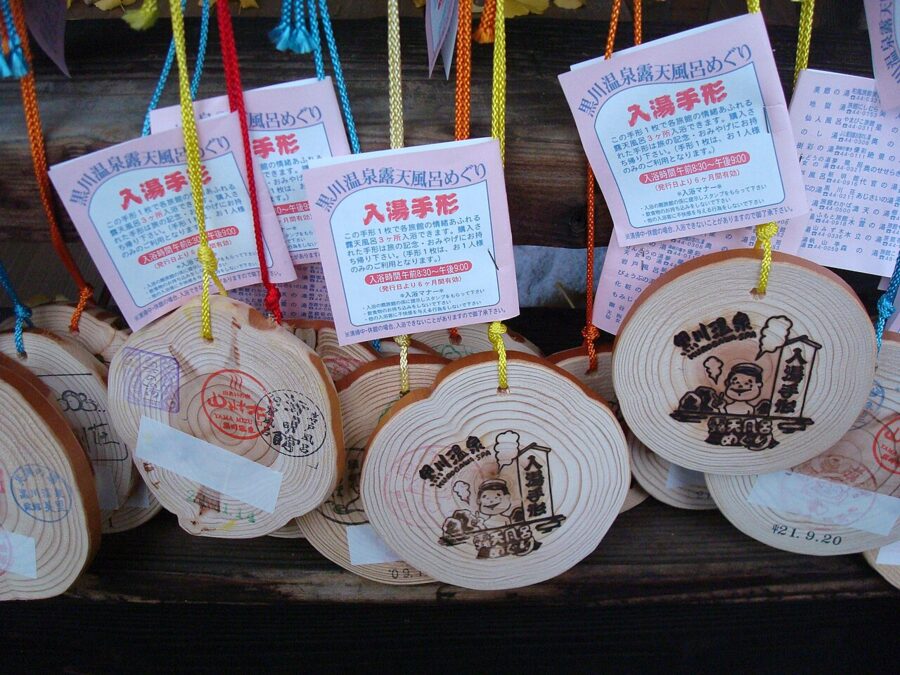
As of November 2026, the nyūtō tegata costs ¥1,500 (about US$10). It covers three outdoor baths chosen from 25 at member inns and stays valid for six months, so one bath now and two on a later trip works. One pass per person, no sharing.
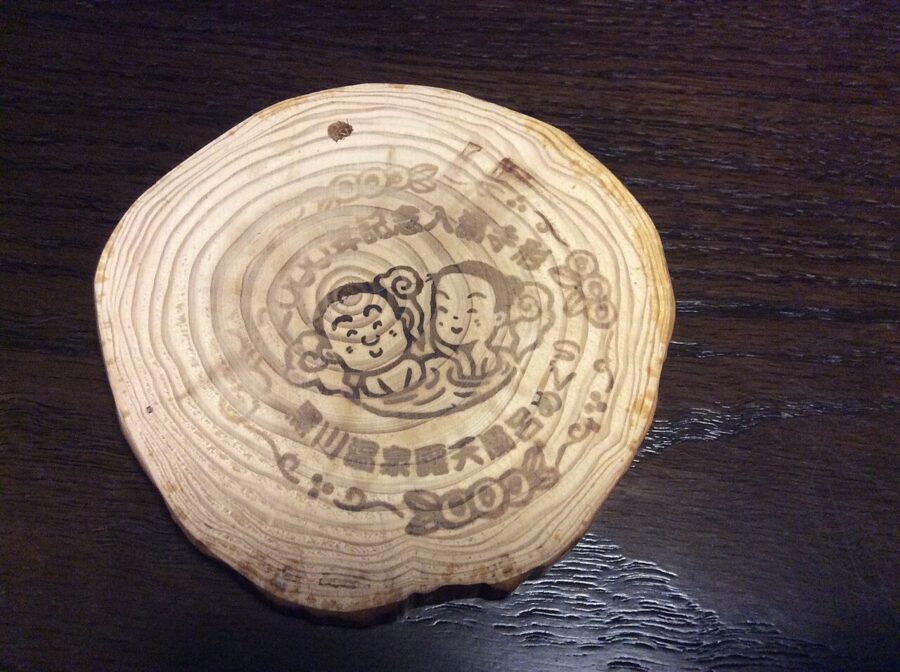

Buy it at Kazenoya (風の舎), the association’s information center by the Fureai Hiroba car park, open 9 a.m. to 5 p.m., or at any member inn, though inns sometimes run out. The pass covers 8:30 a.m. to 9 p.m., and each inn sets its own day-visitor hours inside that, and some stop at 3 p.m.
- Adult: ¥1,500, three baths, or two baths plus one food or souvenir item.
- Child: ¥700 (about US$5), ages 3 to the end of elementary school; three baths, or two and a juice. Three stamps earn a small prize at the association office.
- Valid: six months from purchase.
At each inn’s desk you hand over one of the three stickers on the back and the desk stamps its seal on the front. On the adult pass two stickers are red, for baths, and one is green, which you can spend at a listed shop instead.
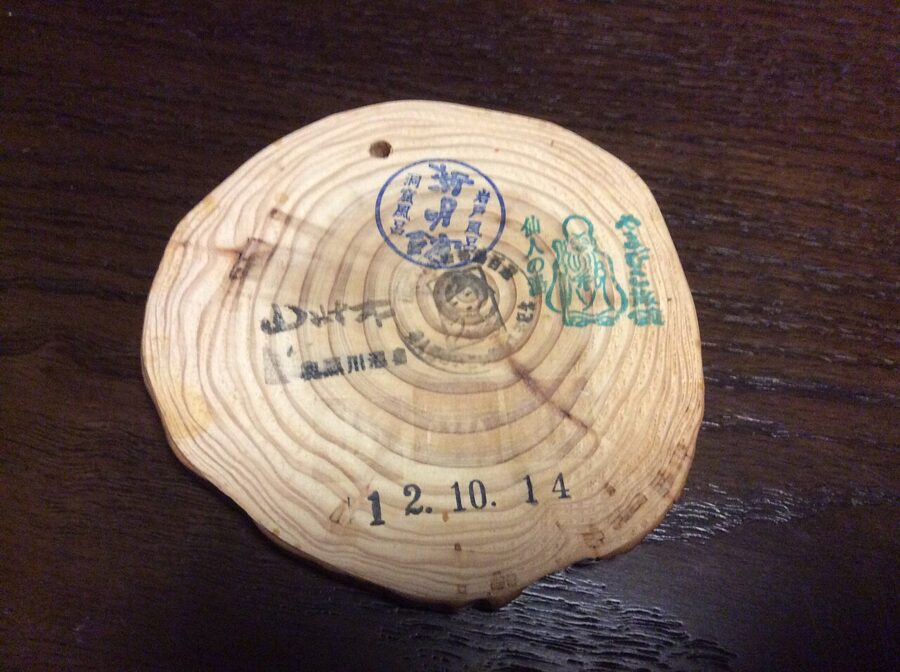

In November 2026 the green sticker bought, among other things, honey soft-serve at Sugi Yōhōen, Jersey-milk soft-serve at Yama no Ibuki, a small draft beer from Warokuya, a cup from the pottery shop Igozaka Tōan, a Shinmeikan towel, or KumaMon cider and a hot-spring egg at Ikoi Ryokan.
Paying at the door costs ¥500 to ¥800 (about US$3 to US$5) per inn. So for one soak, pay at the door; for three, buy the pass and pick the dearer baths.

The pass turned 40 in 2026. For the anniversary, 50,000 special passes went on sale on 1 July 2026, until about March 2027 or until gone. The association says the discs are cut from Oguni-gō cedar and cypress thinnings with help from a local seniors’ club, and that 1% of sales goes to the village’s woods and springs.

Etiquette, photos, tattoos and towels
You bathe naked, wash at the taps first and keep the small towel out of the water. The association’s FAQ adds: no photos in baths or changing rooms, no food or drink brought in, and about an hour per inn.
No inn lends towels; buy one at Kazenoya, a shop or an inn for ¥300 to ¥500 (about US$2 to US$3). Some outdoor baths have no showers, and some inns ban shampoo for environmental reasons. The water runs around 40 to 43°C, hot for small children.
Tattoos are decided inn by inn: send the association’s inquiry form saying you have one and it will tell you where you can bathe, or book a private family bath. Rain and snow do not close the baths, though an inn may stop day visitors if the water cools.
On mixed bathing, the sources disagree. The FAQ says that after a change to a Kumamoto prefectural ordinance the outdoor baths no longer allow it. Yet in November 2026 Shinmeikan listed mixed hours, bathing wear allowed, for its Iwato bath, and Okunoyu lent bathing wear for its mixed bath for ¥500. Assume single-sex baths and ask at the desk.
Inns that take day bathers, and their hours
Open the day-bathing status page on the morning you go; the association updates each inn’s hours, price and crowding around 9 a.m. The table is what it showed on 24 and 25 November 2026, a guide to each inn’s habits rather than a promise.
| Inn | Adult | Day-bathing hours (Nov 2026) |
|---|---|---|
| Shinmeikan | ¥500 | 10:30 to 15:00, last entry 14:30 |
| Ikoi Ryokan | ¥800 | 8:30 to 21:00 |
| Yamabiko Ryokan | ¥700 | 8:30 to 21:00, last entry 20:30 |
| Okyakuya | ¥700 | 10:30 to 19:00, numbers limited |
| Kurokawasō | ¥700 | 10:00 to 15:00, last entry 14:30 |
| Yamamizuki | ¥600 | 10:00 to 14:30, out by 15:00 |
| Kōnoyu | ¥700 | 8:30 to 21:00, last entry 20:30 |
| Wakaba | ¥700 | 8:30 to 10:00, 11:30 to 21:00 |
| Okunoyu | ¥700 | Entry 8:30 to 14:00; no parking |
| Ichinoi | ¥600 | 10:00 to 14:30 |
| Sanga | ¥600 | Varies; parking for bathers |
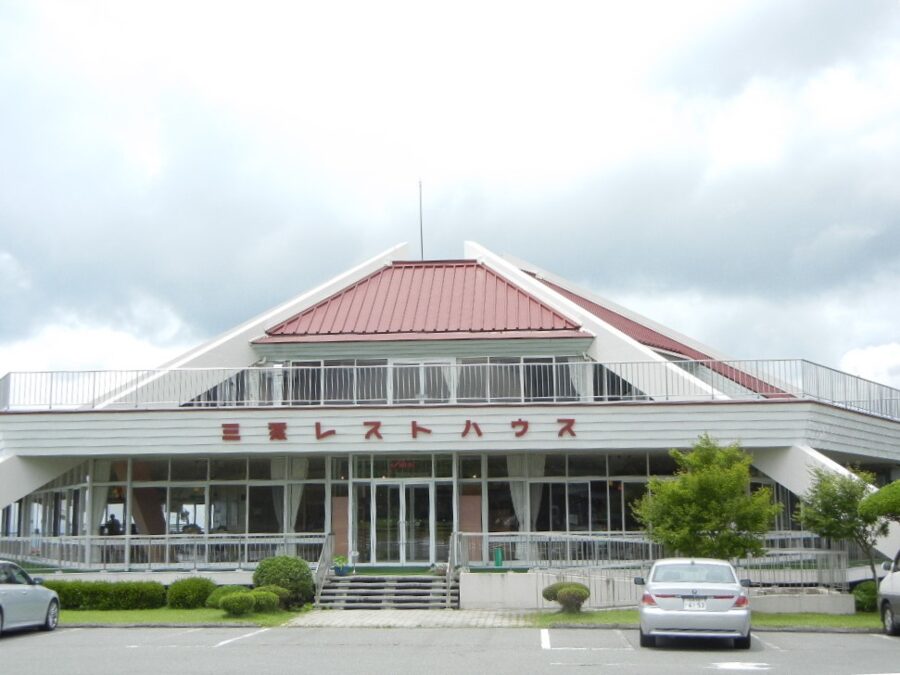
The early closers clean in the afternoon before their own guests arrive at 3 p.m. So three baths on a pass are easiest between about 10 a.m. and 2:30 p.m., and after that the choice narrows to Ikoi, Yamabiko and Kōnoyu. Inn car parks are mostly for guests.
Shinmeikan. The cave is the reason. The inn’s bath page describes the men’s cave splitting into two tunnels with a tub in each, and the women’s cave having two entrances, so you can walk through. It is steamy, closer to a sauna than a pool.
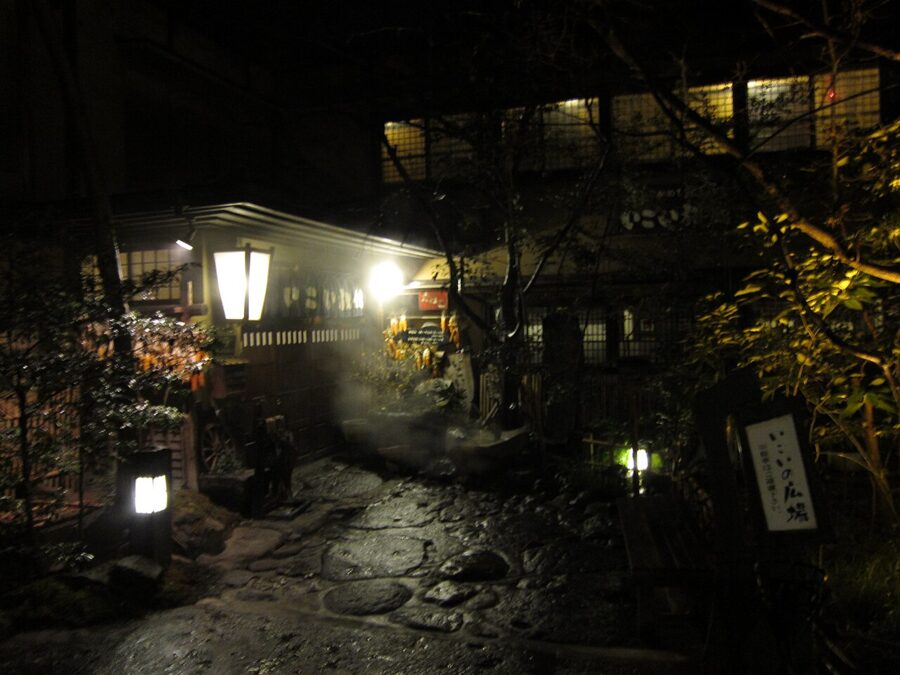

Yamabiko Ryokan. Sennin-buro is the biggest outdoor bath in Kurokawa by the inn’s own account, and men and women swap it day by day. Check the status page for your side.
Ikoi Ryokan. Ikoi has 13 baths, including the women’s Bijin-yu and the waterfall bath, Taki-no-yu. The association lists its men’s mist sauna as open to day bathers at no extra charge.
Okyakuya. The heir of the old domain inn, open since 1722 by its own count. Okyakuya says both outdoor baths take the pass, and every bath is down steep stairs.
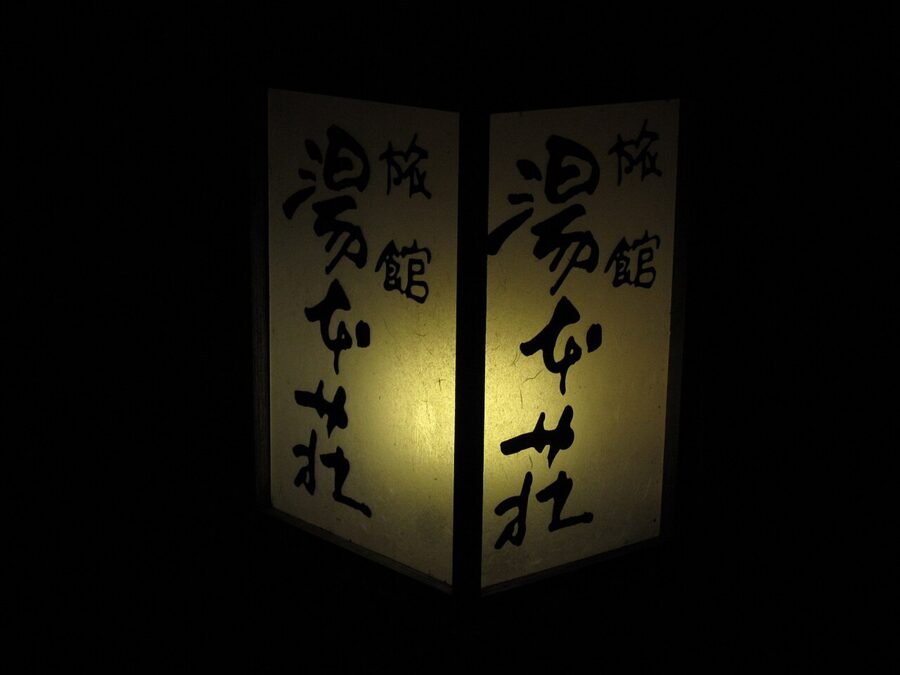

In the woods. Yamamizuki, Shinmeikan’s sister inn, has its outdoor bath on a mountain stream, and Sanga sits alone in woodland with baths on two different springs. Shinmeikan runs a free shuttle round the village that, it says, takes day bathers too.
Ana-yu and Jizō-yu, the old community baths
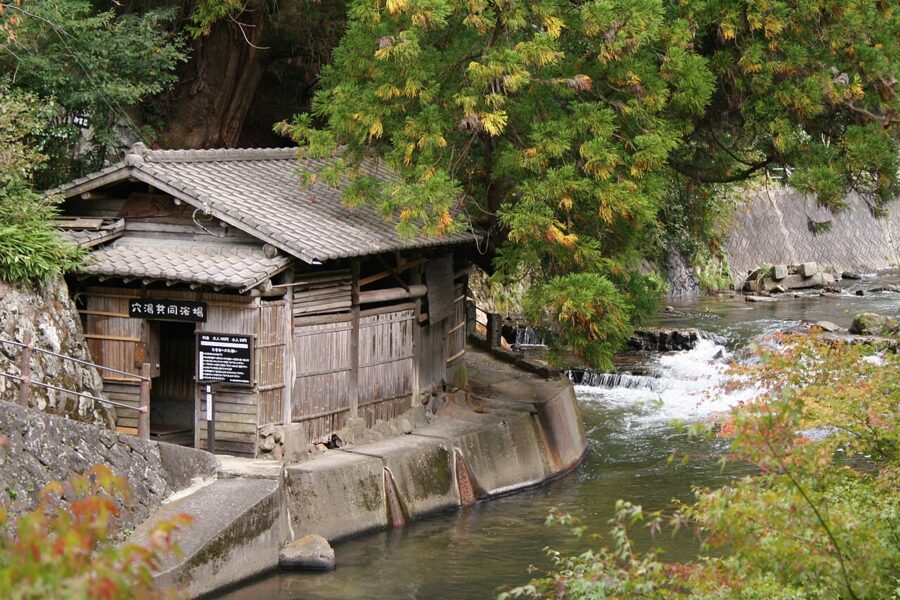
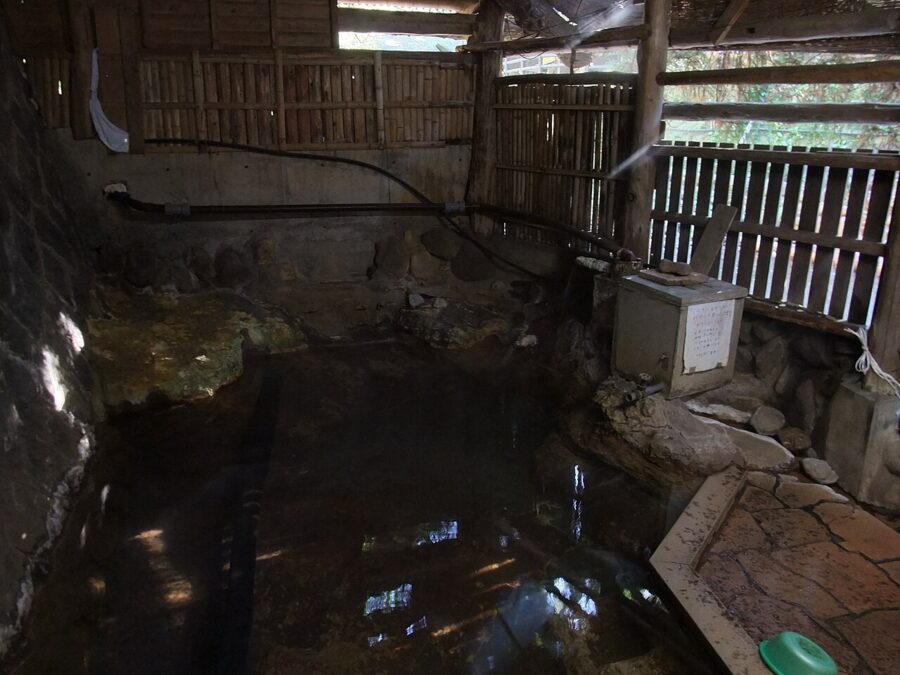
Before the pass there were two community baths, and both still stand: Jizō-yu, the bath of the legend, and Ana-yu, a wooden hut on the riverbank. Neither is on the pass and their terms change, so ask at Kazenoya whether you can use them that day, and expect a plain stone tub.


Staying the night
A ryokan is an inn; an onsen is a hot spring. At Kurokawa you stay at one to use the other. Every member inn has its own outdoor bath, rooms are mostly tatami and dinner is a set course, and staying gives you the village at the hours day visitors miss: after dinner and before breakfast.
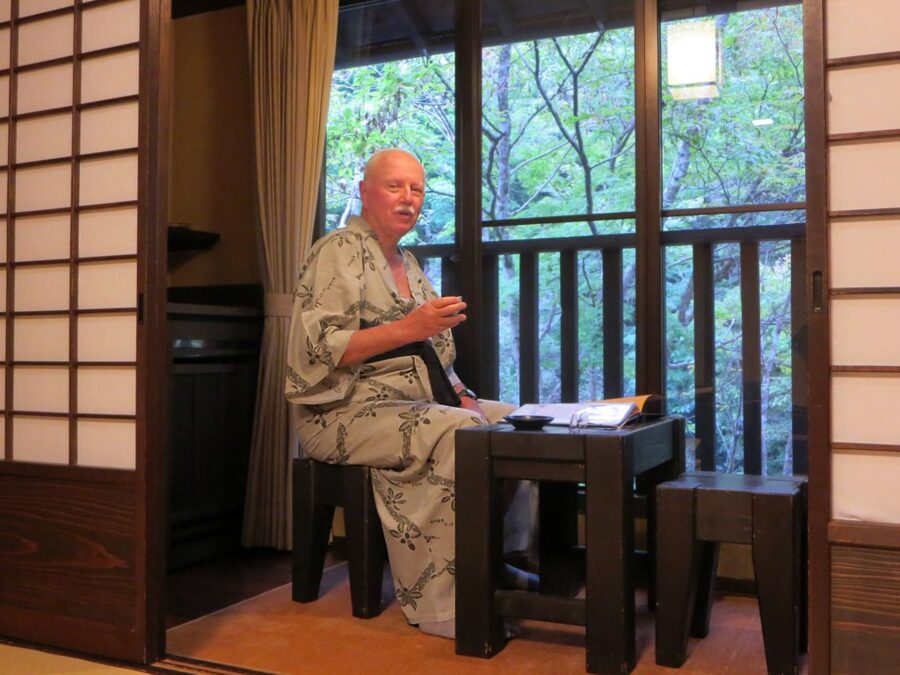

The association’s inn list gives per-person ranges. As of November 2026, most inns start between ¥16,000 and ¥26,000 (about US$105 to US$175), their best rooms reach ¥40,000 to ¥50,000 (about US$265 to US$335), and the dearest, Gekkōju, starts near ¥70,000 (about US$465). Shinmeikan’s own booking page offered two people an eight-mat room with dinner and breakfast from ¥39,600 for the room.
- Book direct. The association site books member inns, and each inn has its own site. Most open three to six months ahead.
- Book early for Golden Week, the September holidays, Obon, October and November, and New Year. Same-day rooms are rare.
- Pickups: many inns collect guests from the bus stop or Kazenoya at a time you fix in advance.
- Food needs: most inns handle allergies if told when you book; few can do fully vegetarian meals.
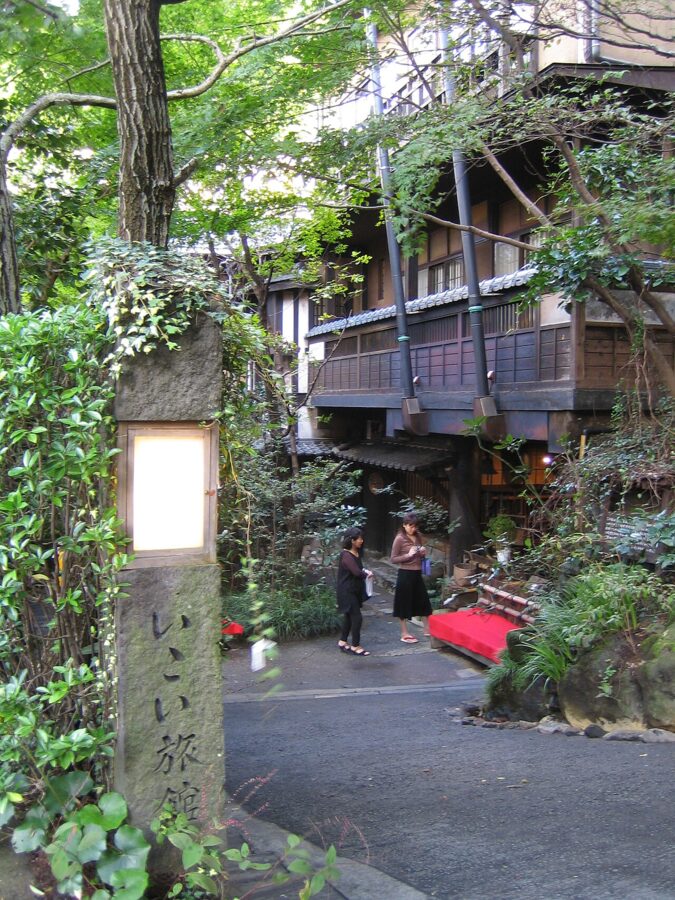

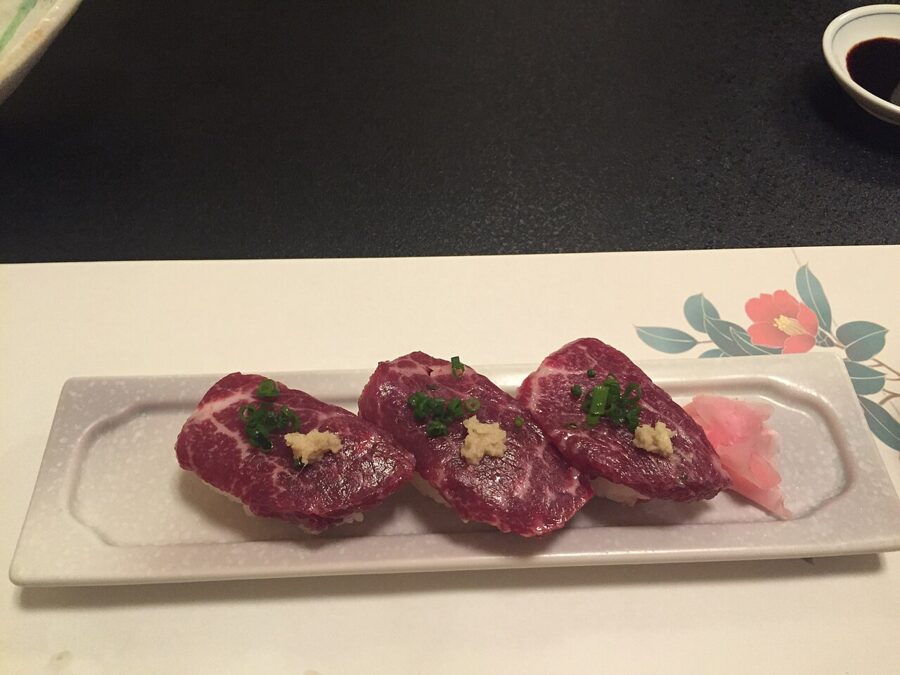
For bath-hopping on foot, I would stay in the center, where Shinmeikan, Ikoi, Okyakuya and Yamabiko are minutes apart. For quiet, Sanga or Yamamizuki. Dinner leans on Kumamoto: basashi (馬刺し, raw horse meat), Higo beef or Aso akaushi (あか牛, brown cattle), river fish and mountain vegetables.

The lanes, food and souvenirs
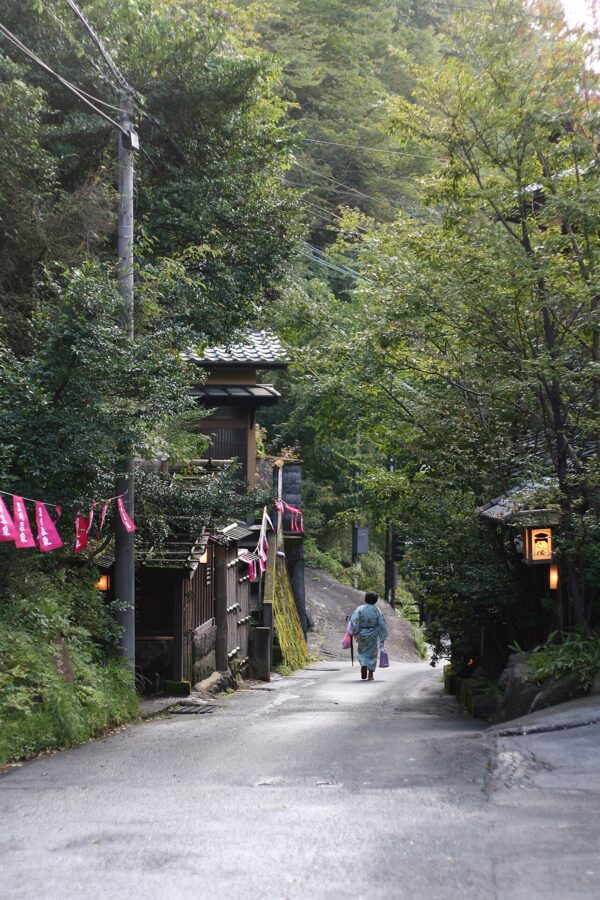
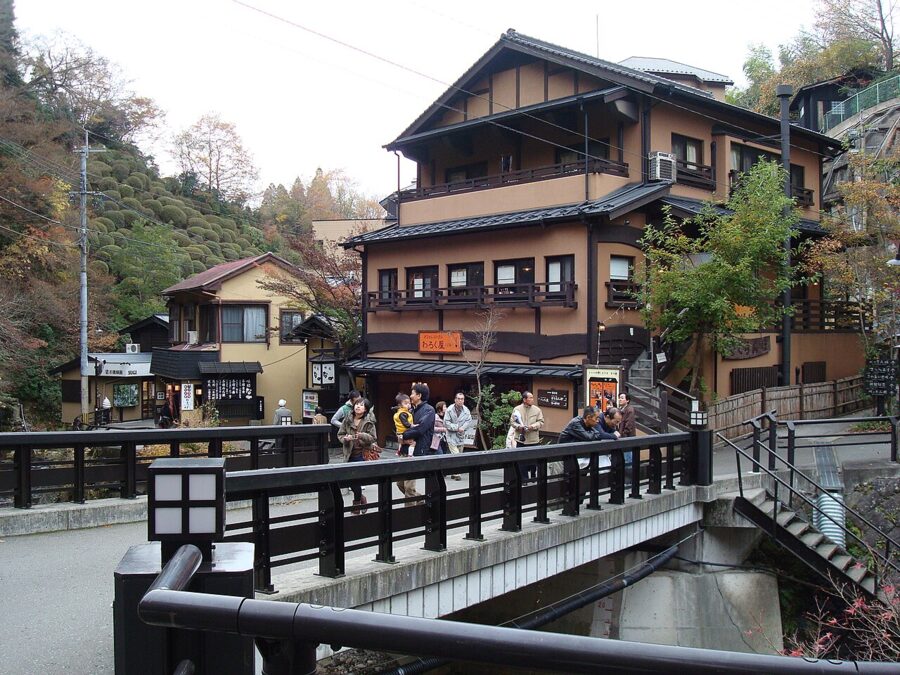
The main walk runs down from Igo-zaka (いご坂), the slope at the top of the village, to Shimo-Kawabata-dōri by the river. The association reckons 15 to 20 minutes without stopping. Nobody manages that.

From the association’s shop list and pass page, as of November 2026:
- Warokuya, a Meiji-era farmhouse moved beside Marurin Bridge, serves akaushi beef; 11 a.m. to 4 p.m., closed Thursdays.
- Au Pan & Coffee bakes with local Jersey milk; 9 a.m. to 4 p.m., closed Thursdays and Fridays.
- Yama no Ibuki, Jersey-milk soft-serve; 9 a.m. to 5 p.m., closed Wednesdays and Thursdays.
- Sugi Yōhōen, a beekeeper’s shop with honey tastings; 9:15 a.m. to 5:30 p.m. daily.
- Igozaka Tōan, pottery bought direct from about 70 Kyushu kilns.
- Gotō Saketen, a liquor shop of over 90 years at the top of Igo-zaka, with a convenience corner.
Most shops keep roughly 9 a.m. to 6 p.m., and Tuesday to Thursday sees the most closures. Bring cash: there is no ATM, the nearest is a FamilyMart about 15 minutes away by car, and most desks take cash only.
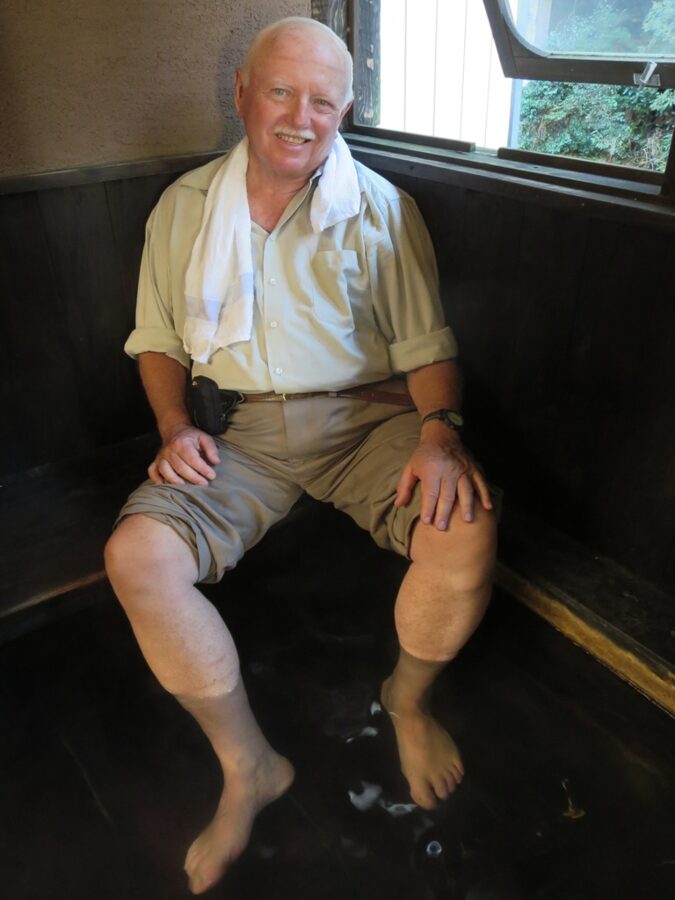

Coin lockers by Kazenoya and behind the gas station cost ¥100 or ¥500 (about US$1 or US$3) and take only ¥100 coins; Kazenoya changes bills. Becchinkan, below Kazenoya, is a free rest room, 10 a.m. to 4 p.m.
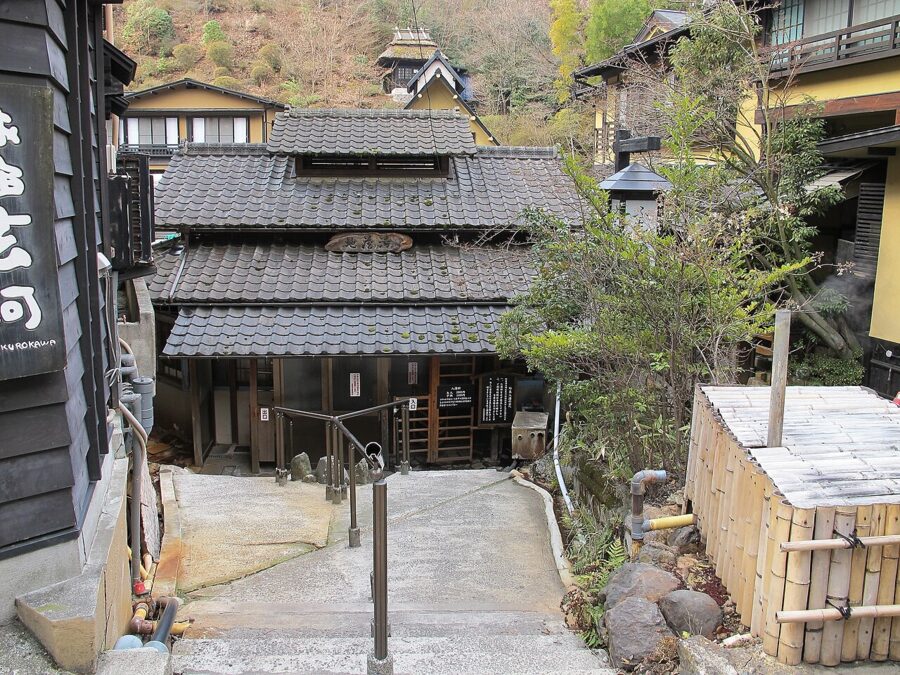

For a walk beyond the lanes, Kazenoya hands out a map of a forest course through Oku-Kurokawa to the Hiranodai lookout, about three hours there and back, with plenty of slopes.
Seasons, light-ups and crowds
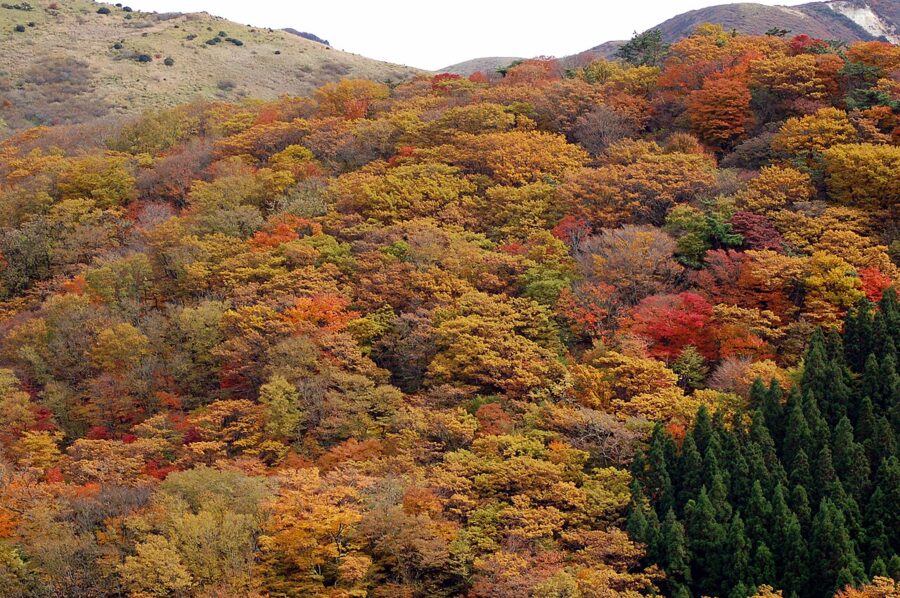
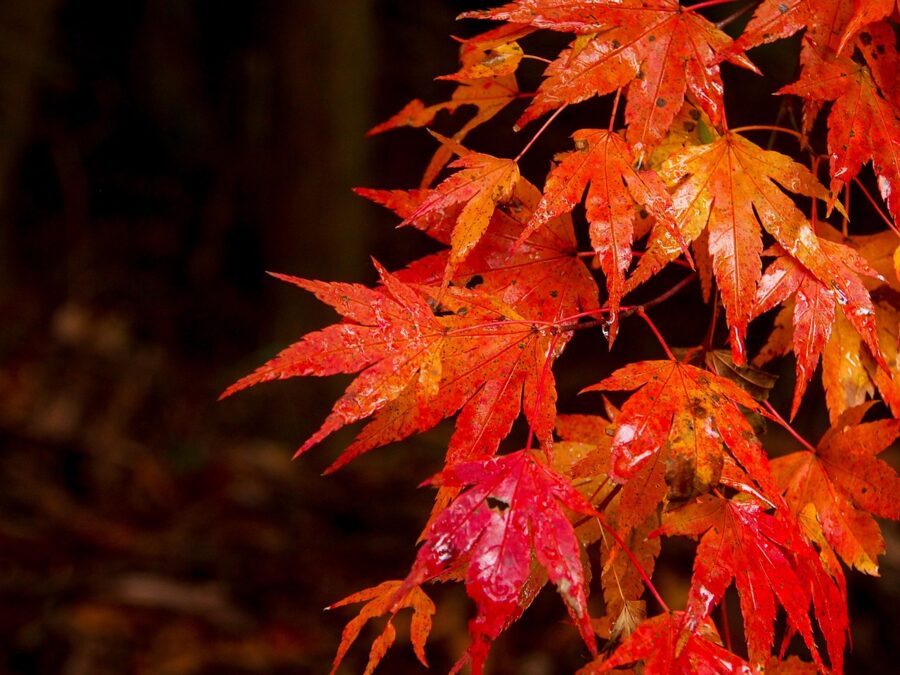
Cherry blossom comes in early April, and autumn color peaks from late October to mid-November, when rooms are hardest to get. Summer is the quiet surprise: the association says the village has had one night above 25°C in ten years.

The Yuakari light-up runs from 19 December 2026 to 31 March 2027: about 300 split-bamboo ball lanterns, lit 5 p.m. to 9:30 p.m. On Saturdays except 3 January, food stalls open at 5 p.m. and kappo-zake (かっぽ酒, sake warmed in bamboo) is poured from 6:30 p.m.
Between December and March the association asks drivers to carry winter tires or chains, because snow and ice are frequent. Bus travelers want shoes with grip.
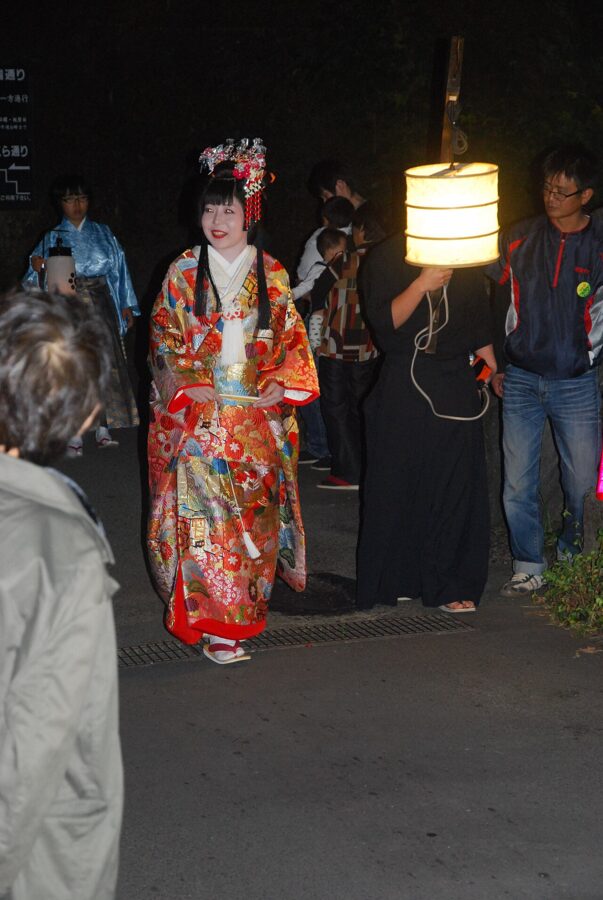
In summer 2026 the umbrella-lantern light-up hung paper parasols over the lanes from 1 June to 30 September, 6 p.m. to 9:30 p.m. The biggest day is the Thanksgiving festival, held on 3 October in 2026, with innkeepers cooking the stall food and a program running to a taiko group at 8:45 p.m.

Getting there by bus and car
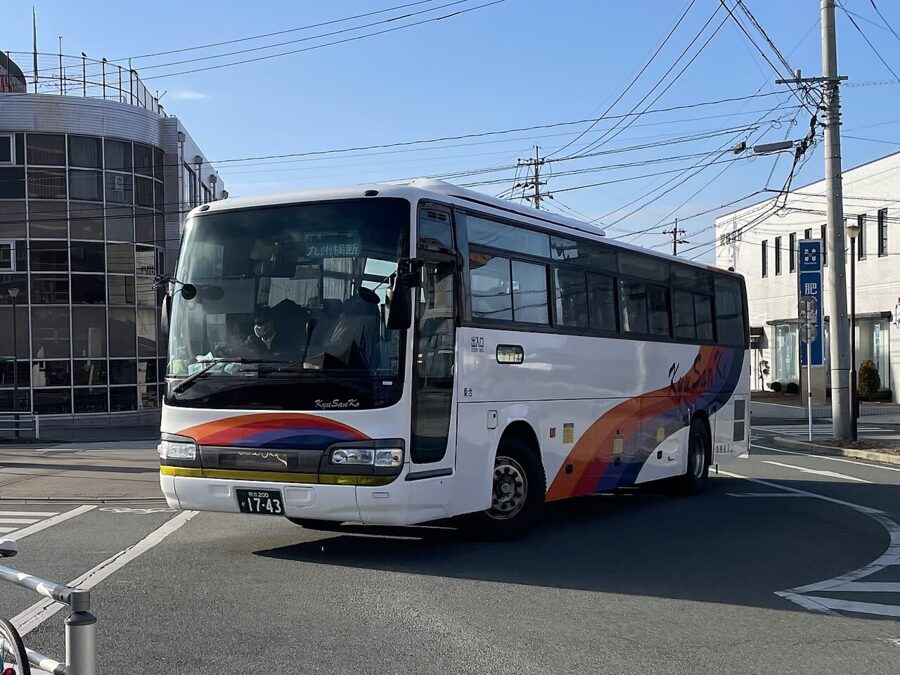
Kurokawa has no station. The association’s access page lists three bus routes, each with three runs a day each way, all best booked by the day before. For connections into Oguni, see getting to Oguni.
From Fukuoka
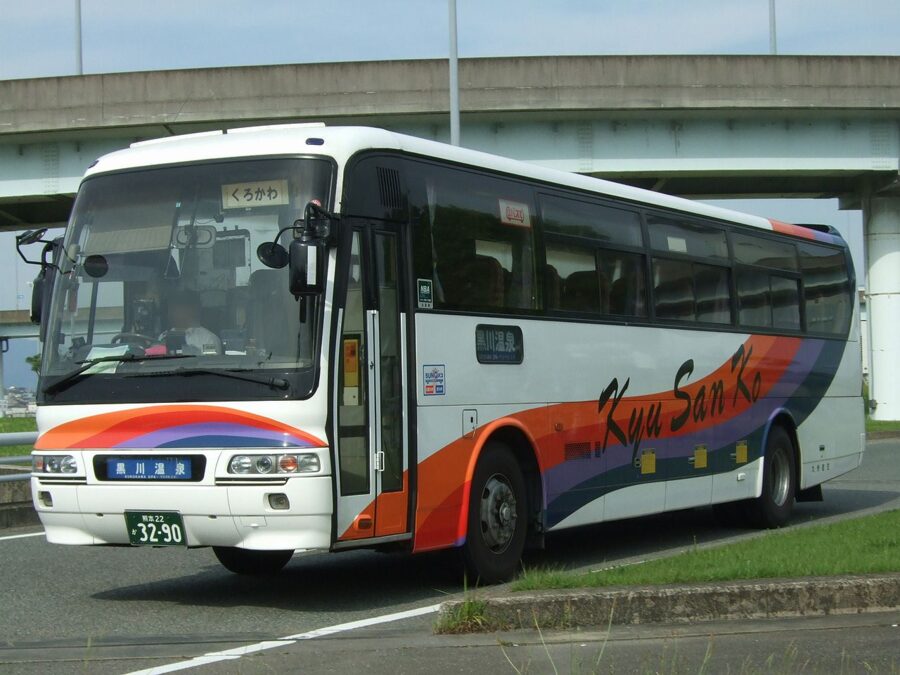
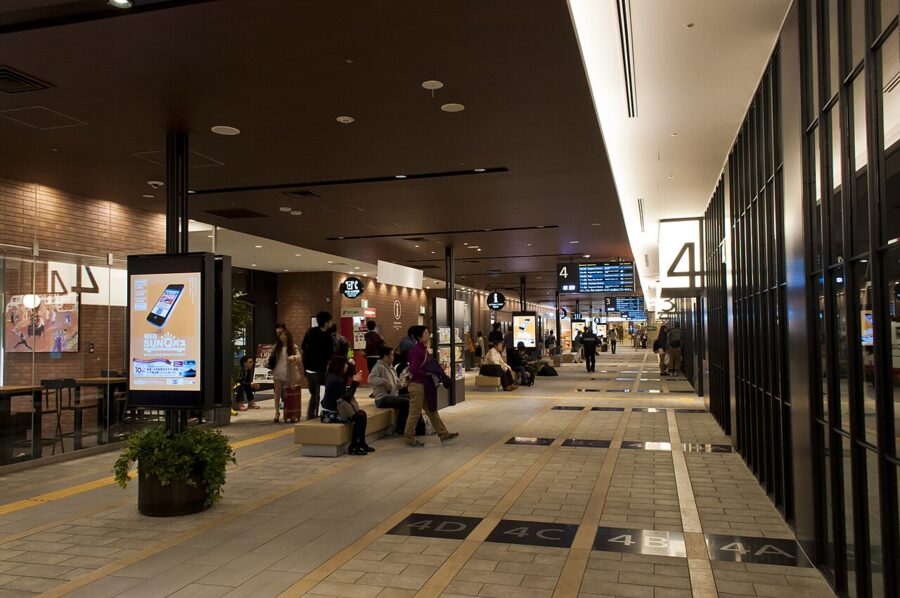
Kyushu Sanko and Hita Bus run the all-reserved Fukuoka to Kurokawa highway bus. Seats open a month ahead, the return must be booked by the day before, and the fare is ¥4,000 (about US$27) from Tenjin, Hakata or Fukuoka Airport, per the October 2025 fare table still in force in November 2026.

| Stop | Run 1 | Run 2 | Run 3 |
|---|---|---|---|
| Tenjin Expressway Bus Terminal | 9:30 | 11:15 | 12:40 |
| Hakata Bus Terminal | 9:53 | 11:38 | 13:03 |
| Fukuoka Airport (International) | 10:13 | 11:58 | 13:23 |
| Kurokawa Onsen | 12:29 | 14:14 | 15:39 |
| Return: Kurokawa Onsen | 10:00 | 11:00 | 14:00 |
| Hakata Bus Terminal | 12:34 | 13:34 | 16:34 |
Times are from Sanko’s Fukuoka to Kurokawa timetable, revised 1 October 2025, the same every day. Book through the Kumamoto Highway Bus Reservation Center or the links on the association’s access page.

From Kumamoto, Beppu and Yufuin
The Kyushu Odan Bus crosses the island between Kumamoto and Yufuin or Beppu and stops at Kurokawa. As of the 1 August 2026 fare table, Kumamoto Station to Kurokawa is ¥3,400 (about US$23), Kurokawa to Yufuin ¥2,700 (about US$18) and Kurokawa to Beppu ¥4,000. Part of the route is reservation-only.

| To Kurokawa | Departs | Arrives |
|---|---|---|
| Kumamoto Station | 7:23 / 8:23 / 12:08 | 10:15 / 11:15 / 15:00 |
| Beppu Ekimae Honmachi | 8:10 | 10:45 |
| Yufuin Station Bus Center | 9:10 / 13:50 / 14:50 | 10:45 / 15:25 / 16:25 |
Back the other way, buses leave Kurokawa for Yufuin at 10:15, 11:15 and 15:00 (only the 15:00 goes on to Beppu), and for Kumamoto at 10:45, 15:25 and 16:25, reaching Kumamoto Station at 13:23, 18:03 and 19:03. Times are from Sanko’s Kyushu Odan timetable, revised 1 October 2025.

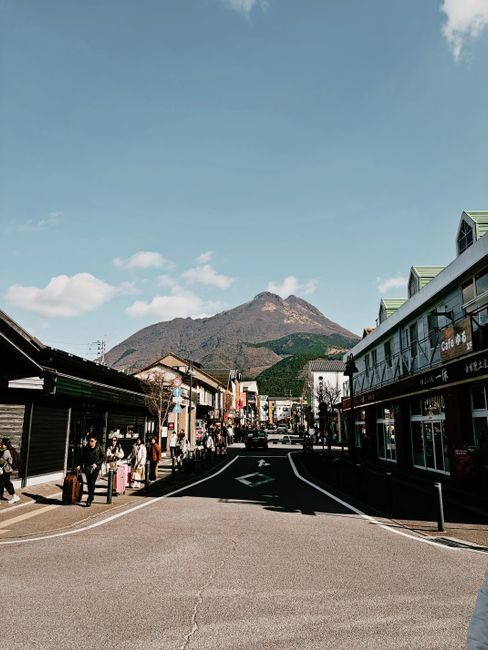
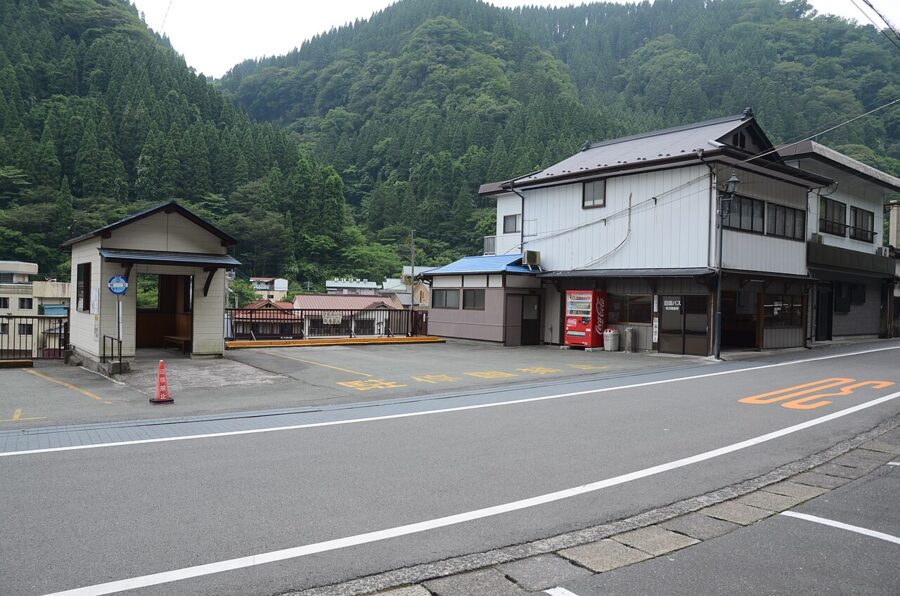
The bus stop is about 600 meters (a third of a mile), ten minutes uphill, from Kazenoya. Taxis are very few and none cruise; for short hops in the village, call Tsuno Taxi.
By car
The association suggests aiming first for Route 212 between Hita and Aso, Route 57 between Kumamoto and Aso, or the Yamanami Highway from Yufuin. Aso, Yufuin and Hita are each about an hour away.
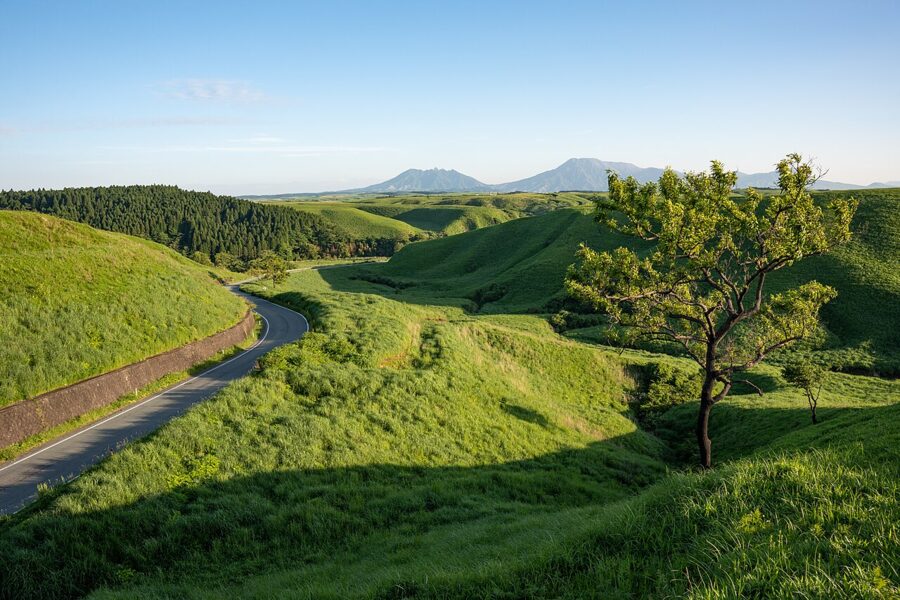

The public car parks hold about 280 cars, open around the clock, and all but one are free. The biggest is on Route 442 east of the gas station. The No. 4 car park charges ¥200 (about US$1) an hour after 20 free minutes, up to ¥1,000 (about US$7) a day.

One night at Kurokawa, hour by hour
- Before: book the bus both ways and a room in the center. After 9 a.m. on the day, check the status page.
- Late morning: arrive on the 8:23 from Kumamoto (11:15) or the first Fukuoka bus (12:29). Buy the pass at Kazenoya.
- Before 2:30 p.m.: the cave at Shinmeikan, then a soft-serve on the green sticker.
- 3 p.m.: check in and take your inn’s own bath.
- Evening: dinner, then the second bath at Ikoi, Yamabiko or Kōnoyu. In winter, walk the river under the lanterns.
- Morning: the third bath from 8:30 a.m., then the 10:00 or 11:00 bus to Fukuoka, or the 10:45 toward Aso and Kumamoto.
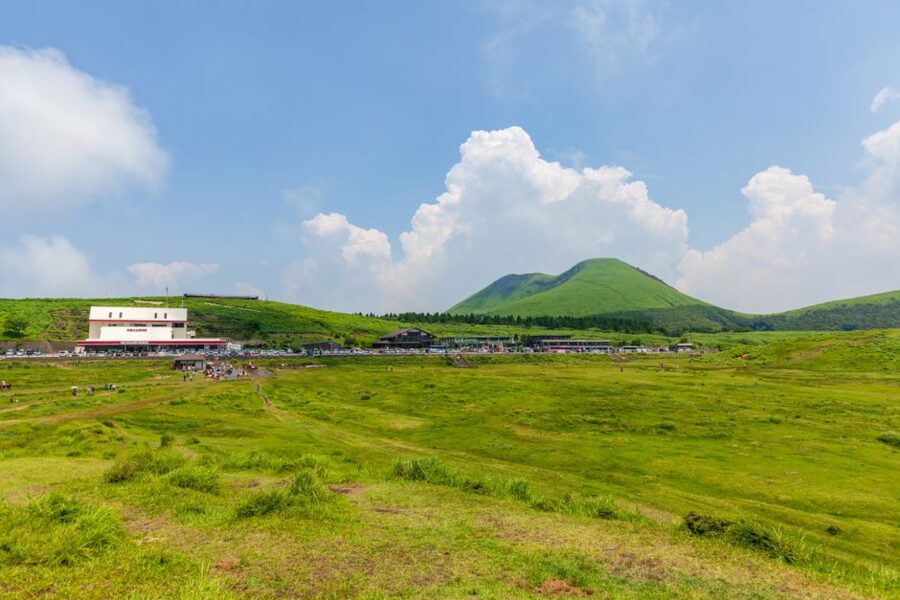
With a car, swap the bus for the rim roads: Mount Aso by the Milk Road, or north to Nabegataki and Tsuetate.
The bath I would save for last is the one in the dark before breakfast, in your own inn, when the lanes are empty and the river is the loudest thing in the valley. Then hang the stamped disc round your neck one more time and walk down to the bus.