
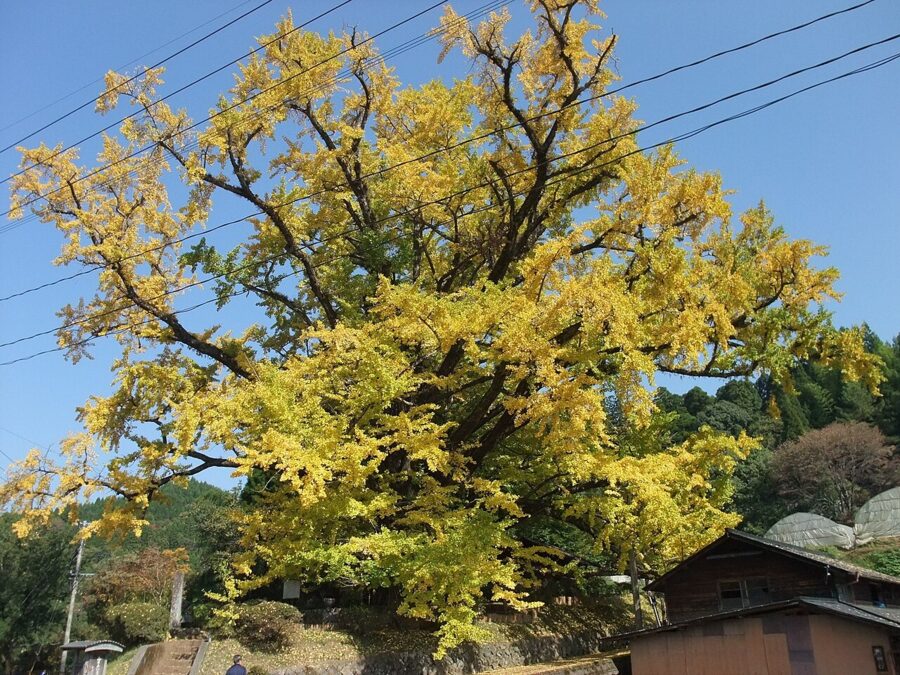

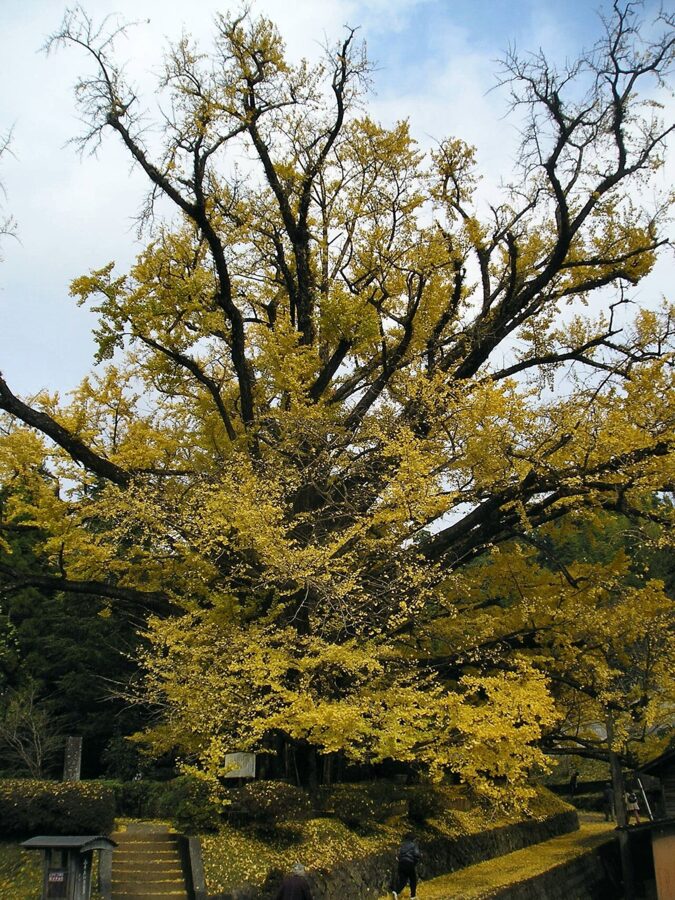
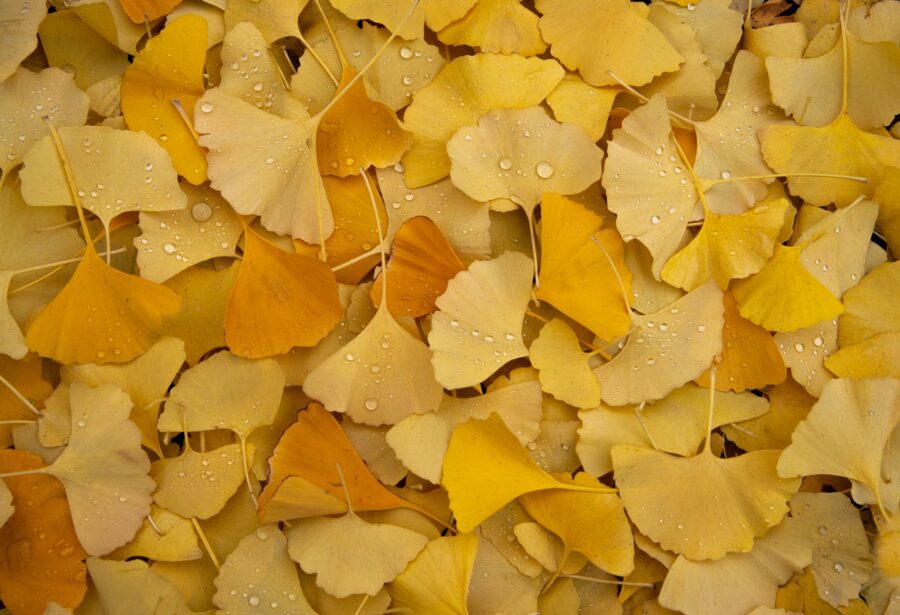
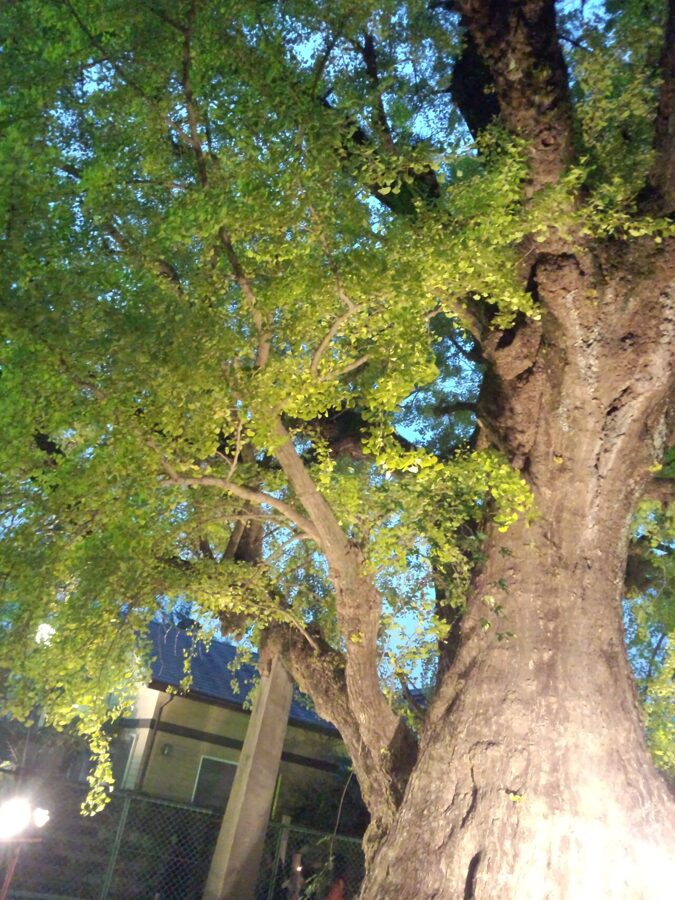
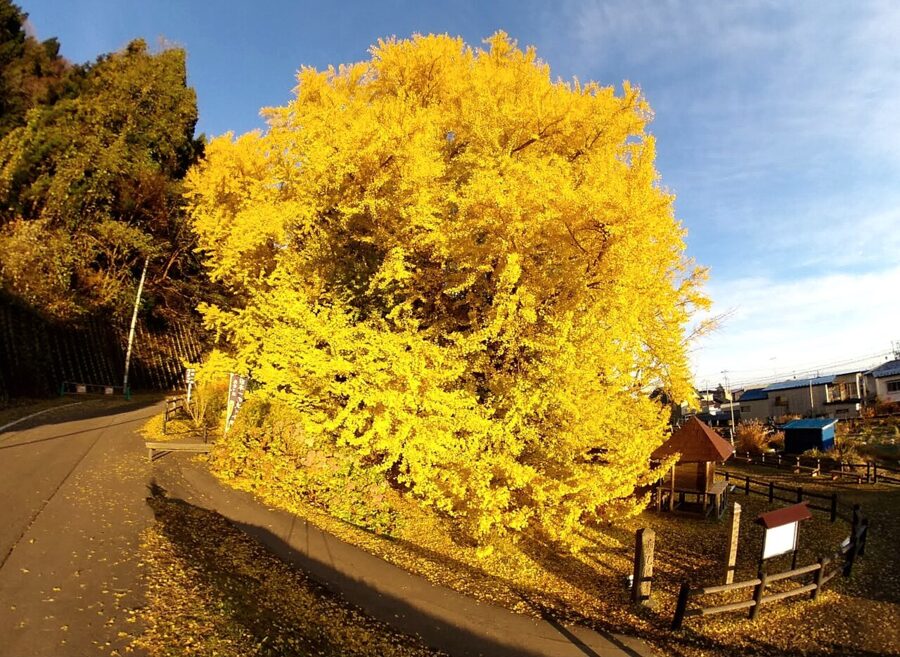
For most of the year the Shimonojō ginkgo (下城の大イチョウ) is a big green tree beside a village road north of Oguni, and the cars on Route 212 go straight past it. Then for two or three weeks around the start of November it turns the color of egg yolk, the lights go on at dusk, and the little road through Shimonojō fills with cars. After that the leaves come down all at once and lie in a yellow sheet over the roofs and the road.
It is the largest ginkgo in Kumamoto Prefecture and a national natural monument, and the village calls it Chichikobu-san (ちちこぶさん), roughly “Mr. Milk-lumps.” The tree is worth the drive in its yellow weeks and only mildly interesting outside them, and the gorge below it hides two waterfalls that most visitors never see. It also folds neatly into a half day with Nabegataki.


Contents6 parts
A thousand years, give or take
Every local source agrees on the height: about 25 meters (some 80 feet). The girth is where they part company. The national listing, written when the tree was designated, gives about 9.6 meters around the trunk at eye level; a 2026 report in the Kumamoto Nichinichi Shimbun says 10; the town and a 2024 Ministry of the Environment big-tree guide say about 12; and one popular foliage listing gives 21 meters, which is the measurement around the root mass rather than the trunk. They are probably all right about different things, because the base of this tree is not one trunk but a main stem wrapped in dozens of shoots.
Those shoots are what the 1934 designation actually noticed. The national listing, under its old name 下の城のイチョウ (Shimo-no-jō no Ichō), notes the many suckers rising from the base and the branches spreading in all directions, and calls it one of the country’s notable ginkgo giants. The Ministry of Education designated it a natural monument (tennen kinenbutsu, 天然記念物) on 28 December 1934, and the Agency for Cultural Affairs keeps it on the list today. Shimonojō, the district, now writes its name 下城; the old spelling survives only in the official title.
The age is the soft number. The town and the foliage listings all say “over 1,000 years,” and nobody has counted rings on a living monument. But the earliest firm trace of ginkgo in Japan is seeds in the cargo of a ship that went down in 1323 on its way to Hakata from Ningbo, and ginkgo goes unmentioned in Heian-era court writing. I would read “a thousand years” as the village’s way of saying very, very old, and leave it there.
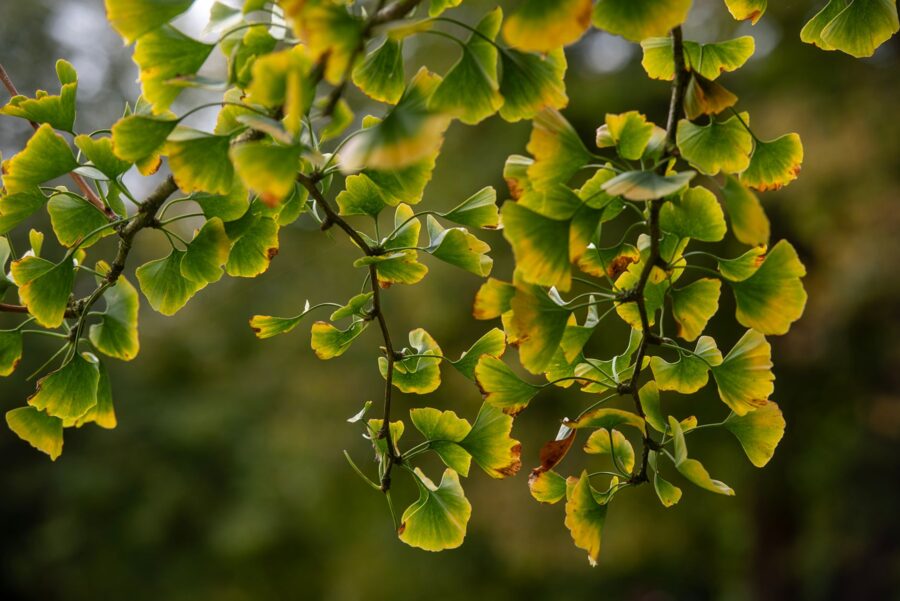
A ginkgo (Ginkgo biloba, イチョウ) is the last living species of a family of trees that were common when dinosaurs were, which is why it gets called a living fossil. It grew wild in China, not Japan, and came over with people. Trees are either male or female, and Shimonojō’s is female.
That matters if you go in late October, because female trees drop seeds. Their soft outer coats smell rancid when they ripen and can irritate skin, so look where you step and keep bare hands off them. Inside is the ginnan (銀杏) nut that turns up grilled on skewers at izakaya all over Japan.
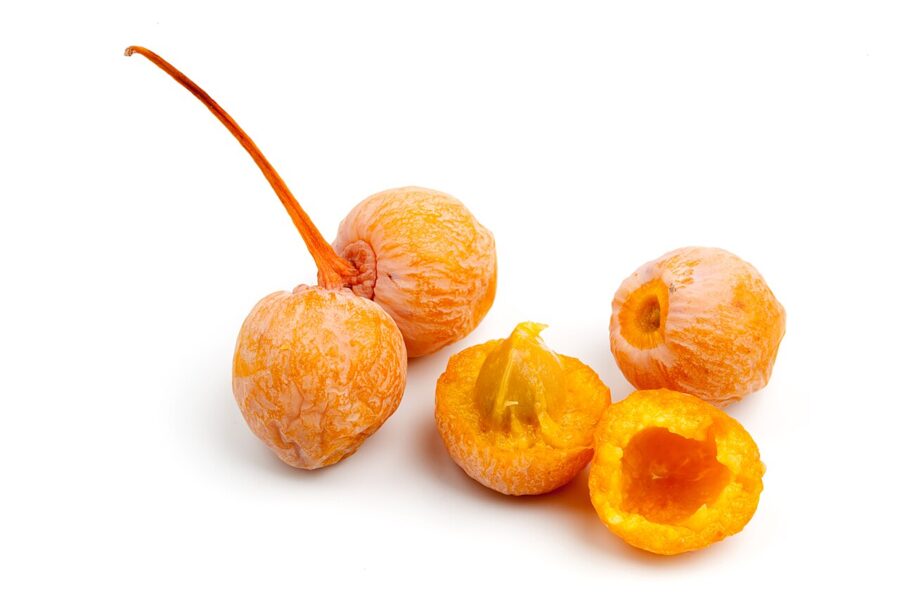

Chichikobu-san and the castle lord’s mother
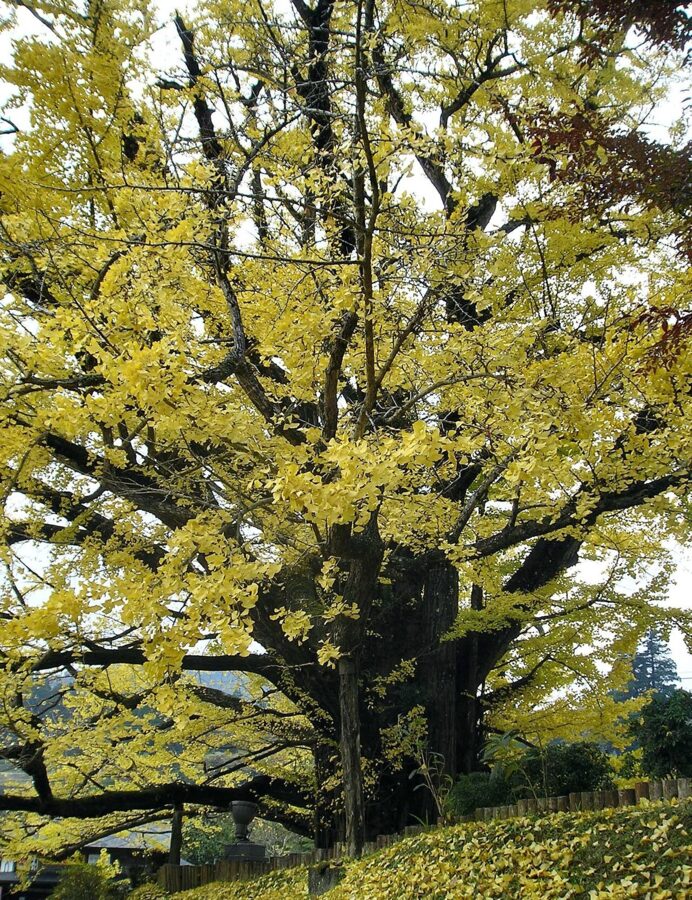
Many old ginkgo grow hanging “breasts,” the stalactite-like growths the Japanese call chichi (乳). Shimonojō has almost none of those. Instead its trunk is covered in round lumps, and those gave it the nickname.
The town’s own page on the tree repeats the story everyone here knows: a woman short of breast milk who brewed the bark and drank it would find her milk came in. Patches of scraped bark show that some people still try. Prayers here now run to children and good marriages too, and the women’s association of the Shimonojō district looks after the tree.
Who is buried under it depends on who you ask. A plaque put up by the town board of education in 1979 says the stone gorintō (五輪塔, a five-tiered grave marker) at the foot of the tree belongs to Myōei, mother of a lord of the old Shimonojō castle, and that the ginkgo was planted as her marker. The other story ties it to Oguni’s Kagamigaike legend and makes it the grave of the wet nurse of Princess Komatsu, a granddaughter of Emperor Daigo. Both are better tales than the botany.
When it turns yellow
Reckon on late October to the first ten days of November. That is the window the town, the prefecture’s newspaper and the weather services all give, and 2026 fit it: the Kumamoto Nichinichi Shimbun photographed the tree coloring under lights on 31 October, local people expected it to hold until about 10 November, and by 17 November the tree was reported past its best with under 40 percent of its leaves left. A warm autumn pushes it later, and a cold, windy night near the end can take down a good part of it at once.
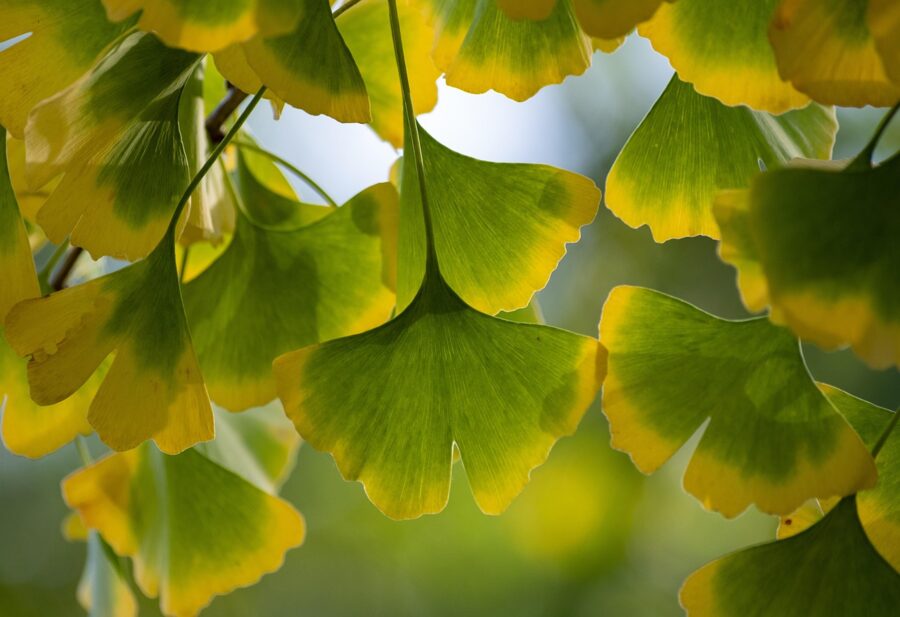
To check the current year, the most useful page is the Weathernews foliage page for the tree, which posts photos and a color rating sent in by the industry section of the Oguni town hall through the season. It is in Japanese, but the photos speak for themselves and the dates are plain. The town’s tourism site announces the lighting dates each autumn; in 2026 the notice went up in early October.
Weekends in peak week are busy from about 10 a.m. to 4 p.m., and the lot is small. I would go on a weekday morning, when the lot has space and the tree has room around it. And if you miss the peak by a few days, go anyway: the carpet of fallen leaves over the road and the storehouse roofs nearby is its own sight, and the bare tree shows its lumpy trunk far better than the full one does.
The night lighting
Oguni lights the tree every autumn. In 2026 it ran nightly from mid-October to 15 November, 5:30 to 10 p.m., as reported in early November; earlier years ran 6 to 10 p.m. and ended once the leaves had fallen. Viewing is free, as it is in daylight.
The lighting is what fills the lot on Saturday nights. Under the lights the crown glows against the dark hillside, and the lumpy trunk is easier to read than by day. Bring a warm layer: Oguni sits high, and November nights in the valley drop to a few degrees above freezing.
The falls below the tree
The ginkgo stands on a small rise above the gorge of the Momigi River (樅木川), a tributary of the Tsue River that eventually reaches the Ariake Sea by way of the Chikugo. Two waterfalls sit in that gorge within a couple of minutes’ walk, and most people who come for the tree never look over the edge. They should.
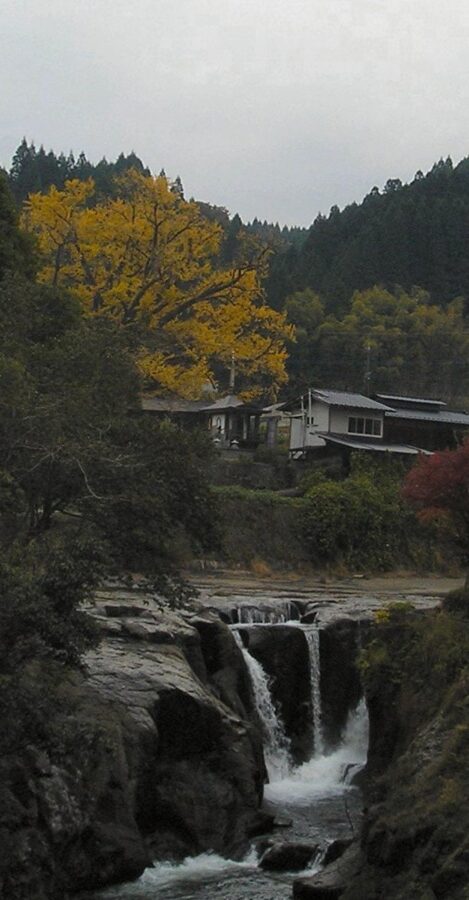

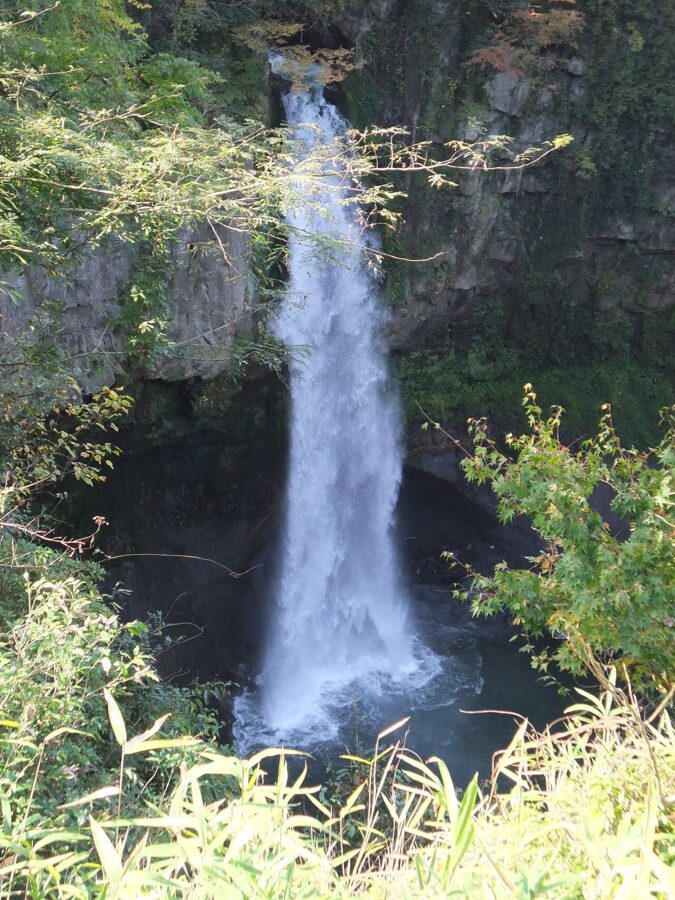
Shimonojō Falls (下城滝) drops about 40 meters (130 feet) down a sheer wall in one go. A walkway runs around it, and from the viewpoint at the top you look straight down into the plunge. Like most falls it is at its best after rain; in a dry November spell the ginkgo is the bigger show.

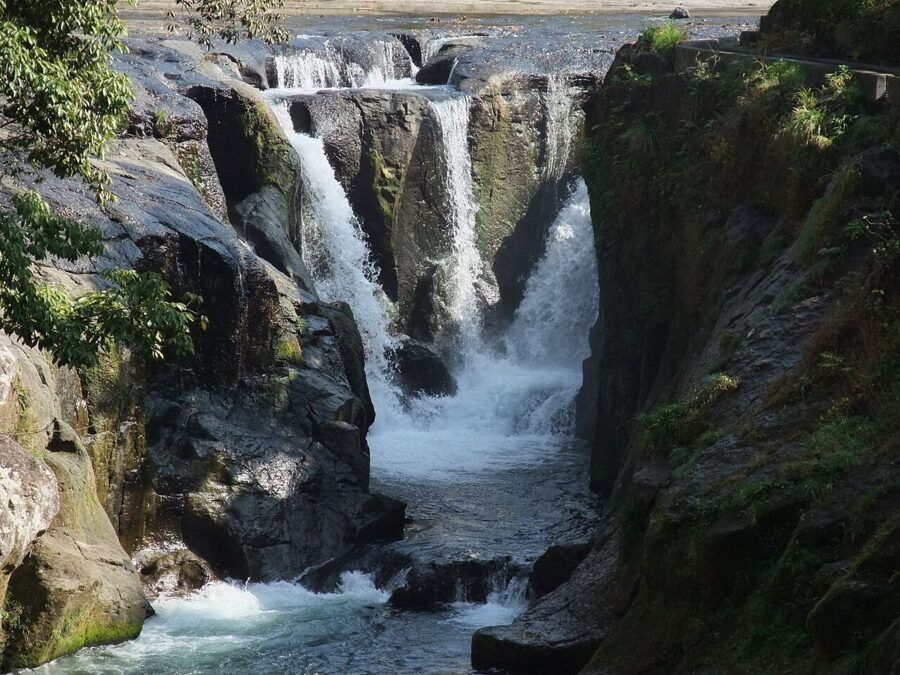
The smaller one, Nabekama Falls (鍋釜滝), is right below the tree, a set of short drops through a slot of dark rock. The name means “pots and kettles,” and on a still day you can hear it from the foot of the ginkgo.

Give it twenty minutes: the tree, the steps down to Nabekama, the walkway to the Shimonojō viewpoint and back. The walkway has steps and stays damp in the shade, and fallen ginkgo leaves make it slick, so wear shoes with some grip.

The village
Shimonojō is a farming district of scattered houses and cedar plantations, about halfway between Oguni’s town center at Miyahara and the hot-spring gorge of Tsuetate. The name means something like “the lower castle,” after a small castle that once held this valley, though there is little to see of it now.

The district has its own dance, Shimonojō-gaku (下城楽), which helps lead the procession at the autumn festival of Oguni Ryōjinja, the main shrine in Miyahara. A recent offering had a fifth-grader from Oguni Elementary dancing it for the first time, which is how a small district keeps a tradition going.

Parking, buses and the drive
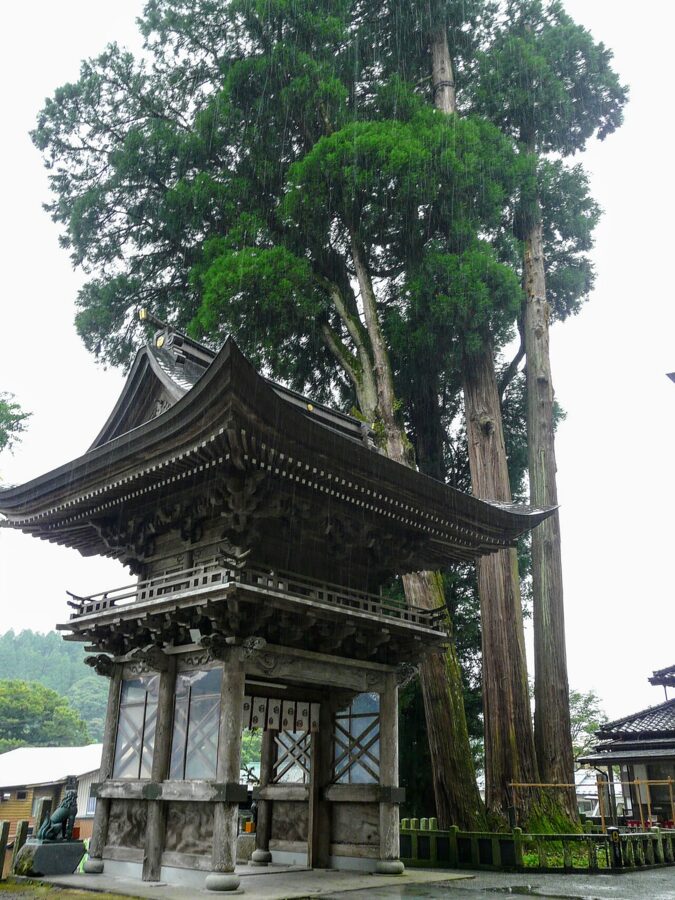
The tree is on a town road just east of Route 212, about five minutes by car north of Michi-no-Eki Oguni (Yū Station), the roadside station in the town center. Tsuetate Onsen is about eight minutes farther north. Parking is a small free lot by the falls walkway, with toilets; listings give anywhere from about seven to fifteen spaces, which is tight on a lit-up Saturday in peak week.


- From Kurokawa Onsen or Waita: drive into Oguni town, then north on Route 212 toward Tsuetate. If you are staying at Waita Onsen, combine it with the evening lights and a late bath.
- From Aso: about 40 minutes by car from JR Aso Station, up over the caldera rim and north on Route 212.
- From the expressways: about 35 minutes from Kokonoe IC on the Ōita Expressway via Route 387, or about 50 minutes from Hita IC. Kumamoto City is roughly two hours.
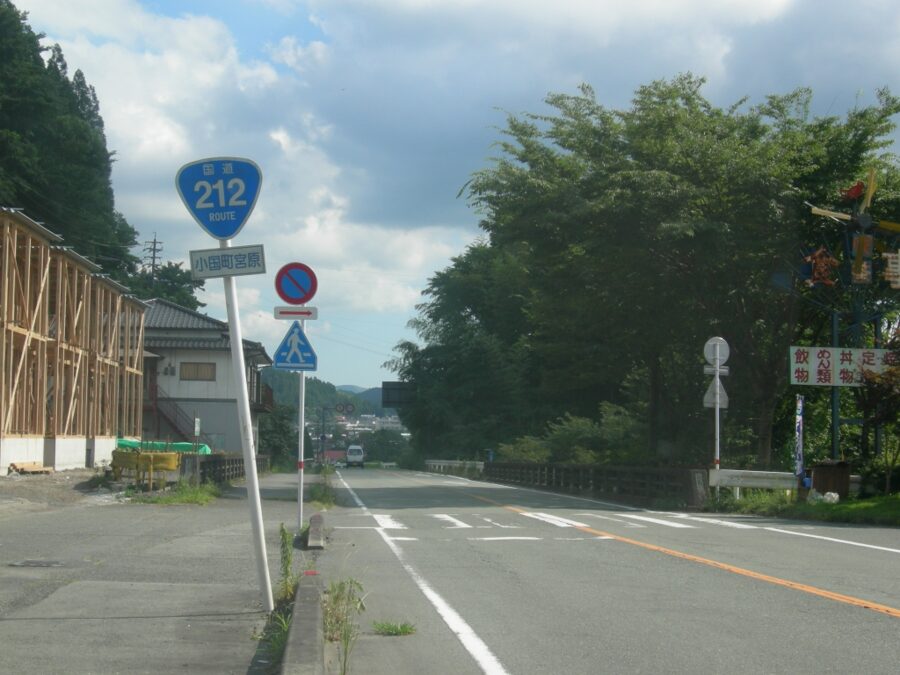
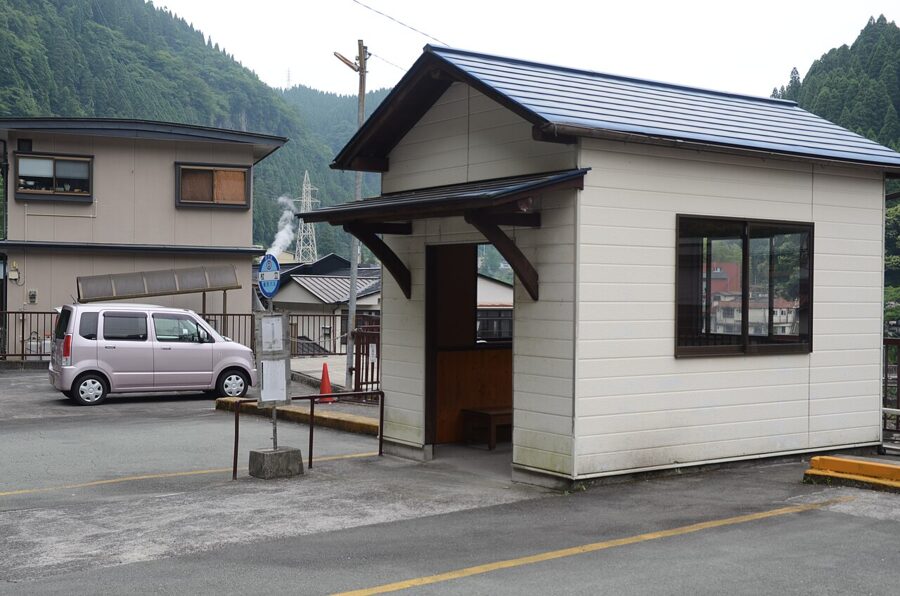
Without a car, Kyushu Sanko’s Aso, Oguni and Tsuetate line stops at Shimonojō on its way between JR Aso Station and Tsuetate, about an hour and a quarter from Aso. Buses are few, and Sanko revised the timetable on 1 October 2026, so check the current times on Sanko’s site before you plan around them. A taxi from Oguni town is the easier option, and the only realistic one if you want the evening lighting and a ride home.
A half day with Nabegataki
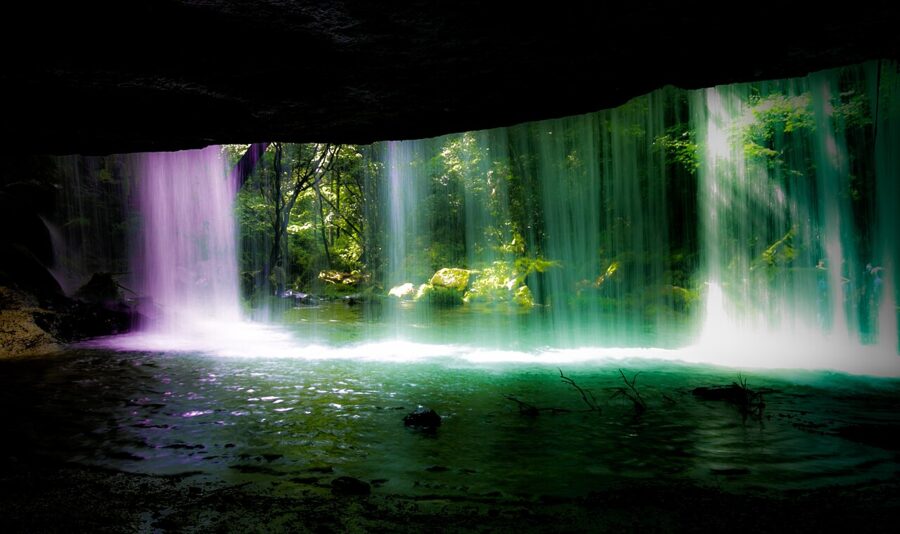
Nabegataki, the falls you walk behind, is about ten minutes from Yū Station in the other direction, so the two make an easy morning.
As of November 2026 entry to Nabegataki Park must be booked online in advance (same-day tickets are sold at the tourism association office in town if slots remain), costs ¥300 (about US$2) for adults and ¥150 for children, and runs 9 a.m. to 5 p.m. with last entry at 4:30. The park also has scattered closure days for tree felling in November 2026, so check before you book.
My order: Nabegataki at the 9 a.m. opening, then the ginkgo and the two falls at Shimonojō before noon, lunch in Oguni town, and back to the tree after dark if the lights are on. In peak week, book Nabegataki before you leave home.

Other great trees of Aso and Oguni
The Oguni basin is cedar country, and the old trees here are not hard to find. The Ministry of the Environment’s big-tree driving course for Aso picks five, Shimonojō among them. Here are the other four, with Oguni’s own Amida-sugi first.
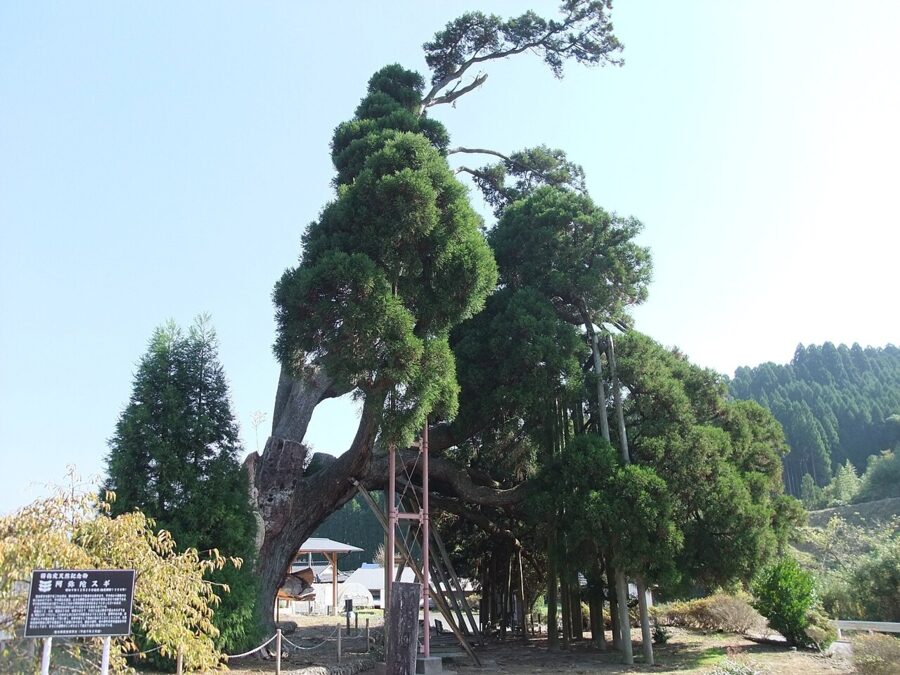
- Amida-sugi (阿弥陀杉), Oguni. A national natural monument cedar said to be over 1,300 years old, measured at 38 meters when listed. Typhoon 18 in 1999 brought down about two thirds of it; the fallen limbs are on show at the town library.
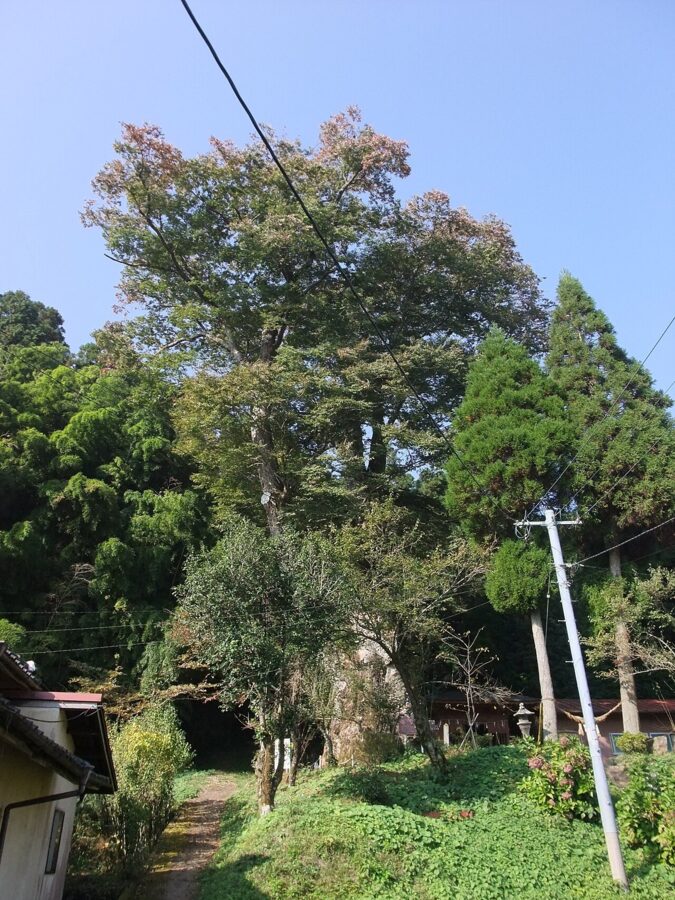
- Keyaki Suigen (ケヤキ水源), Oguni. A spring that rises among the roots of an old zelkova in Miyahara, so the water seems to come out of the tree. The town says 1,000 years; the ministry’s guide says 300-plus.
- Takenokuma giant zelkova (竹の熊の大ケヤキ), Minamioguni. A national natural monument about 13 meters around and 35 meters tall, among the largest zelkova in western Japan; a court case in the early Shōwa years stopped it being felled.
- Takamori-don cedars (高森殿の杉), Takamori. Two cedars standing in grazing land, their limbs twisting out in every direction. Cattle wander here, so follow the signs at the gate.
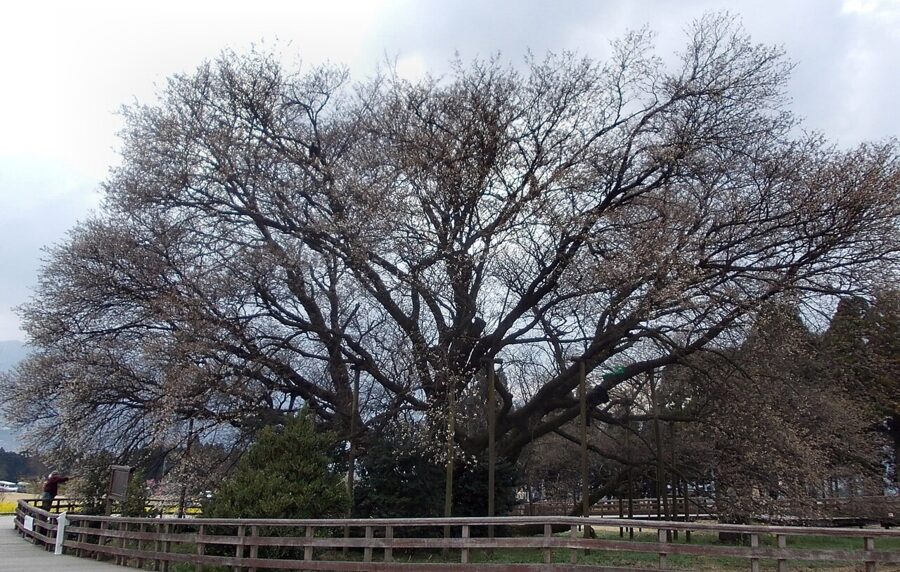
- Isshingyō cherry (一心行の大桜), Minamiaso. A mountain cherry of 400-plus years and one of the finest lone cherry trees in Kyushu. Spring, not autumn.



Two more ginkgo worth knowing
Kumamoto’s other ginkgo on the national list is the Shimoda ginkgo (下田のイチョウ) in Minami-ku, Kumamoto City, in the garden of the old Shimoda family house. If you are wondering where Japan’s biggest is, it is the Kitakanegasawa ginkgo in Fukaura, Aomori, at the other end of the country: about 22 meters around and 31 meters tall, roughly twice Shimonojō’s girth.


None of them, though, has a waterfall under it and a village that plans its November around it. Check the color reports in the last week of October, go on a weekday morning, and walk to the edge of the gorge before you leave.